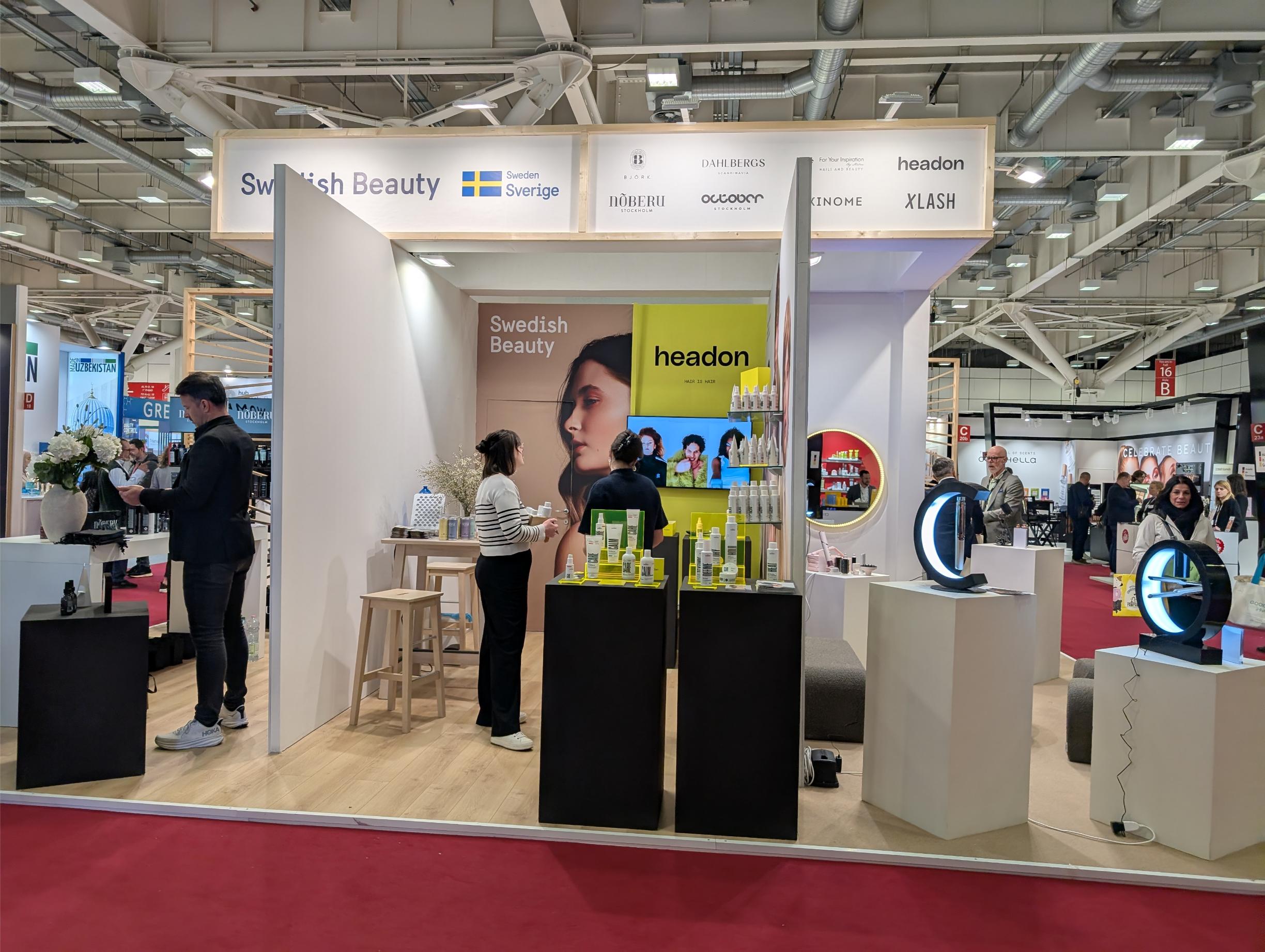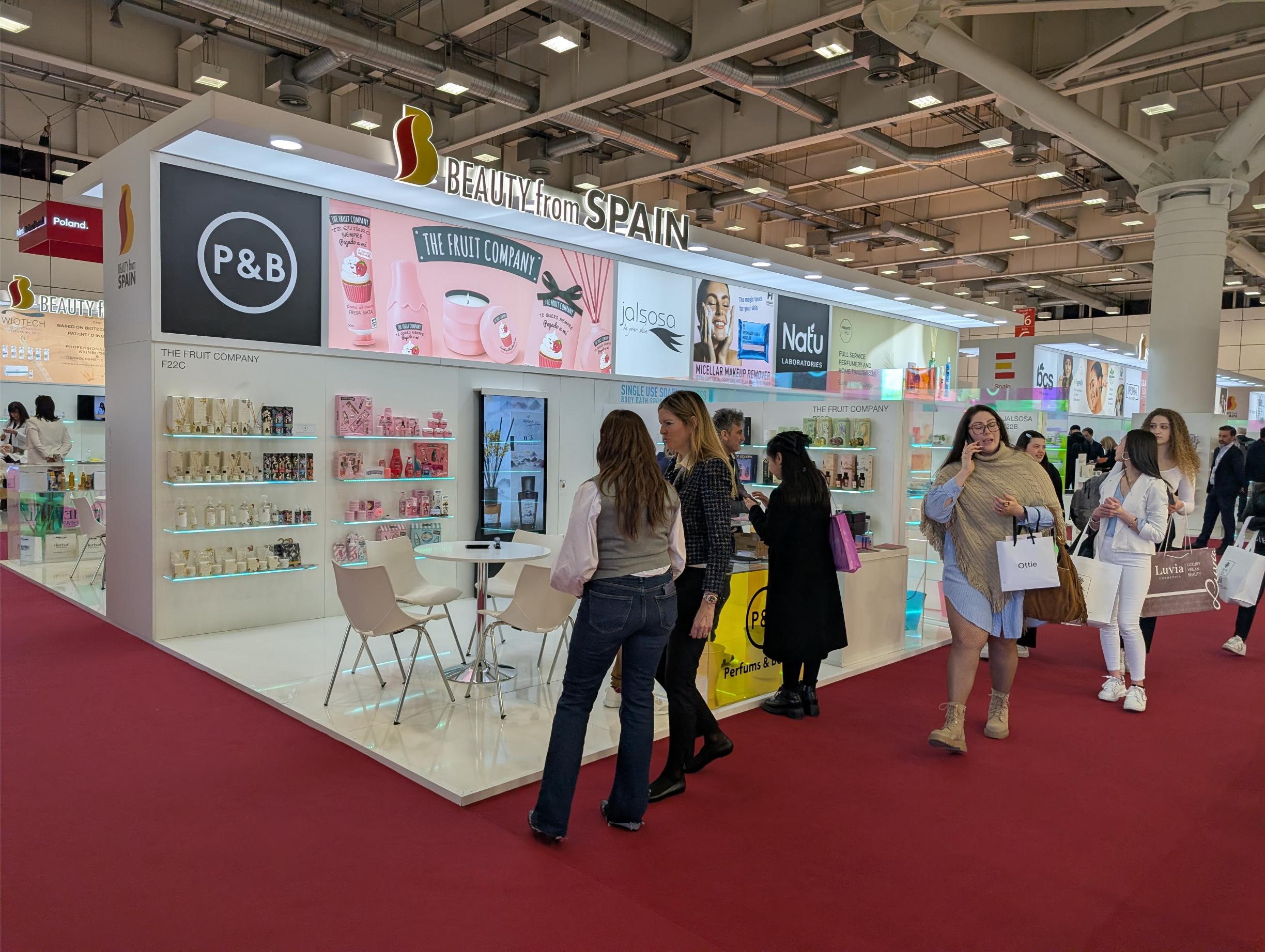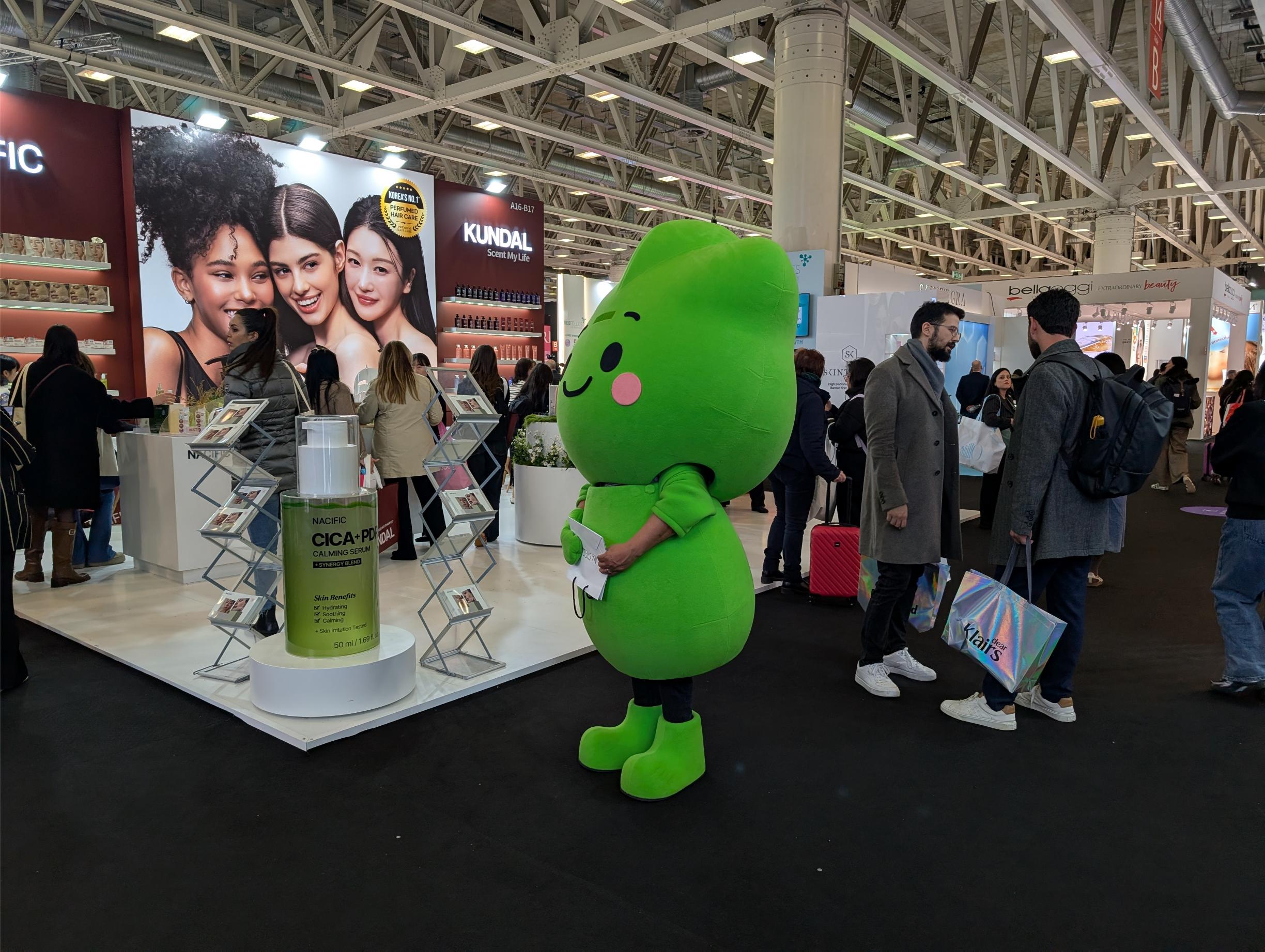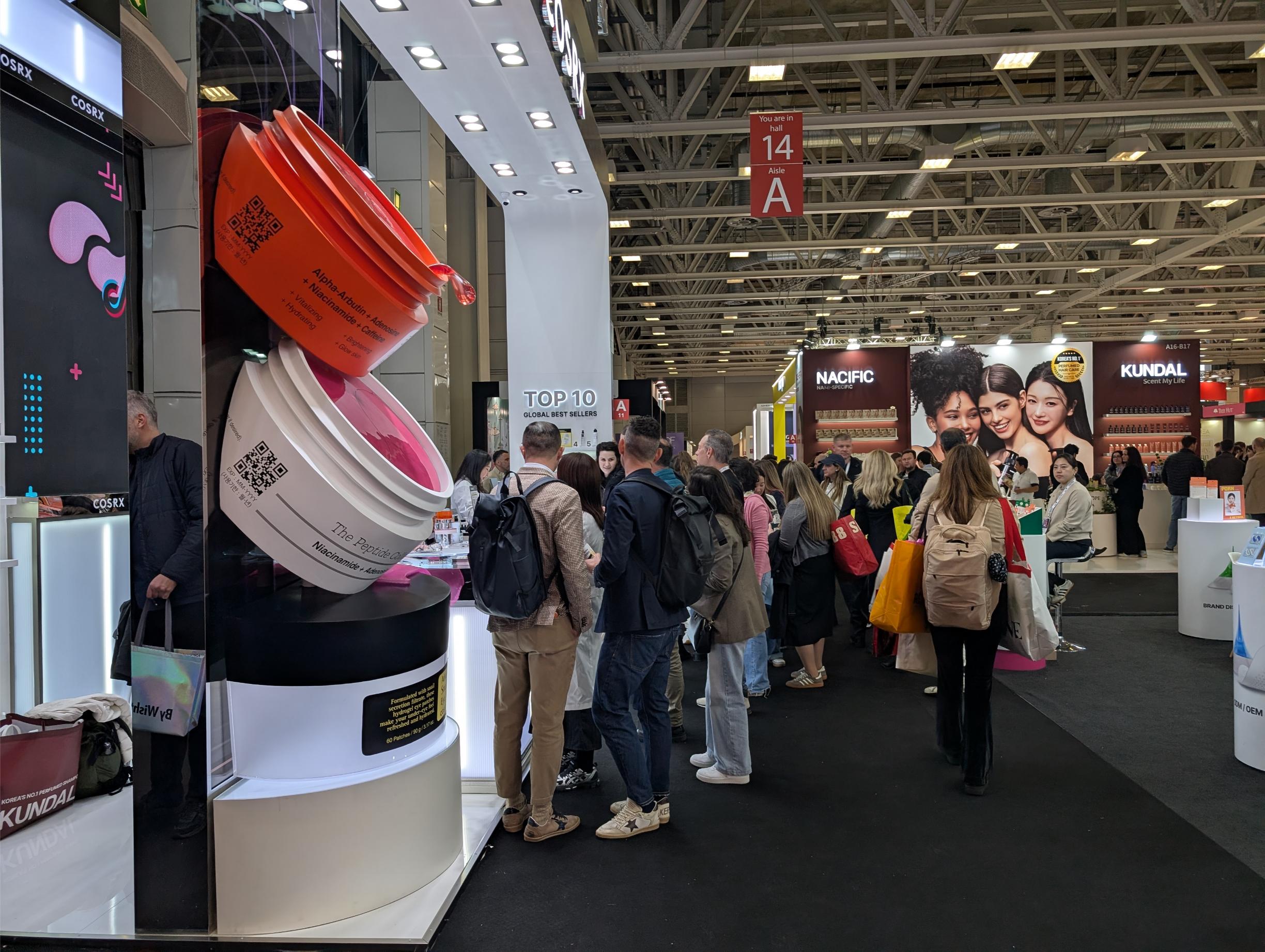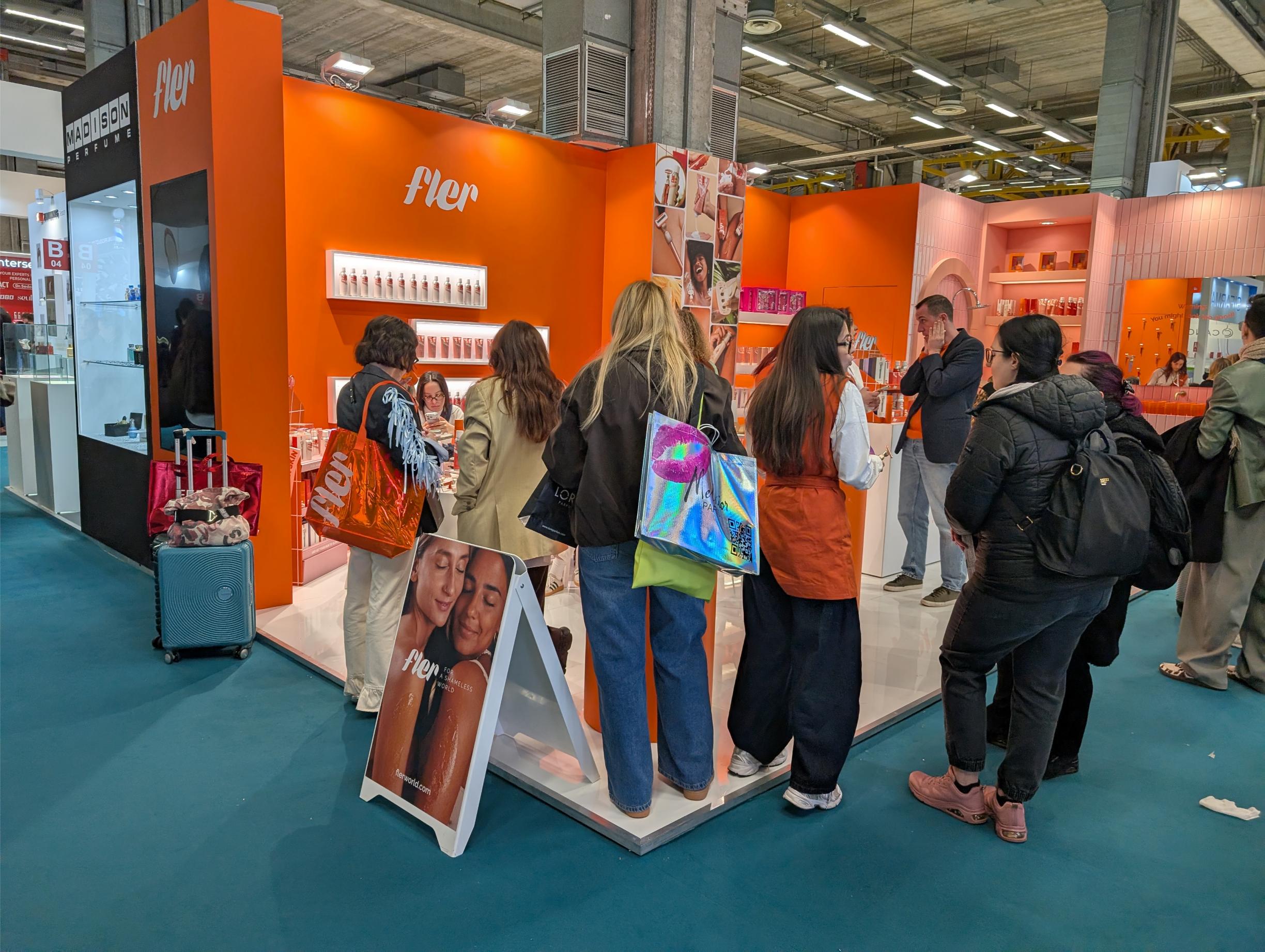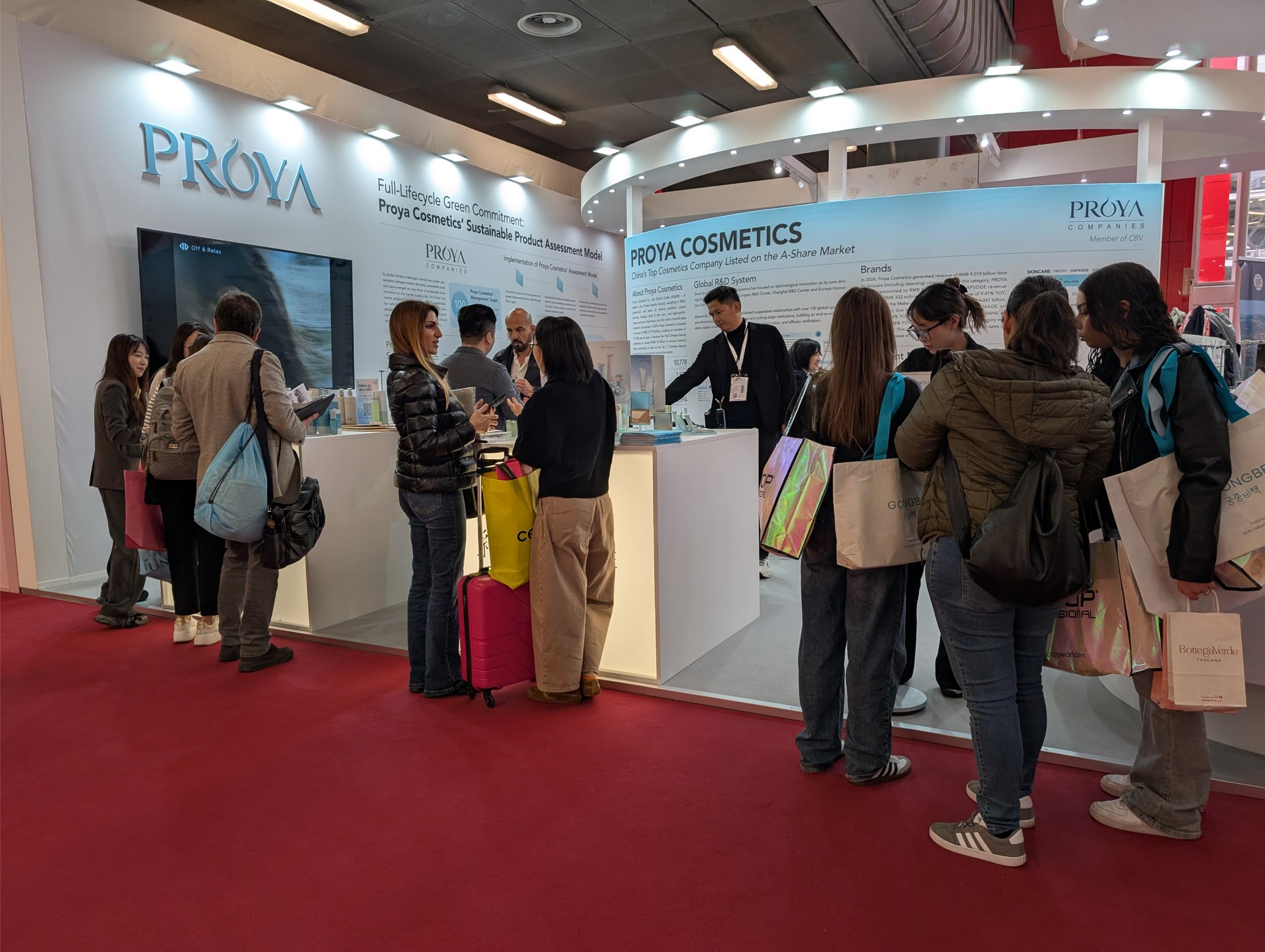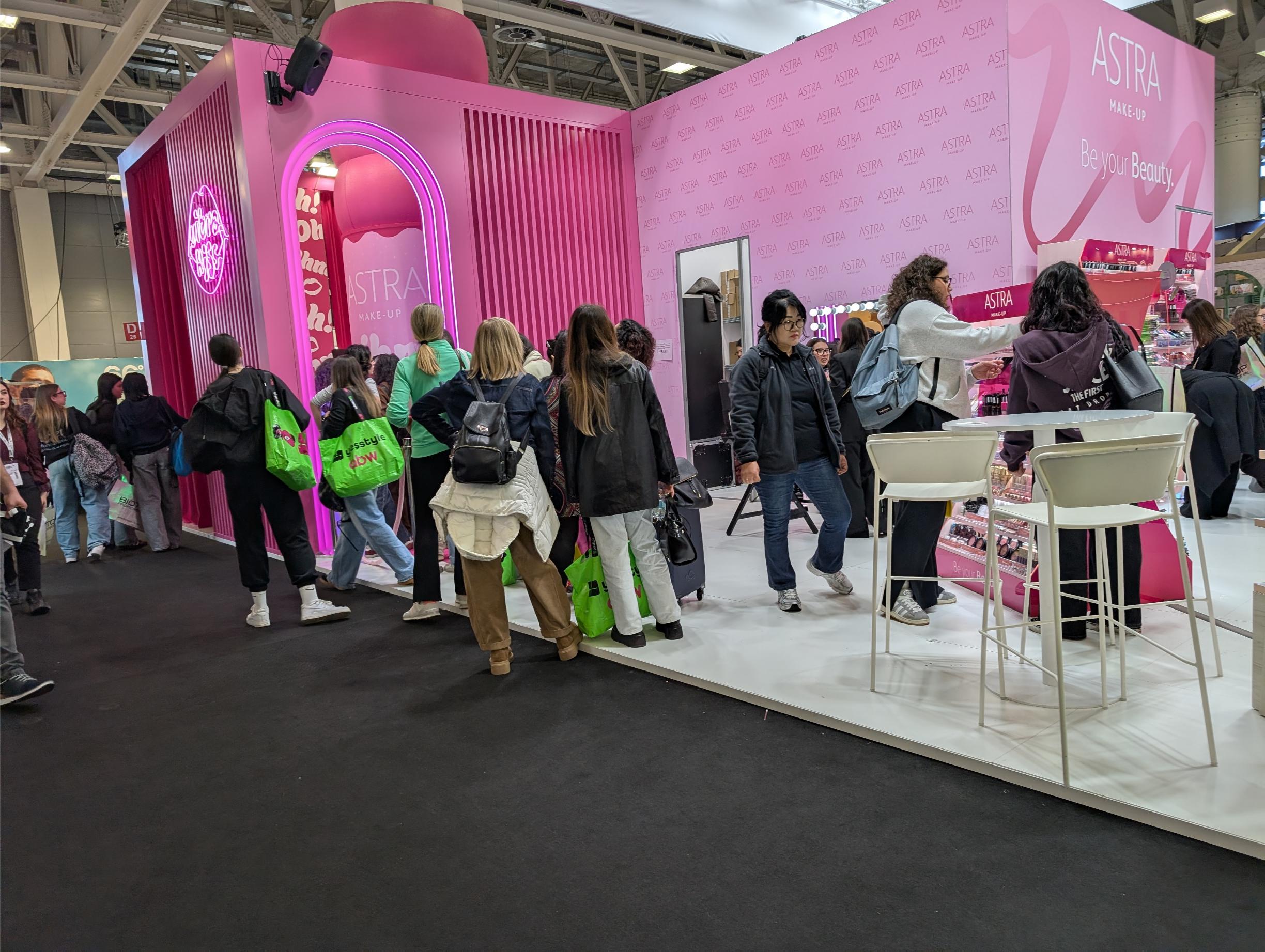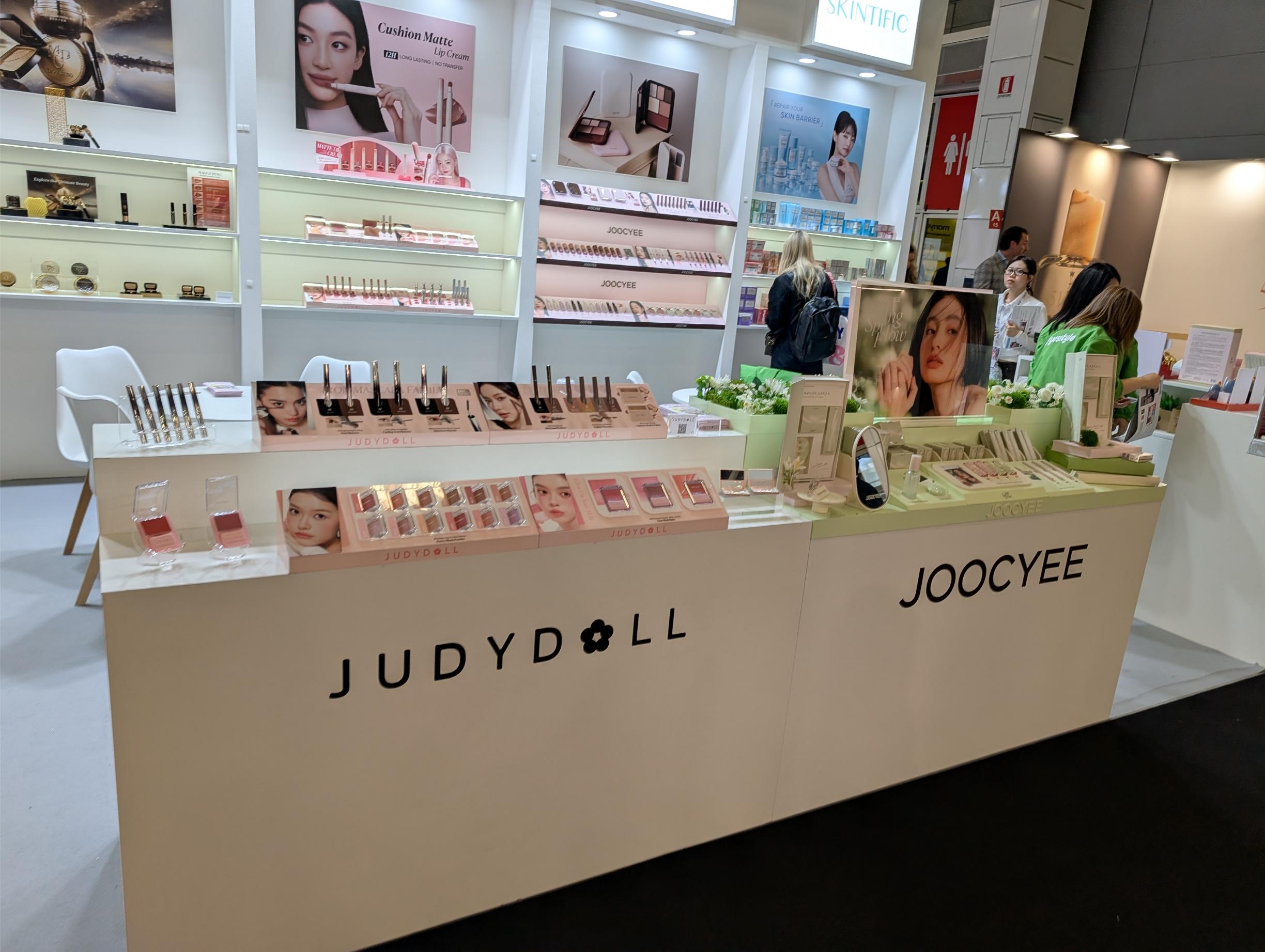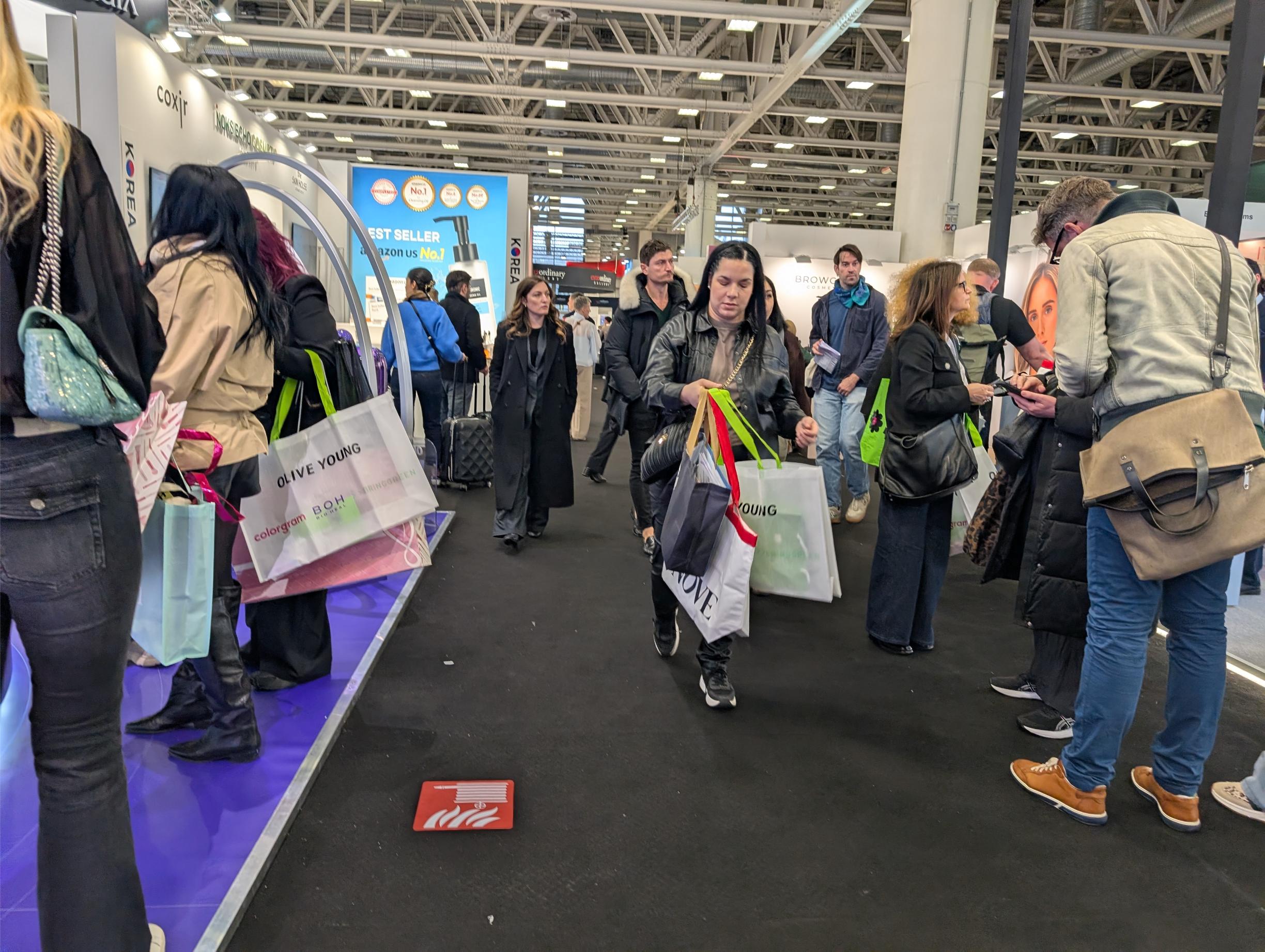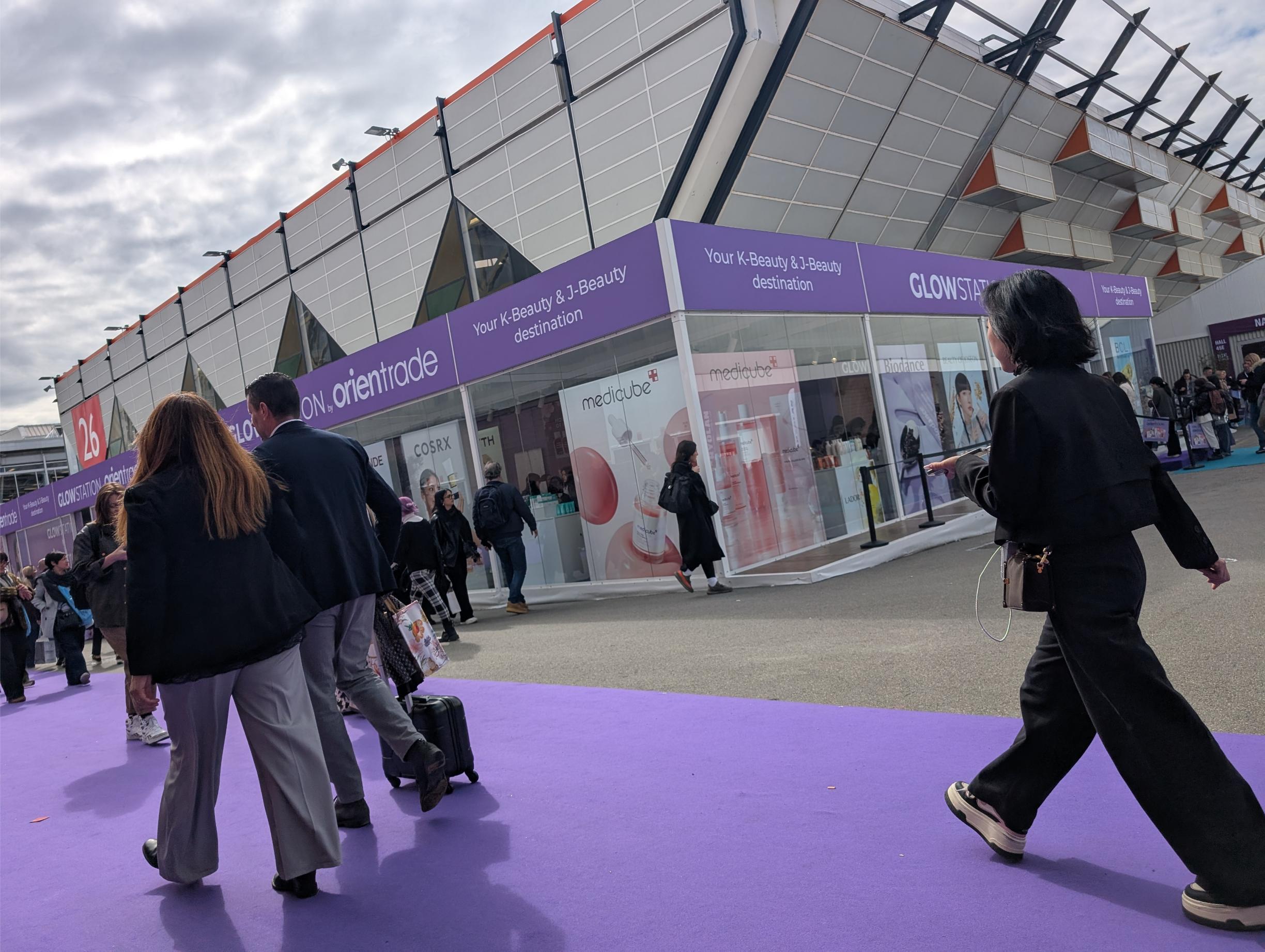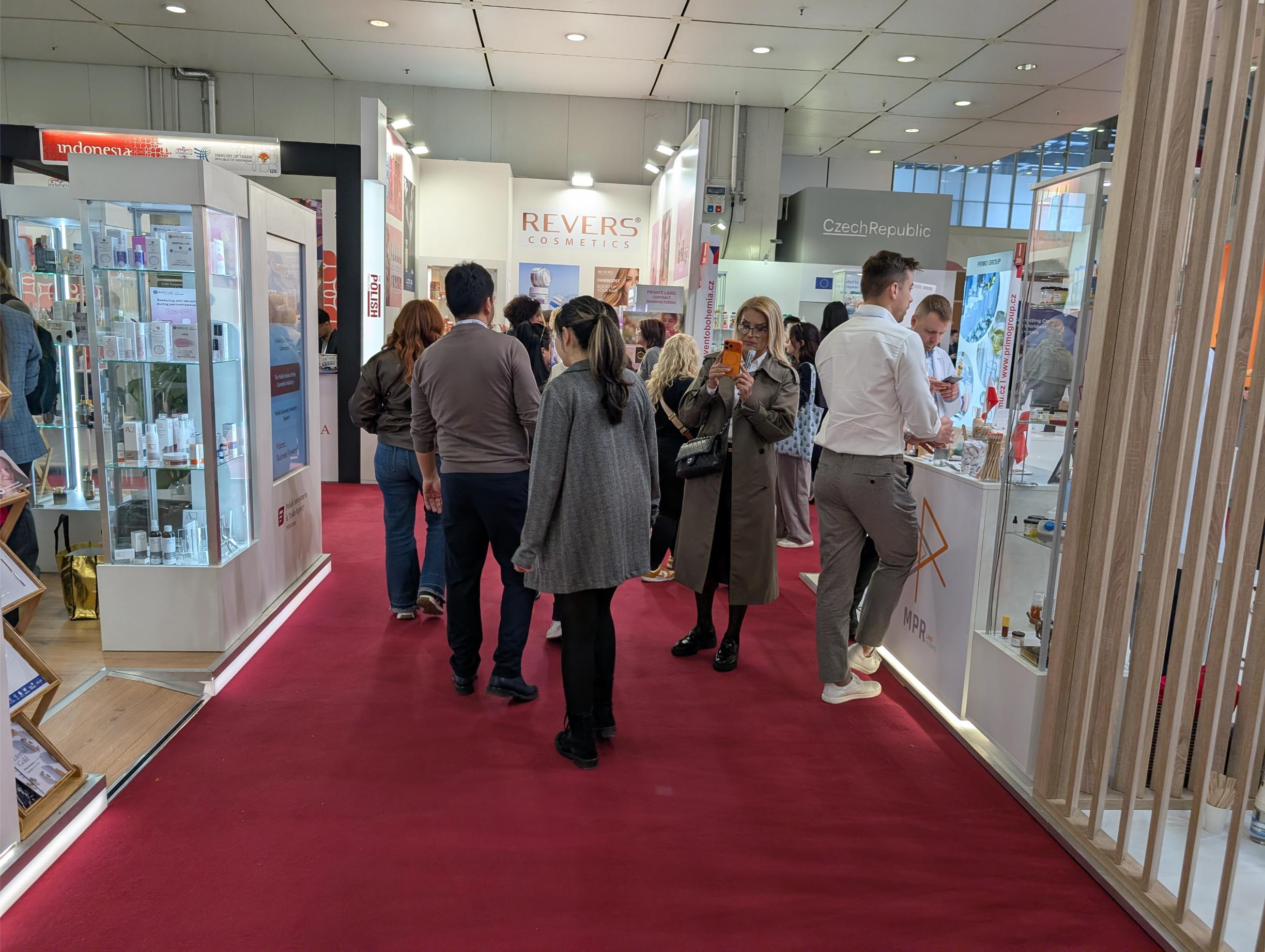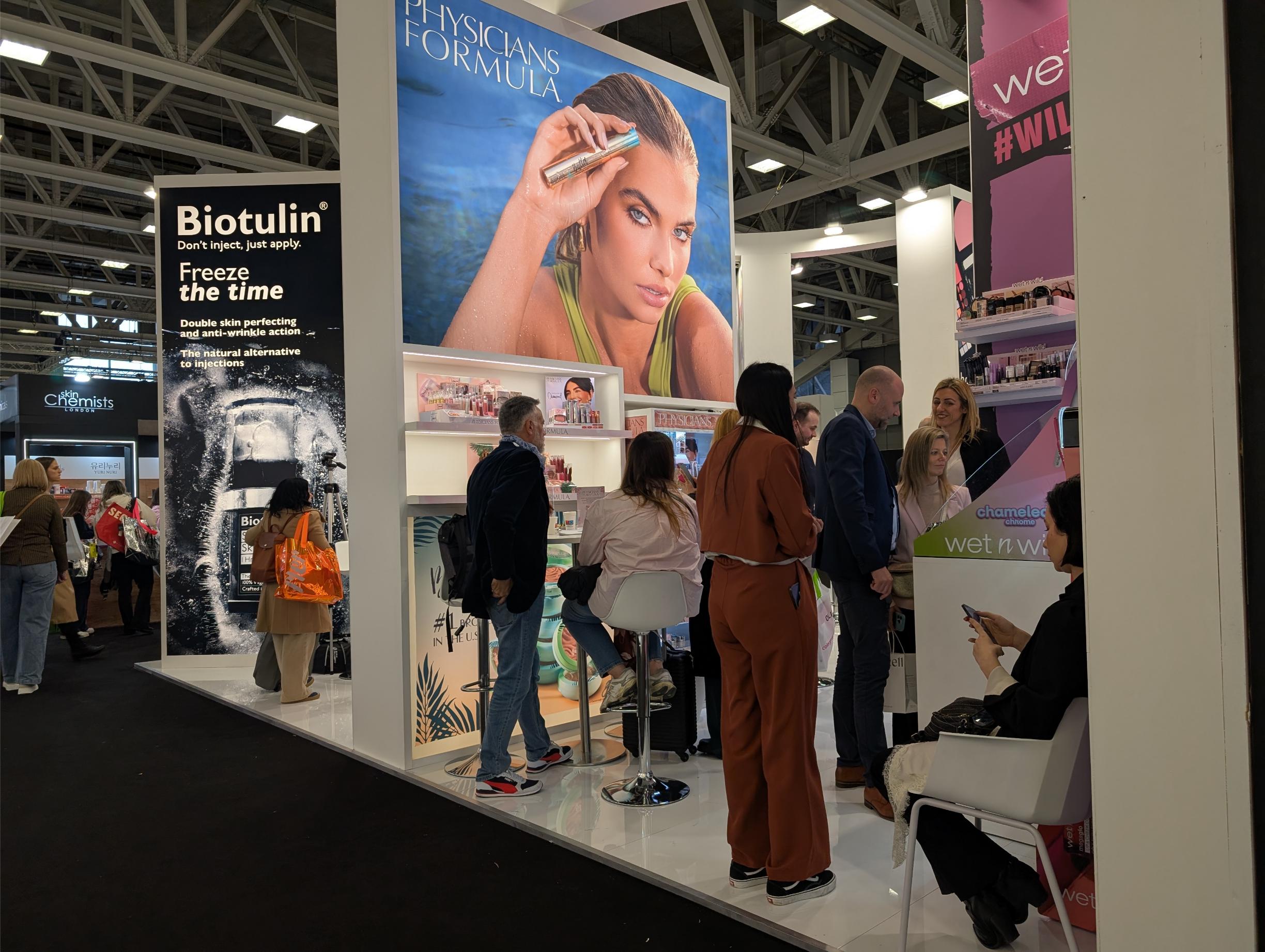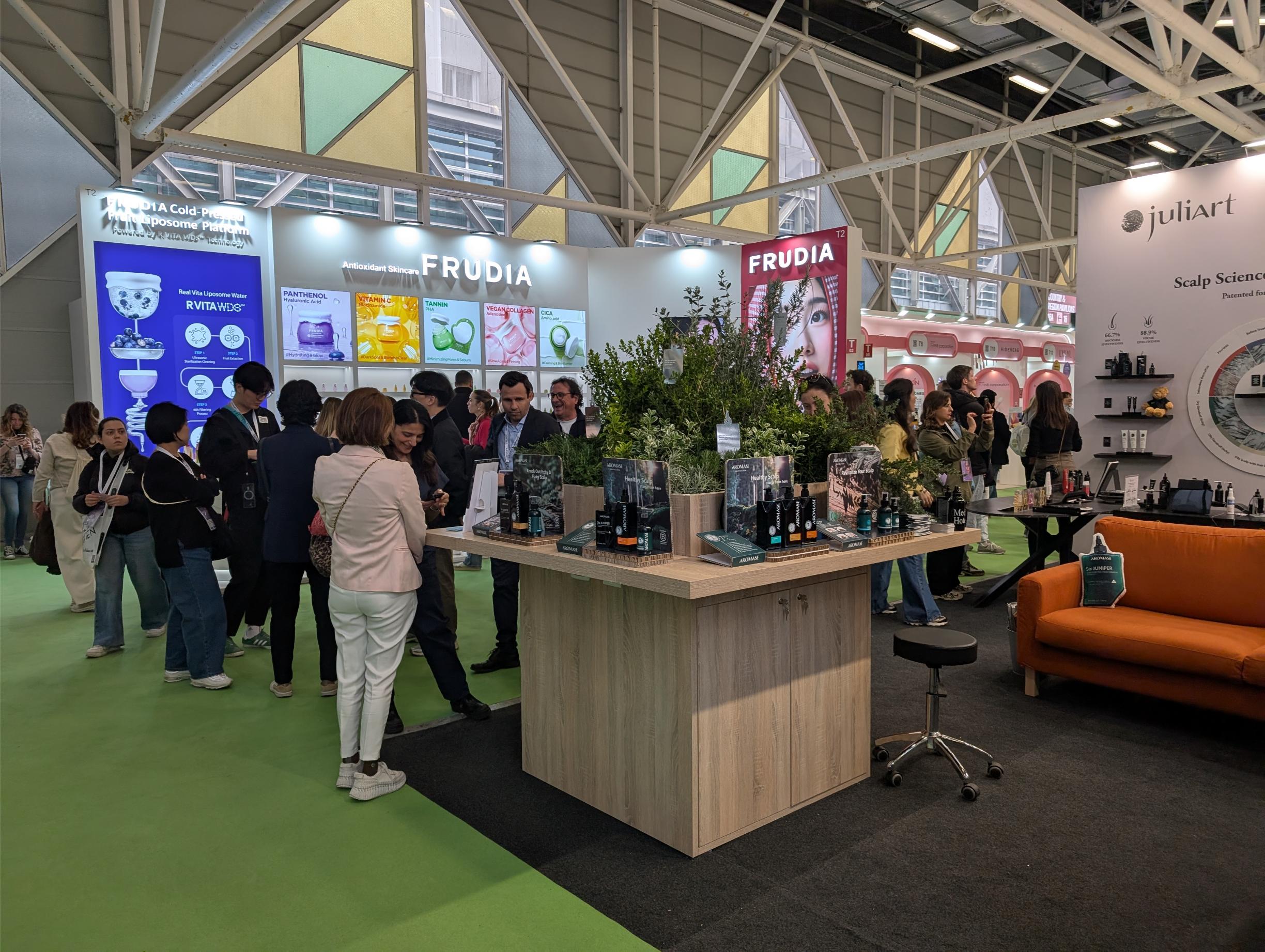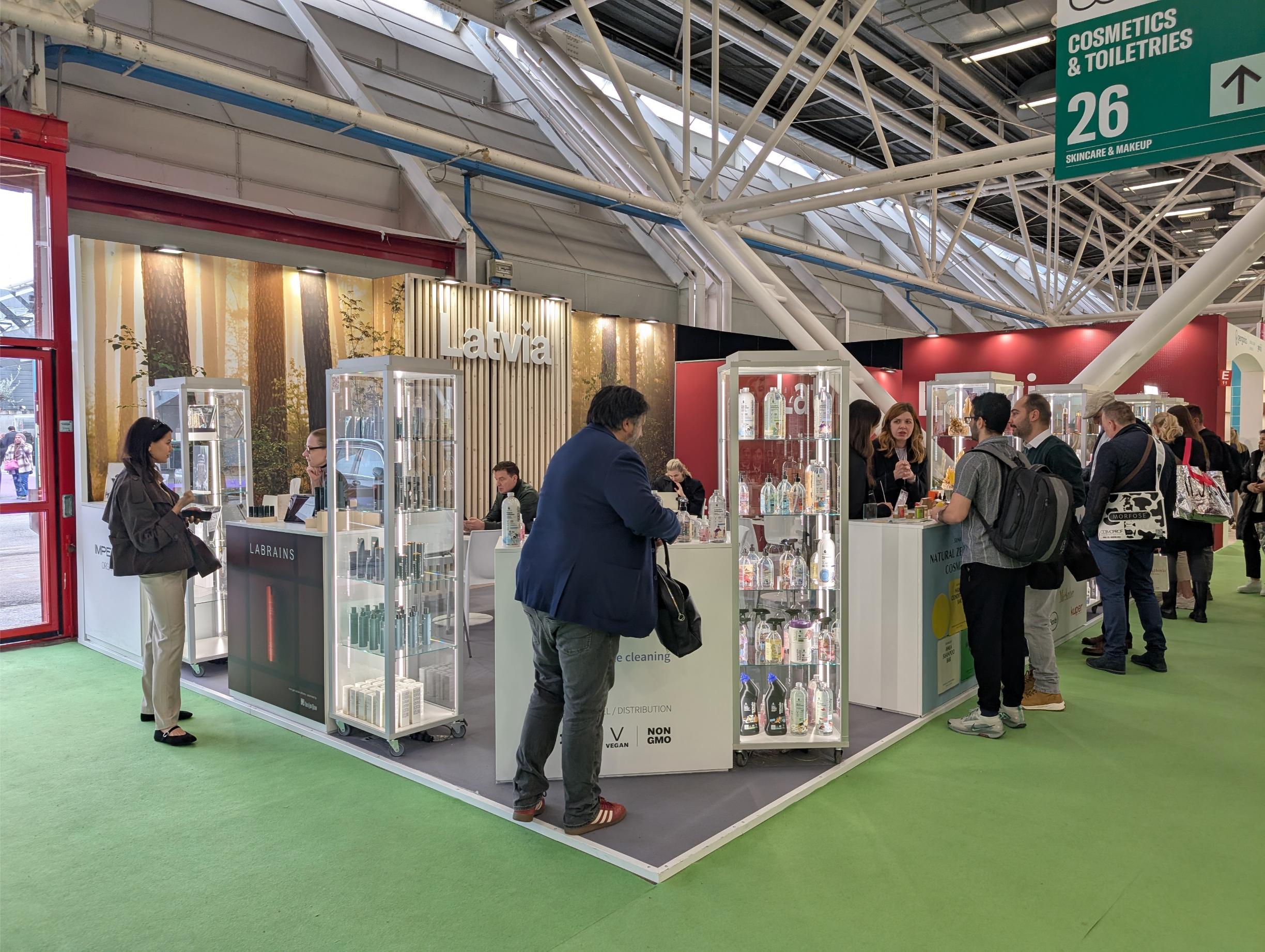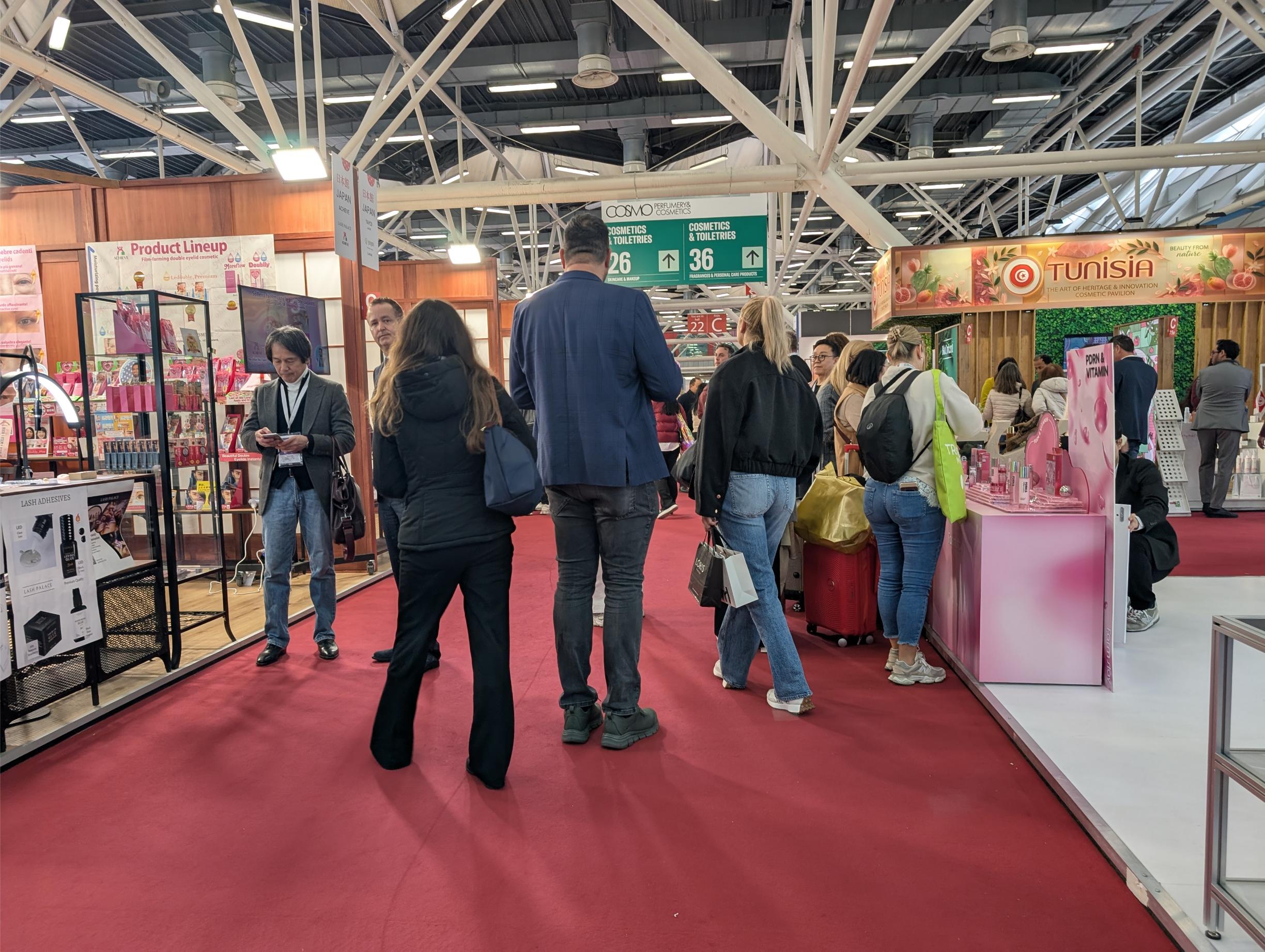
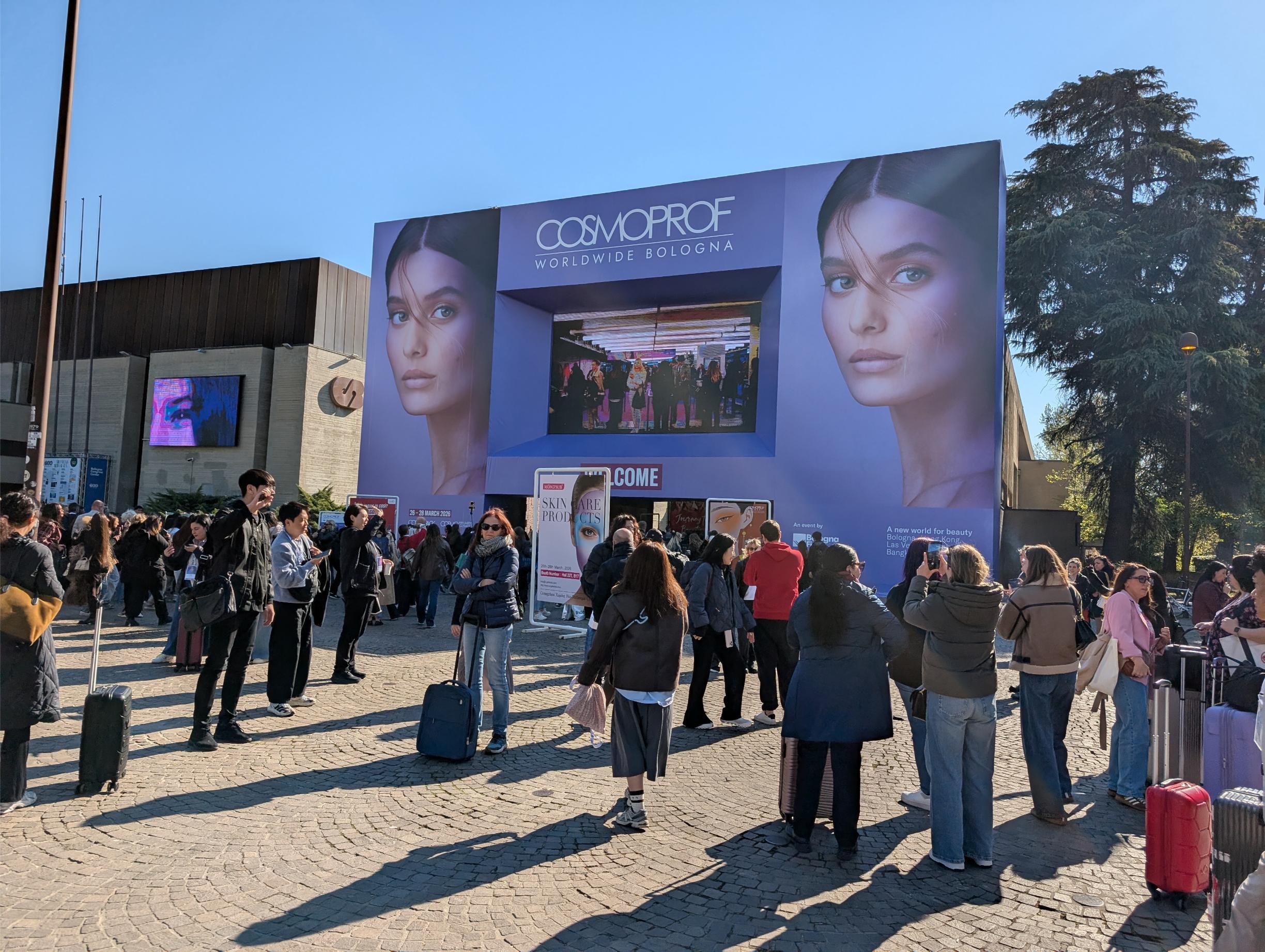
The 57th edition of Cosmoprof Bologna was a lot of fun, despite the rain that was bucketing down during the entire first day. The second day was still grey and cold, but on the third morning the sky was blue and it was finally sunny. See pic below!
Here are the key stats for this year’s fair: According to organisers Bologna Fiere, 255.000+ visitors and 3.100+ exhibitors across all three areas of the fair (Cosmoprof: finished beauty; Cosmopack: packaging, supply chain, OEM/ODM, Cosmo Hair, Nails & Salon: professional/salon beauty). The biggest show section was Cosmoprof, of course, with around 1.300 exhibitors from 56 countries. Cosmo Salon followed with 1.000+ exhibitors from 50 countries and Cosmopack with 600+ exhibitors from 37 countries. Cosmoprof and Cosmopack ran from 26th to 28th March, Cosmo Salon from 26th to 29th March.
I found a rough breakdown of exhibitors by geographic region, with 44% of all exhibitors listed as coming from outside of the EU; the rest were European exhibitors with host country Italy especially strongly represented (20% of all exhibitors). It was also encouraging to see the number of first-time exhibitors grow 37%, and there were 32 country pavillions this year.
If you’re interested in seeing how the trade show has changed over the past decade click here: Cosmoprof Bologna 2016, Cosmoprof Bologna 2017, Cosmoprof Bologna 2018, Cosmoprof Bologna 2019, Cosmoprof Bologna 2022, Cosmoprof Bologna 2023, Cosmoprof Bologna 2024 and Cosmoprof Bologna 2025.
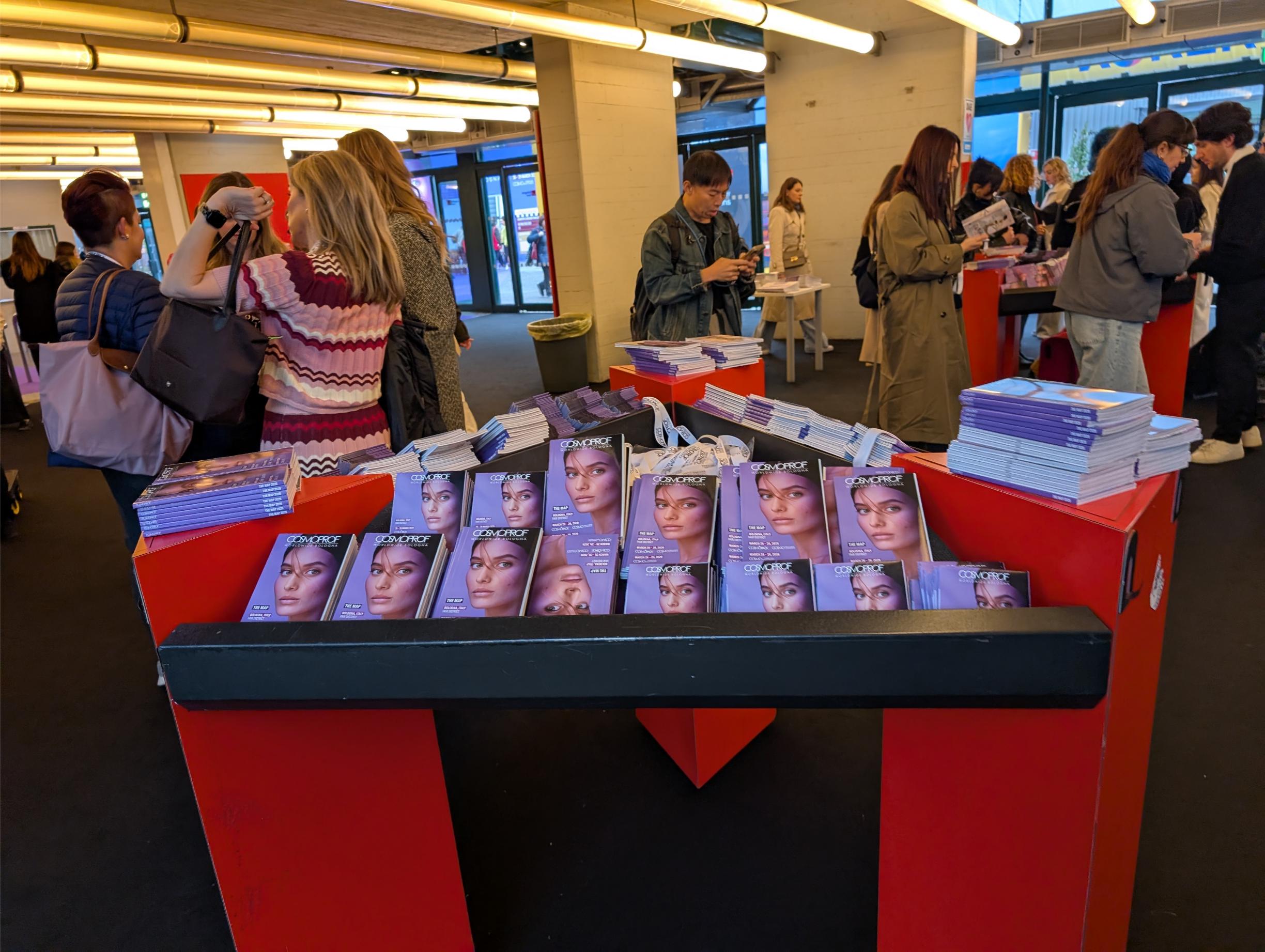
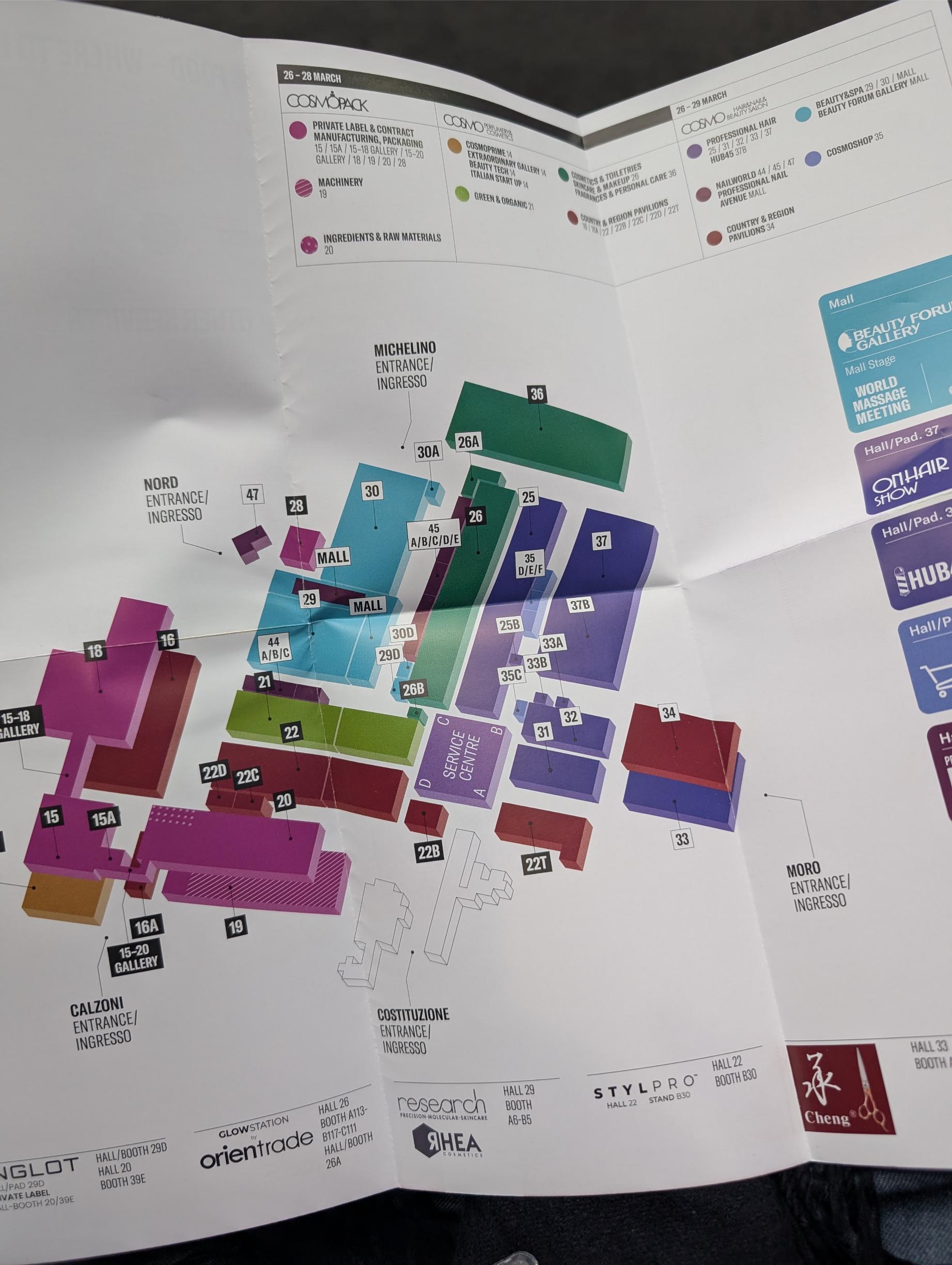
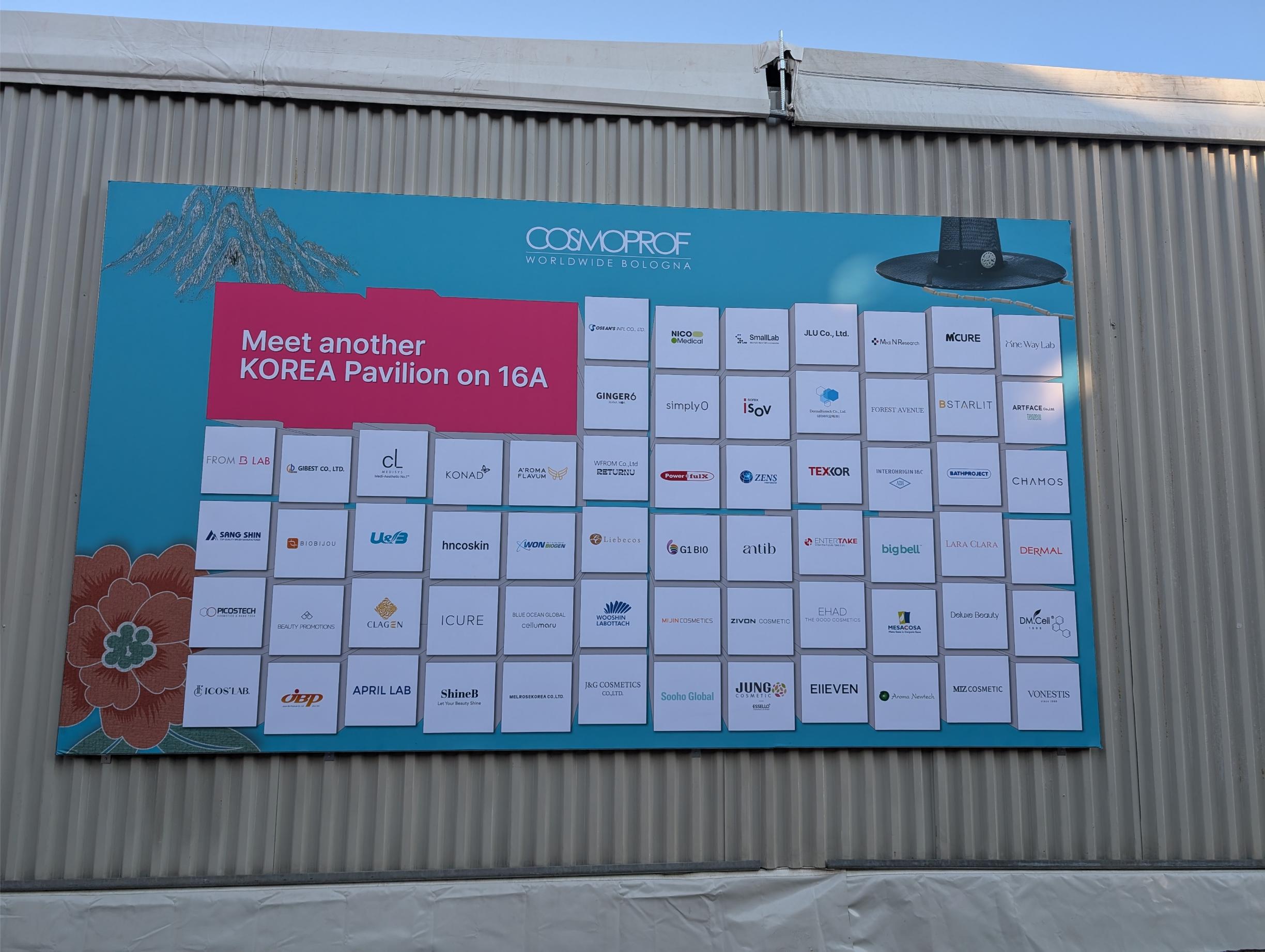
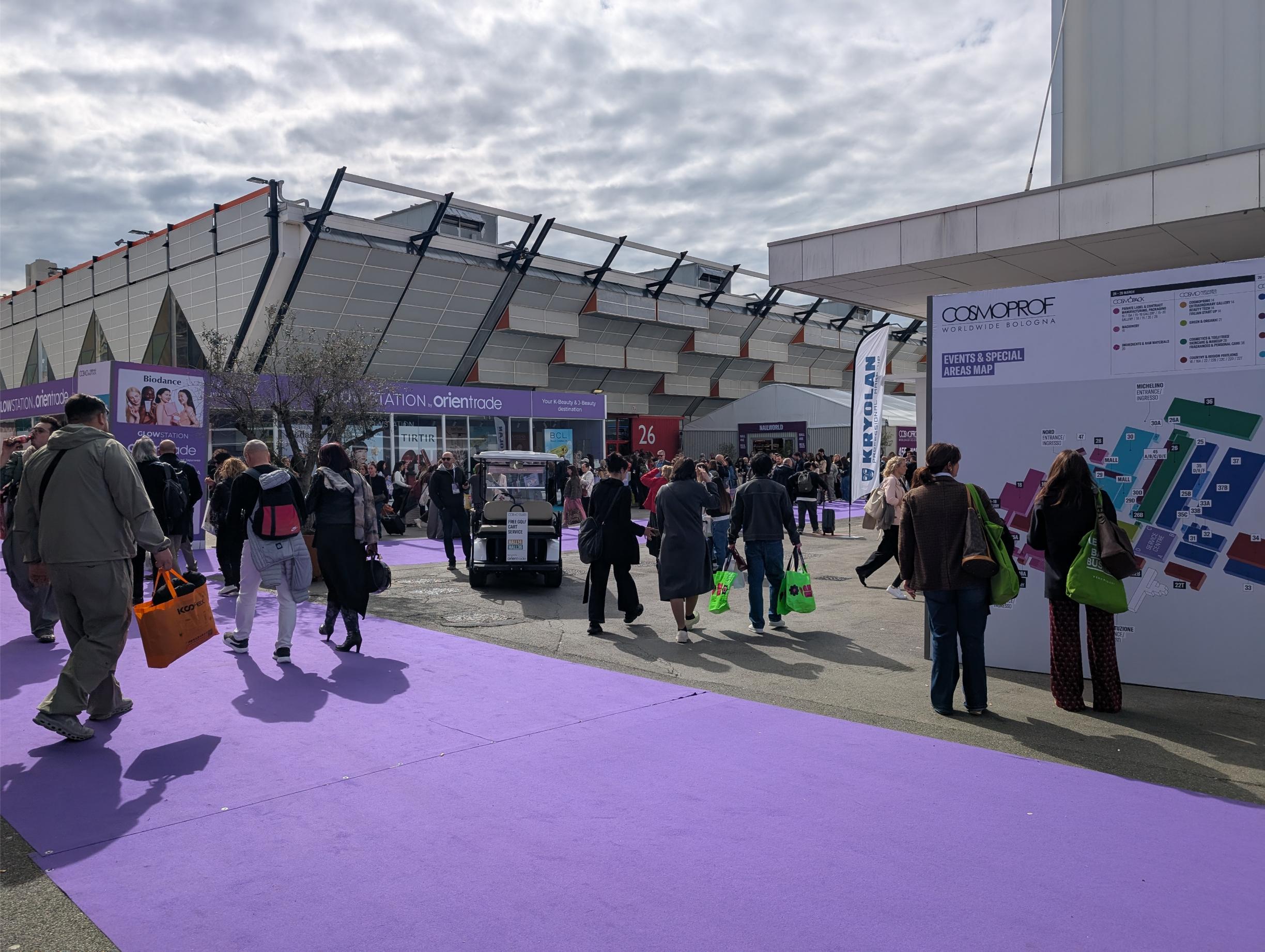
Since my focus is finished/retail beauty I divided up my time at Cosmoprof Bologna as I usually do: The first day is always spent in the Cosmoprime hall for newcomer/emerging brands, indie beauty and beauty trends. On the second day I check out the Green Hall (natural and organic) plus the country pavillion halls, especially France and Spain (which are always present with striking looking booth design and strong visuals. The German pavillion looked plain and boring in comparison, as usual).
In terms of country pavillions I also enjoy visiting the Nordic and Baltic communal pavillions, as well as those of the smaller European and international countries. On the last day, which is usually dedicated to going back to my favourite exhibitors I’ve visited in the first two days (usually to get more information from specific brands or take additional pictures) I discovered two city-specific pavillions which I’ll talk about later in more detail: Budapest Select for Budapest-based beauty brands and Seoul Awards which was co-organised by the agency that also does the fabulous BtheB brand showcases in Seoul. More on this towards the end of this article!

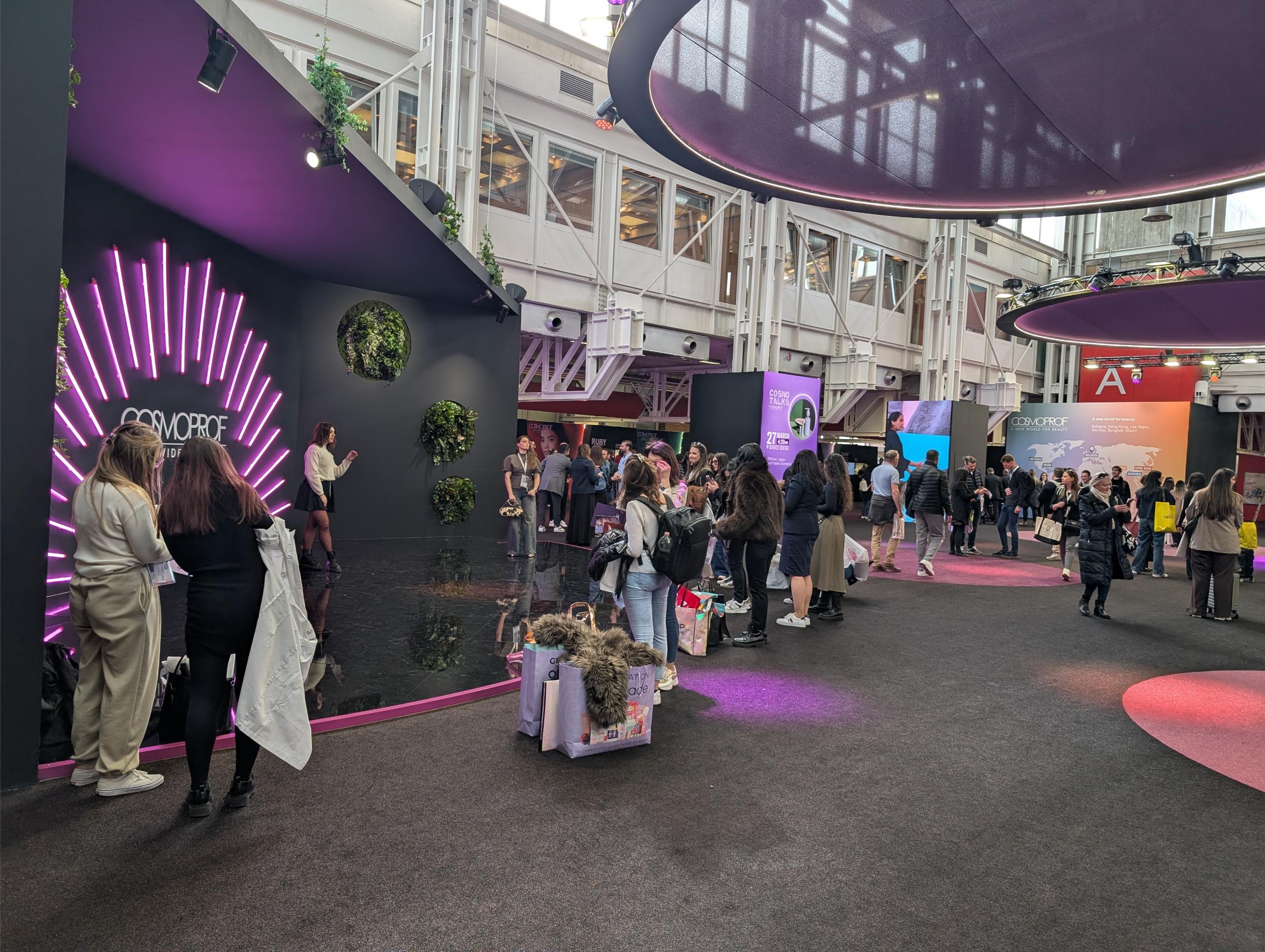
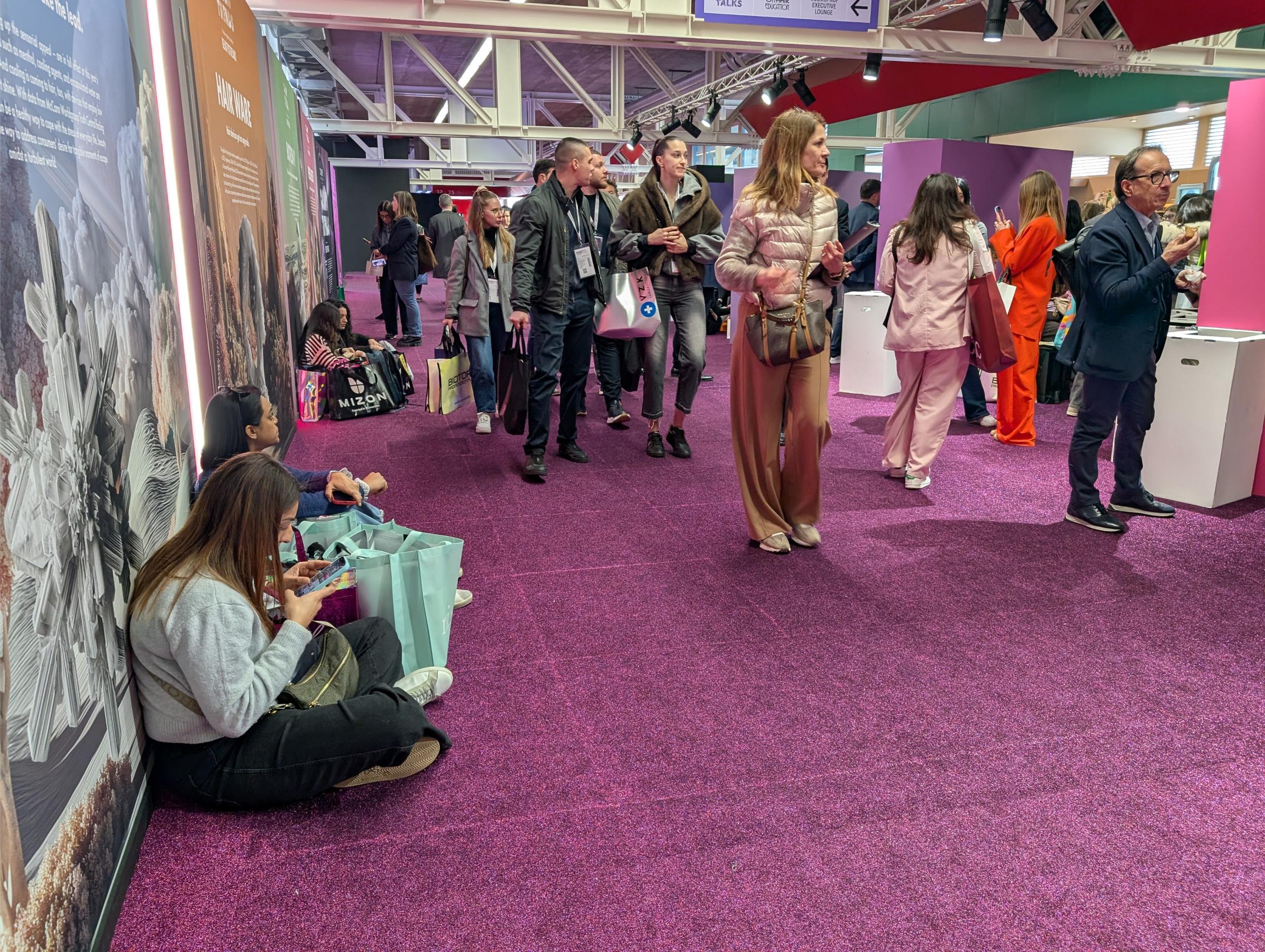
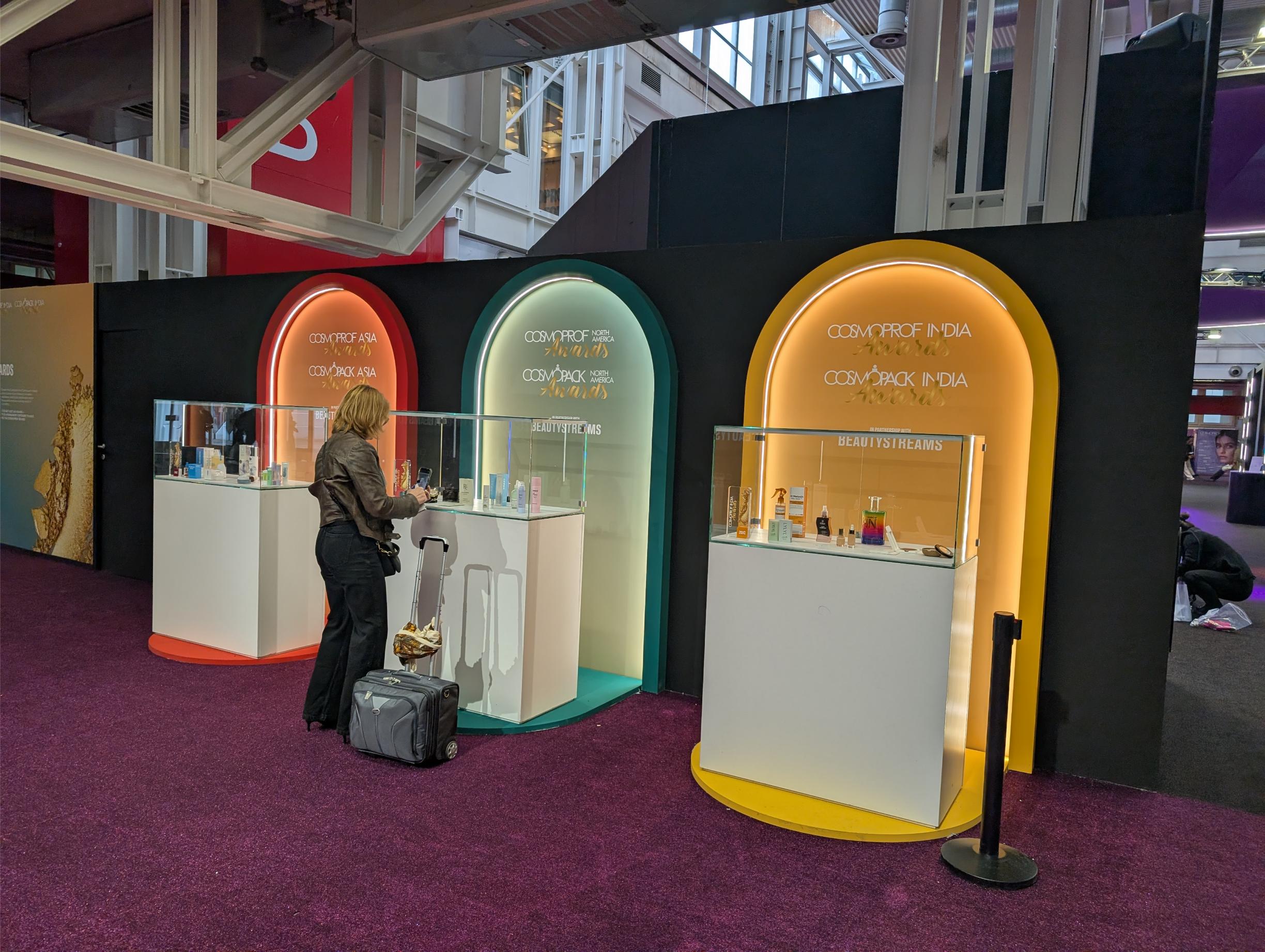
I didn’t notice any revolutionary new trends or types of brands this year, it was mostly more of the same. Having said that, the really big international shows like Bologna feature such a diversity of international indie and mainstream brands that I find it difficult to highlight specific trends other than the usual global beauty drivers: active and functional ingredients, clean beauty, vegan and natural; high-performance face care products, the skinification of body and hair care; that sort of thing.
In a way, it is much easier to identify trends at the regional B2B shows that I visit every year, like Cosme Tokyo for the Japanese market, Cosmobeauty Seoul for the Korean market, Cosmoprof ASEAN for Thailand and so on. The influence of Korean beauty and ingredients was, of course, obvious in the majority of new launches from non-Asian brands. I was particularly interested to see that the PDRN and exosome trend has now trickled down to even the most indie of European natural brands.
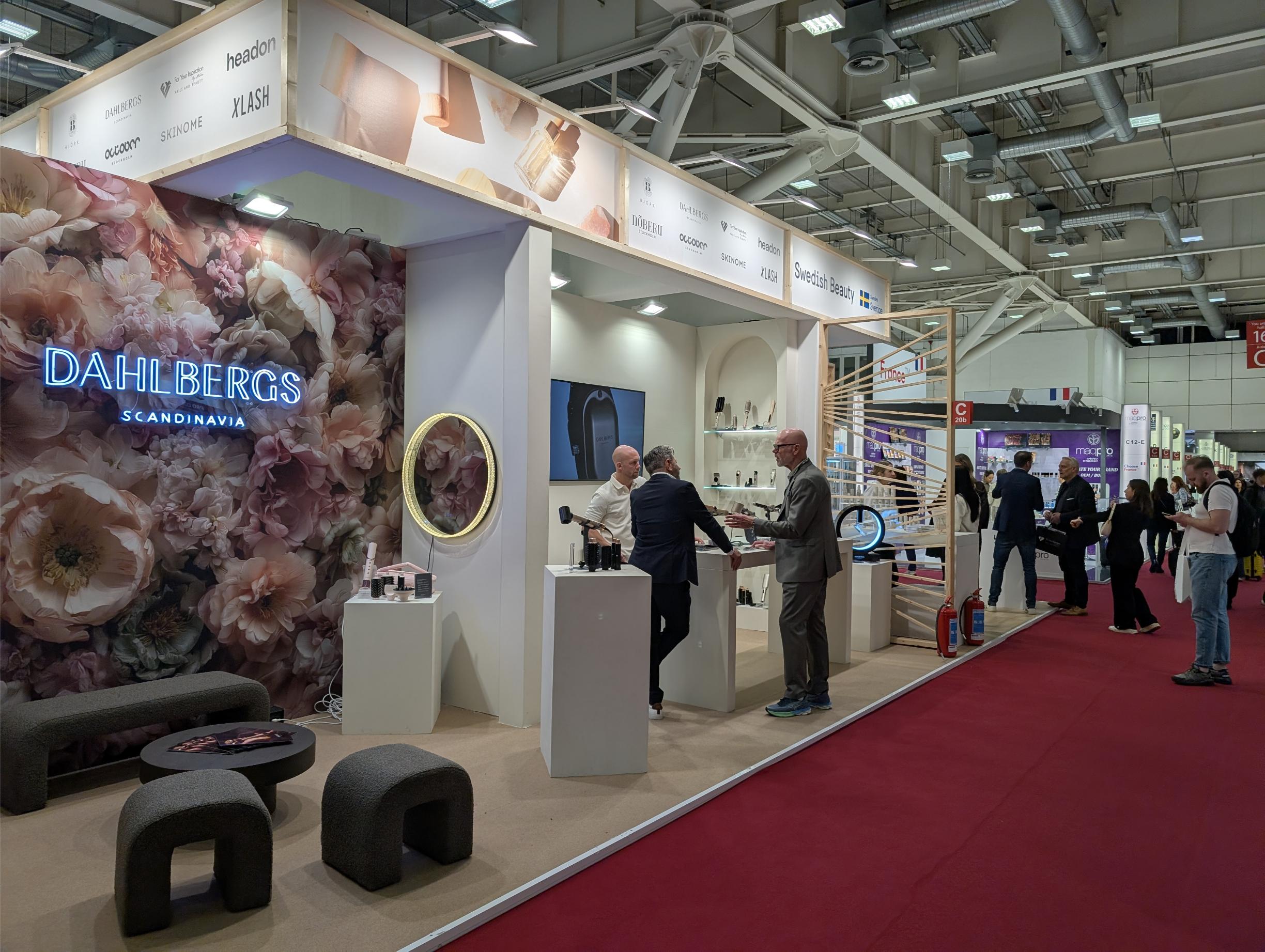
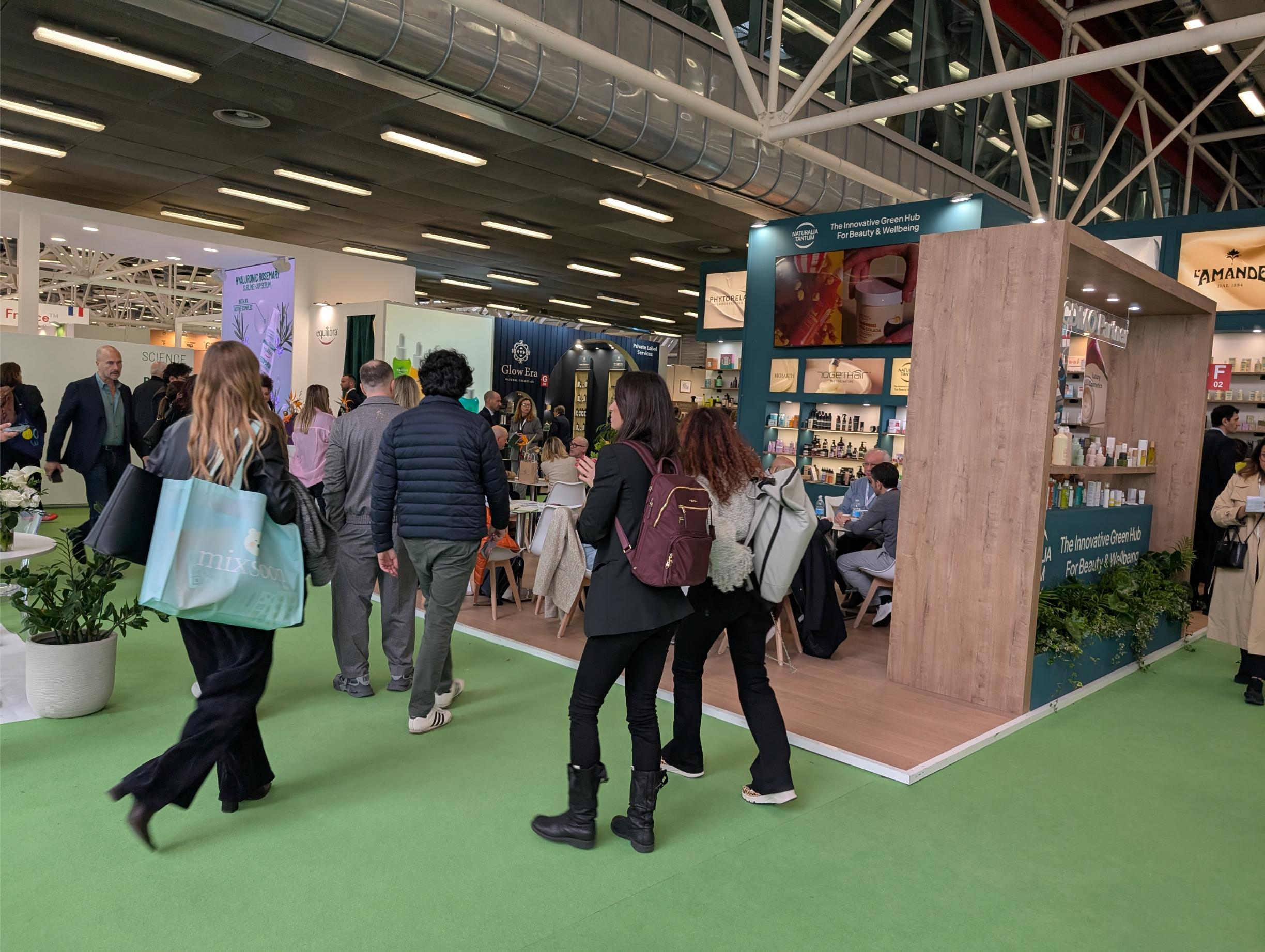
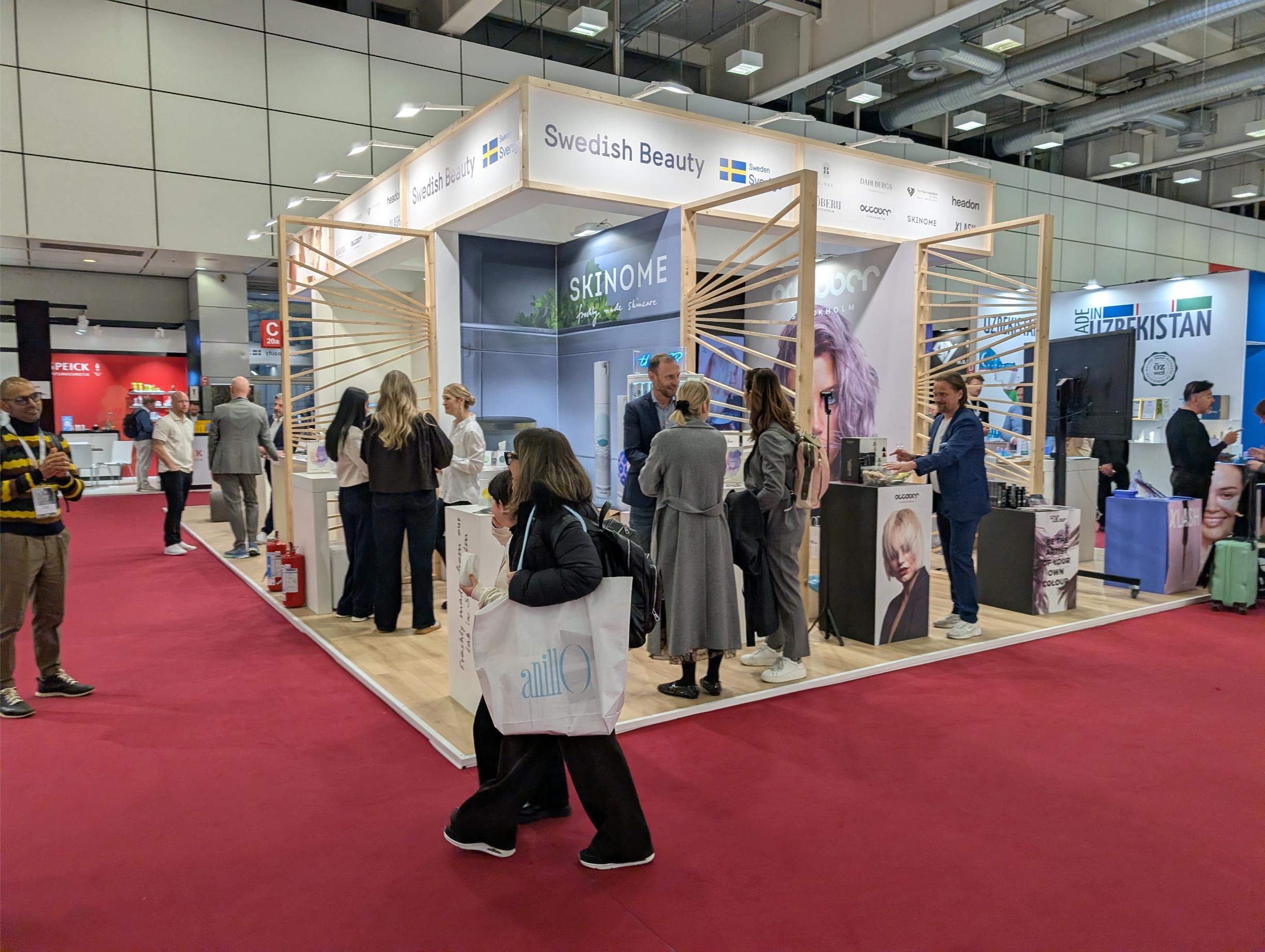
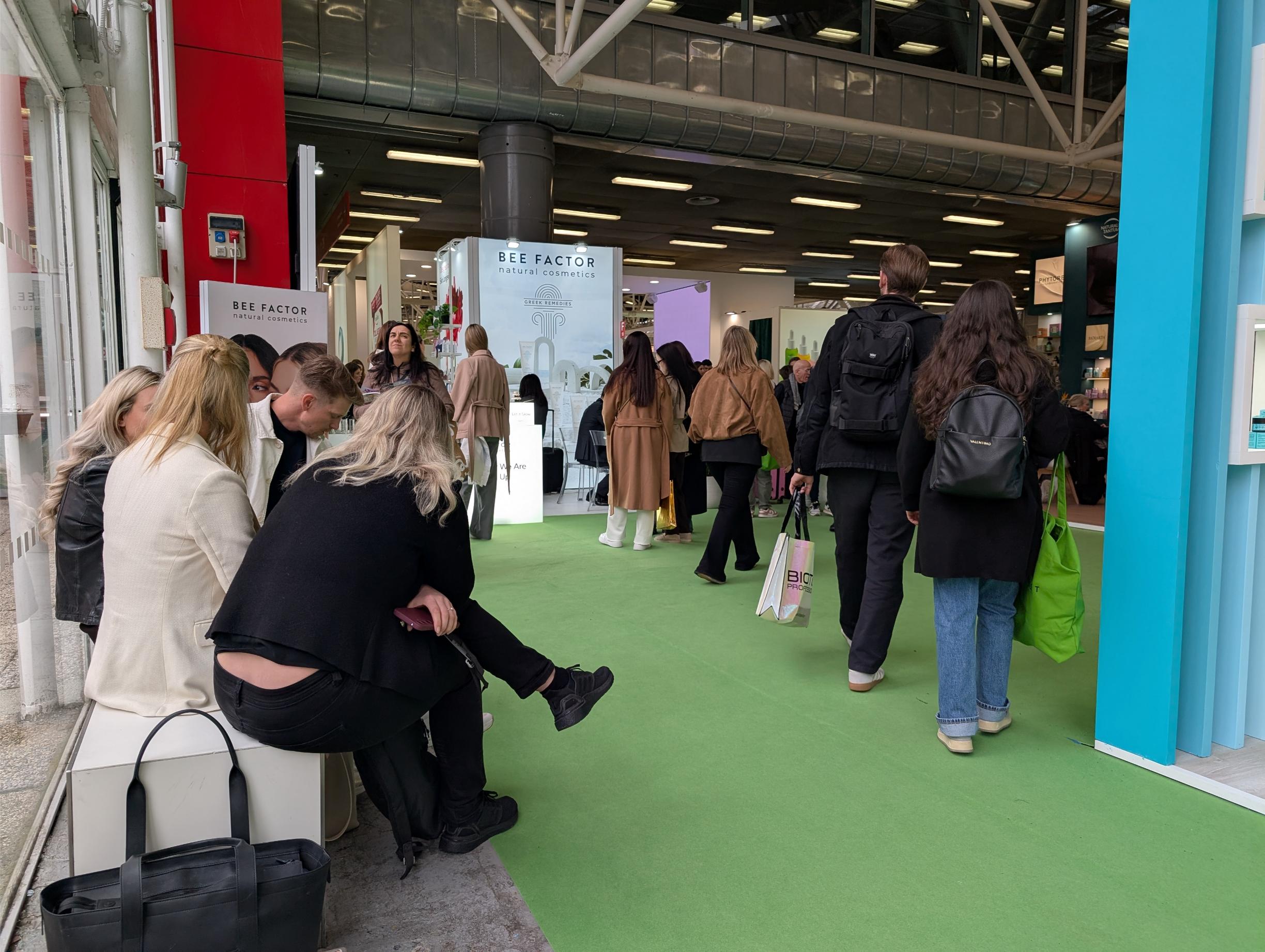
Ok, after this very long introductory paragraph let’s dive into some of my favourite brand discoveries at Cosmoprof Bologna 2026! As usual, brands are listed in no particular order although I grouped them according to hall this year.
COSMOPROF BOLOGNA 2026: COSMOPRIME BRANDS
UPCIRCLE BEAUTY (UK)
Such a treat to see this UK upcycling brand again. I first met Upcircle Beauty at Cosmoprime in 2019 (I just went through my Bologna articles on #trendtravellerblog and yes, it was 2019; they were still a fairly young brand back then). At the 2019 show, Upcircle Beauty had presented its 9-sku range of bath and body care formulated with upcycled coffee grounds collected from various London-based cafés.
Since then the brand has expanded and updated its portfolio; the coffee grounds-based products are still part of the core range but the line-up has been extended with face care, hair care and scalp care and even some fragrances.
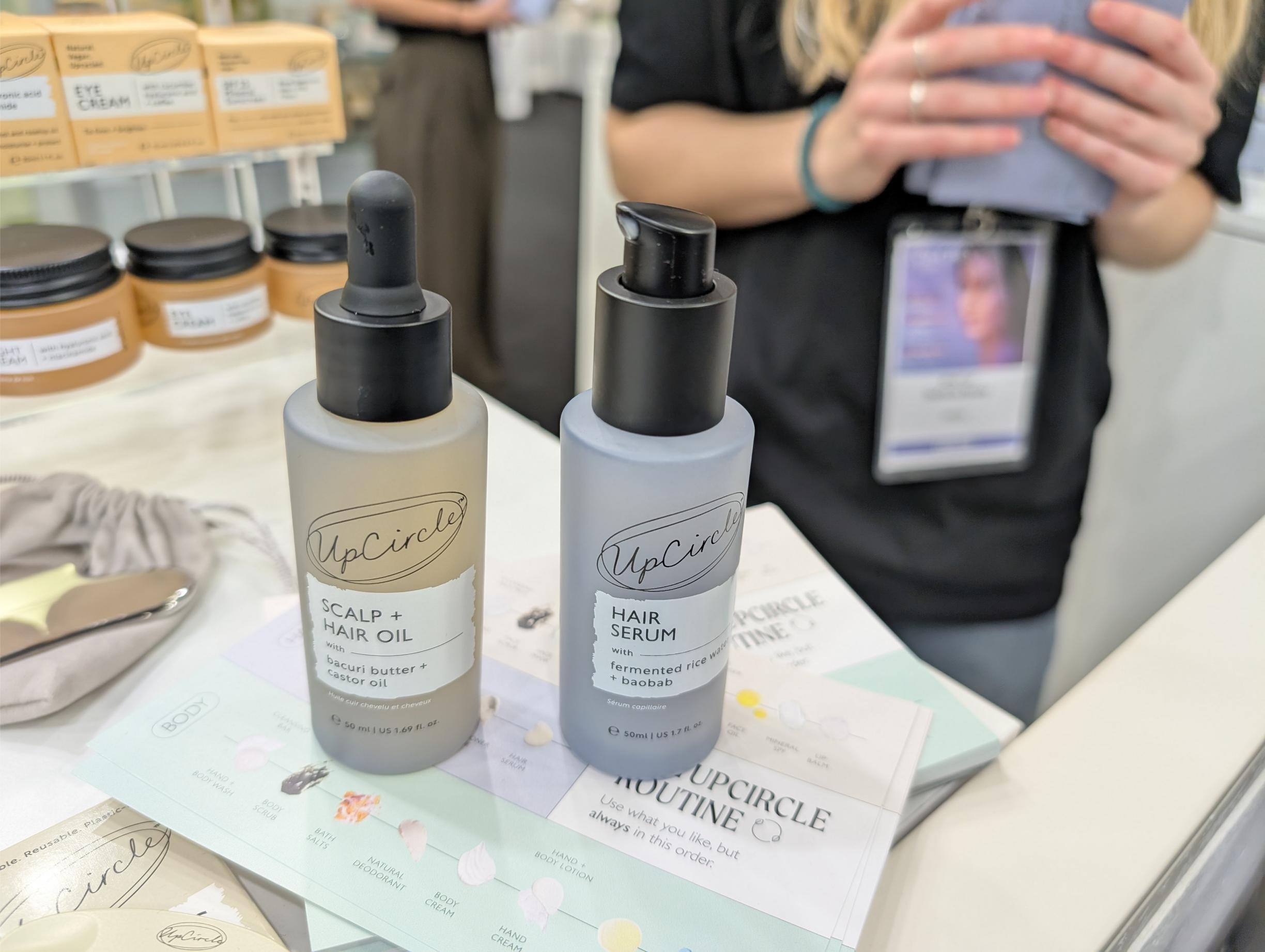
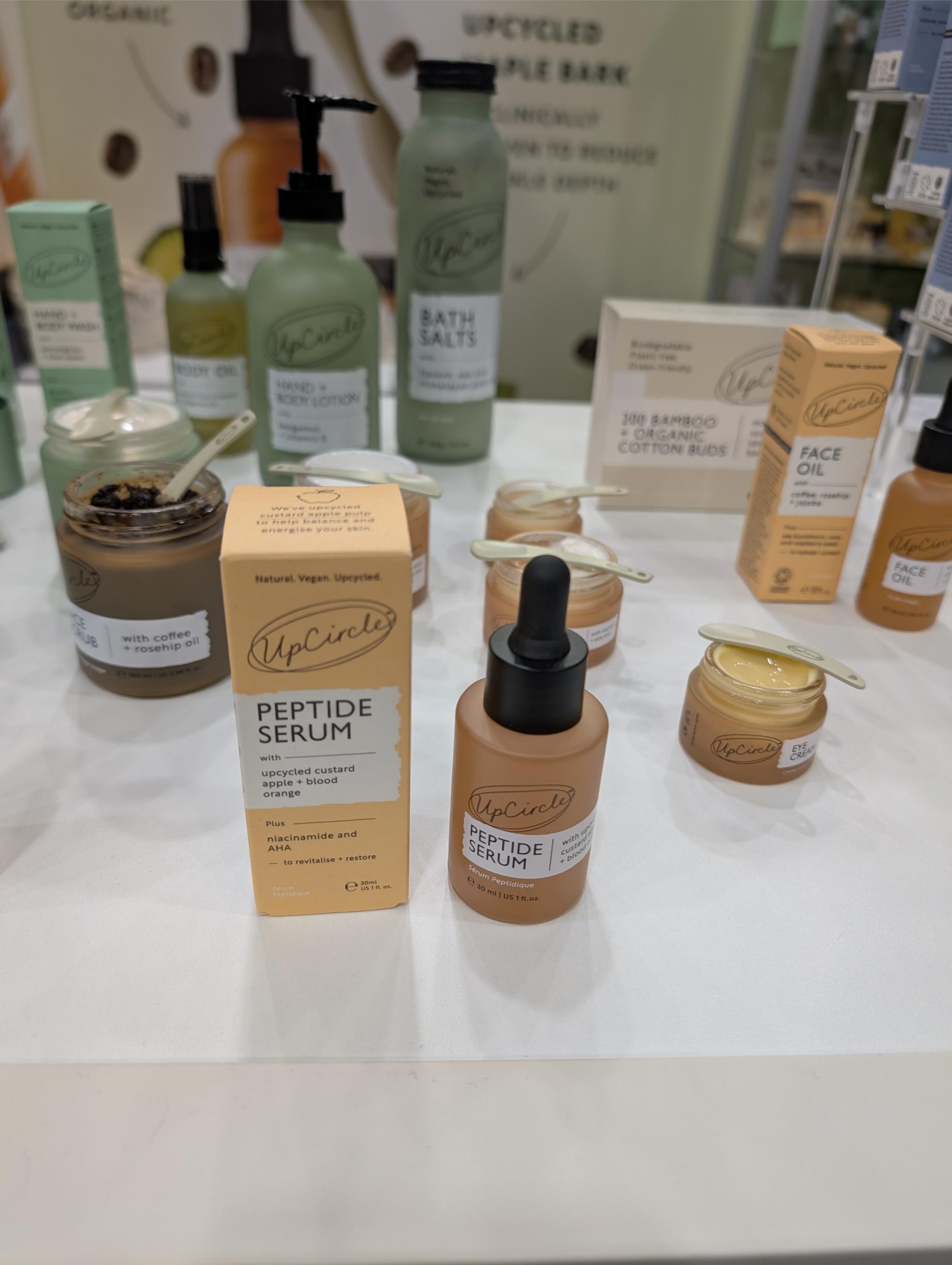
Amongst Upcircle Beauty’s most recent launches were the hair serum and hair & scalp oil which were introduced in October 2025; the hair serum in particular has a lovely and very light-weight texture, designed to condition the lengths and ends of the hair without weighing it down. The scalp oil is an intensive treatment for scalp and roots. The face care range was expanded with a silky Peptide Serum which leaves the skin smooth but not sticky – I received a sample bottle and really enjoy using it.
STANDARD BEAUTY (South Africa)
An interesting brand from South Africa. Standard Beauty launched in 2020 with a body care range, later the company added K-beauty inspired face care products to its product line-up. Standard Beauty’s domestic bestseller is the Glow Glaze Serum (think glass skin!) and in its home market the brand is sold online and in bricks‘ n‘ mortar stores.
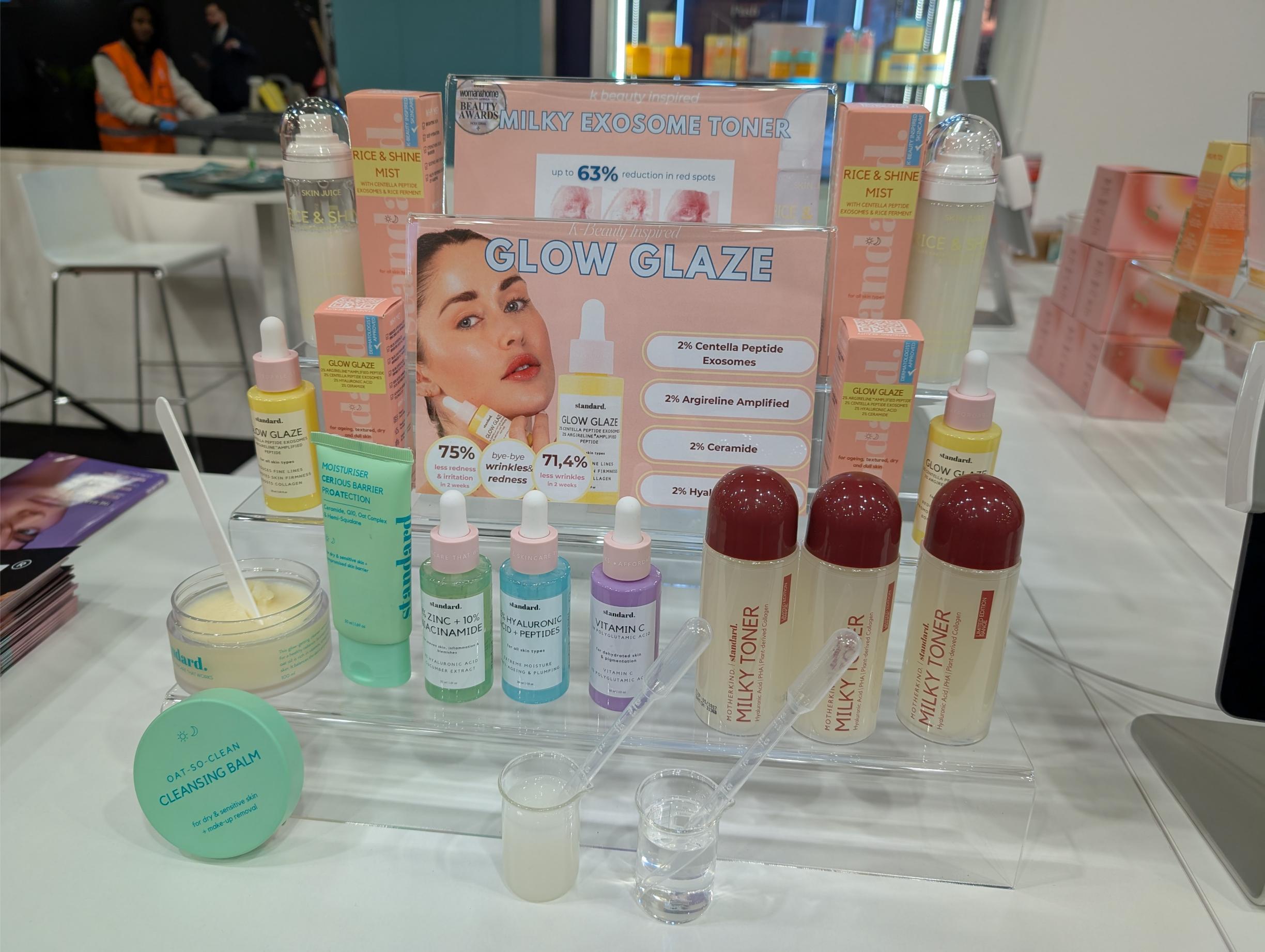
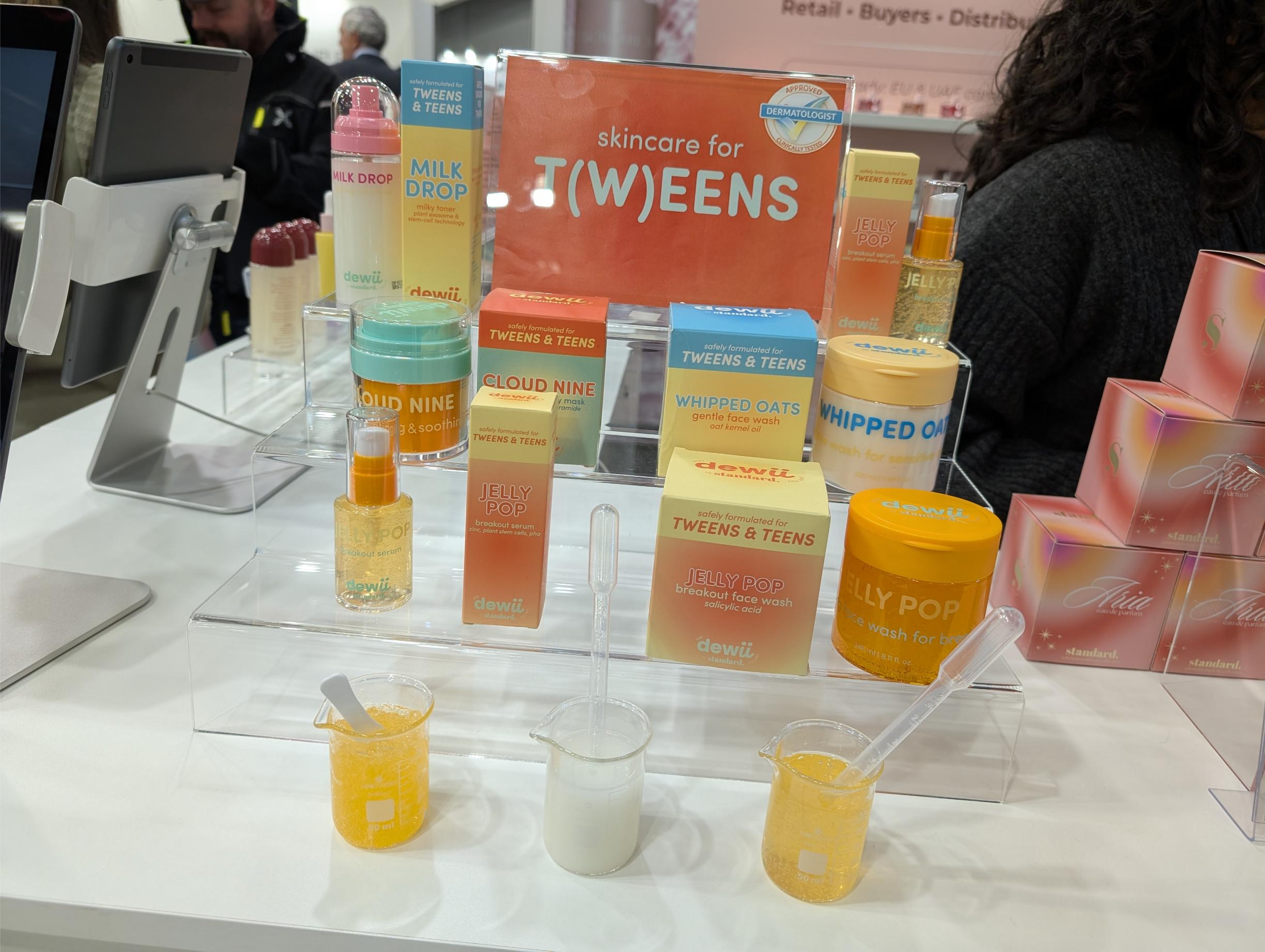
At Cosmoprof Bologna, Standard Beauty also presented its brand-new teen and tween range, Dewii, which focuses on barrier care and problem/impure skin. Textures and packaging are strongly inspired by k-beauty – jelly textures, foam/bubble textures, whipped textures – and the products are really fun to play with.
INIKA ORGANIC (Australia)
Australian mineral makeup brand Inika Organic returned to Cosmoprof Bologna for the first time in years. I checked my blog and I definitely met Inika at Cosmoprof Bologna 2017 but I don’t think I’ve seen the brand since then. Inika isn’t widely available in Germany, or Europe, either so it was great to see the brand’s line-up at the Extraordinary Gallery brand showcase in Cosmoprime.
Obviously there’ve been a lot of new launches, pack design and brand updates over the past decade – I was told that within the colour cosmetics line-up, Inika’s focus over the last few years has been on the lip category – lip glosses, lip oils, lip masks etc. In face care, the newest launch – actually, this new range won’t be launched for a few months yet! – is Pure Biome, a 3-sku refillable face care range of formulae designed to boost and protect the skin’s microbiome.
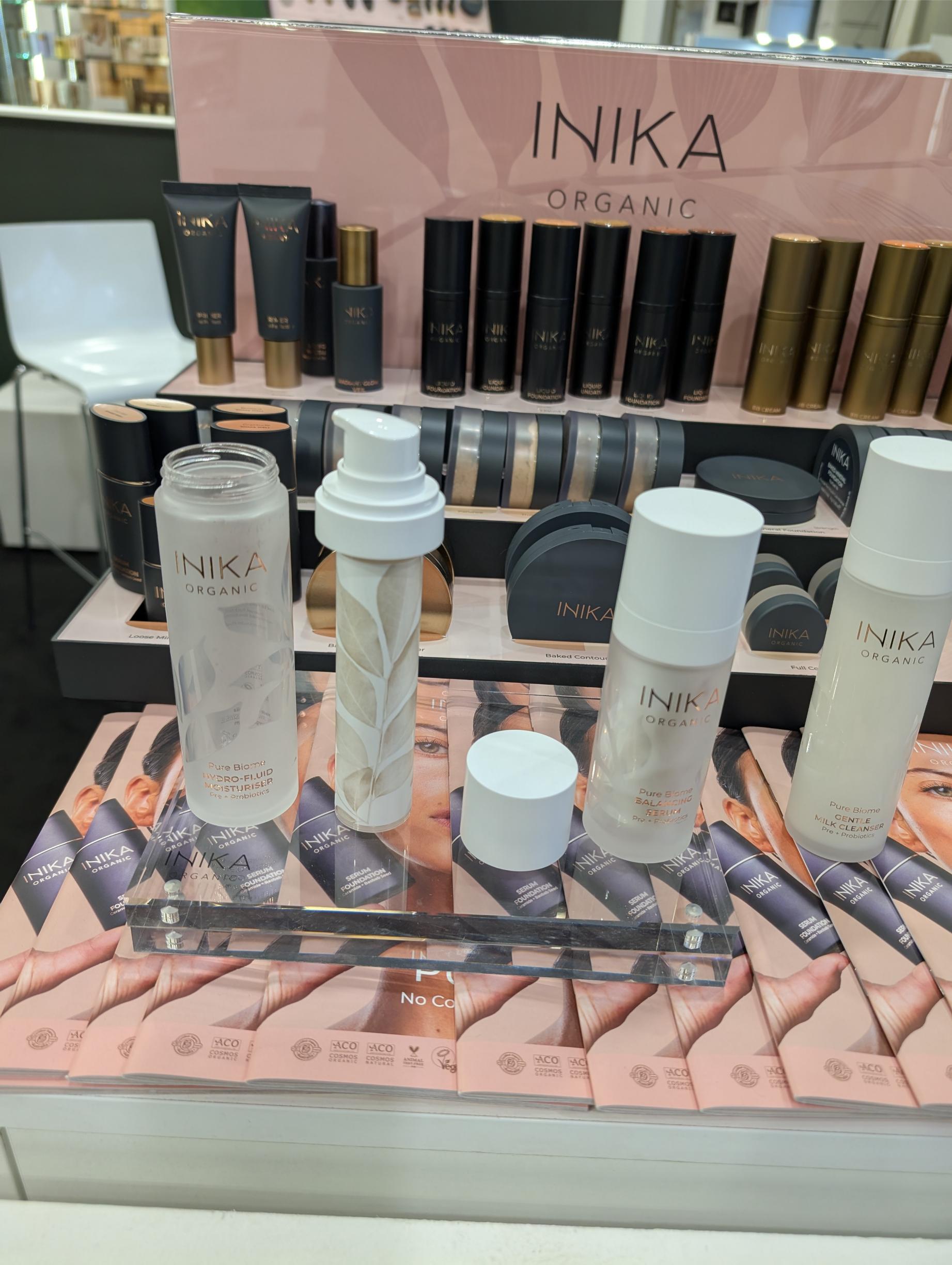
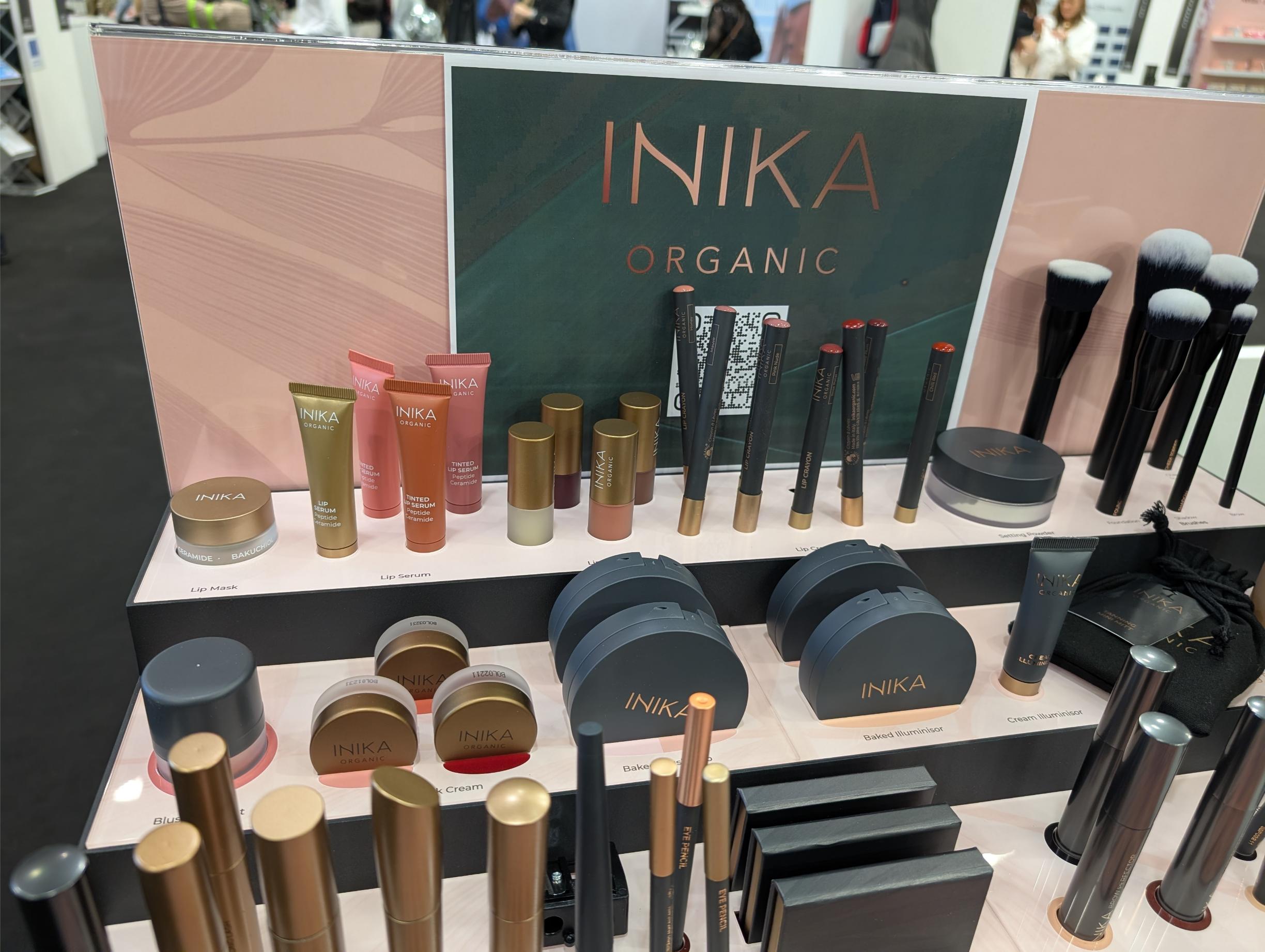
The refill aspect of this new launch was particularly interesting: While pouch refills for bestselling shower gels and shampoos are quite common amongst the major European personal care brands, refill options for face care are much more difficult – the formulae tend to be more complex and therefore a lot more unstable and prone to contamination; and of course anything jelly, cream and gel-textured can be difficult to manually refill from a pouch.
The Pure Biome packaging is divided into an inner tube which contains the product and the outer packaging/applicator. You can purchase refill cylinders, remove the empty inner tube and slot in the refill. The outer packaging (an etched glass cylinder which looks really pretty) remains, and so does the applicator pump.
HAIRGAIN (UK)
UK hair beauty brand Hairgain launched in 2019, starting with hair supplements such as capsules and gummies and then branching out into hair care. The hero ingredients in the Hairgain range are the Anagain complex which is based on pea shoot extract (which is also a key active in the supplement capsules), marshmallow root extract and a peptide complex.
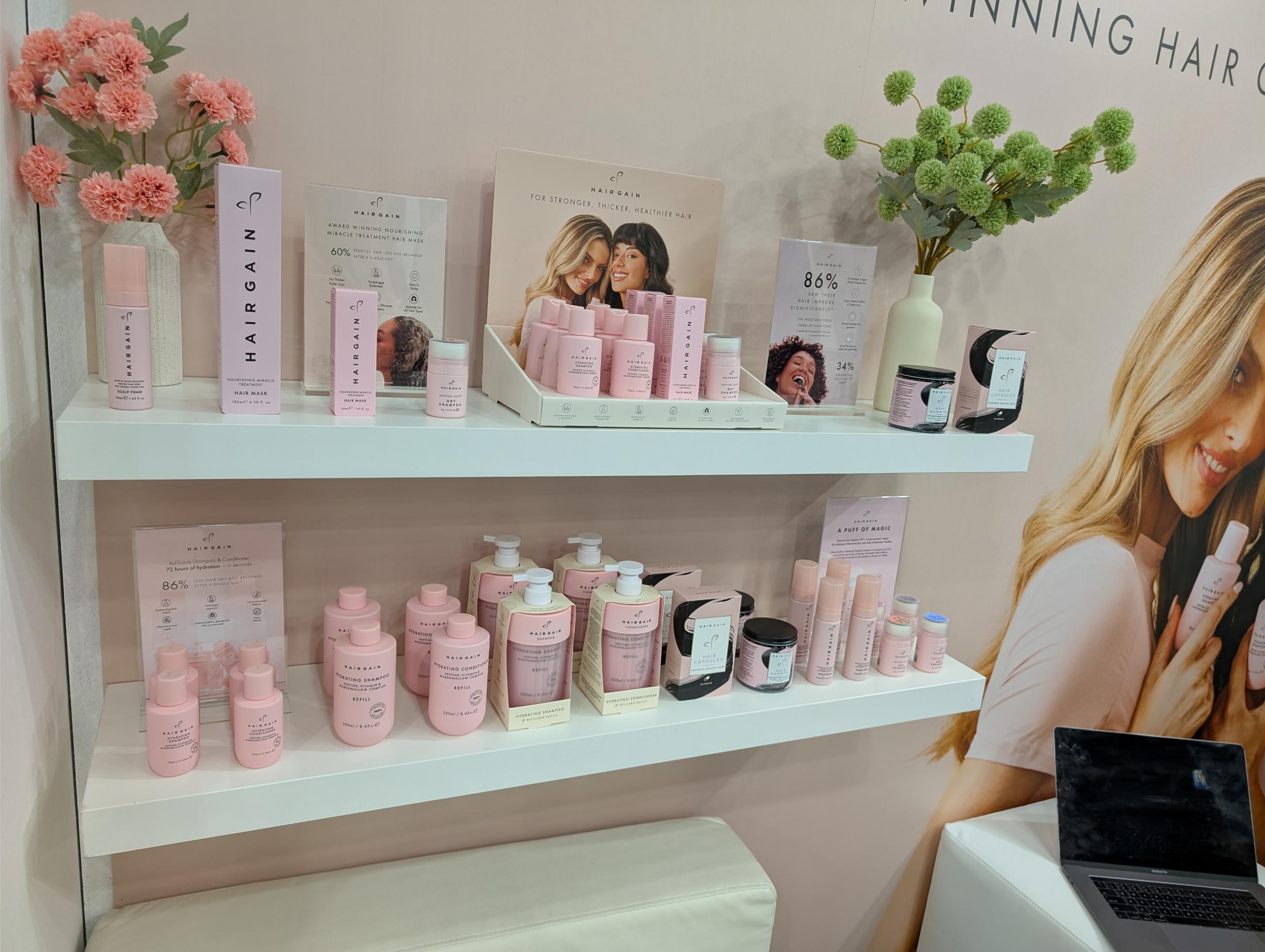
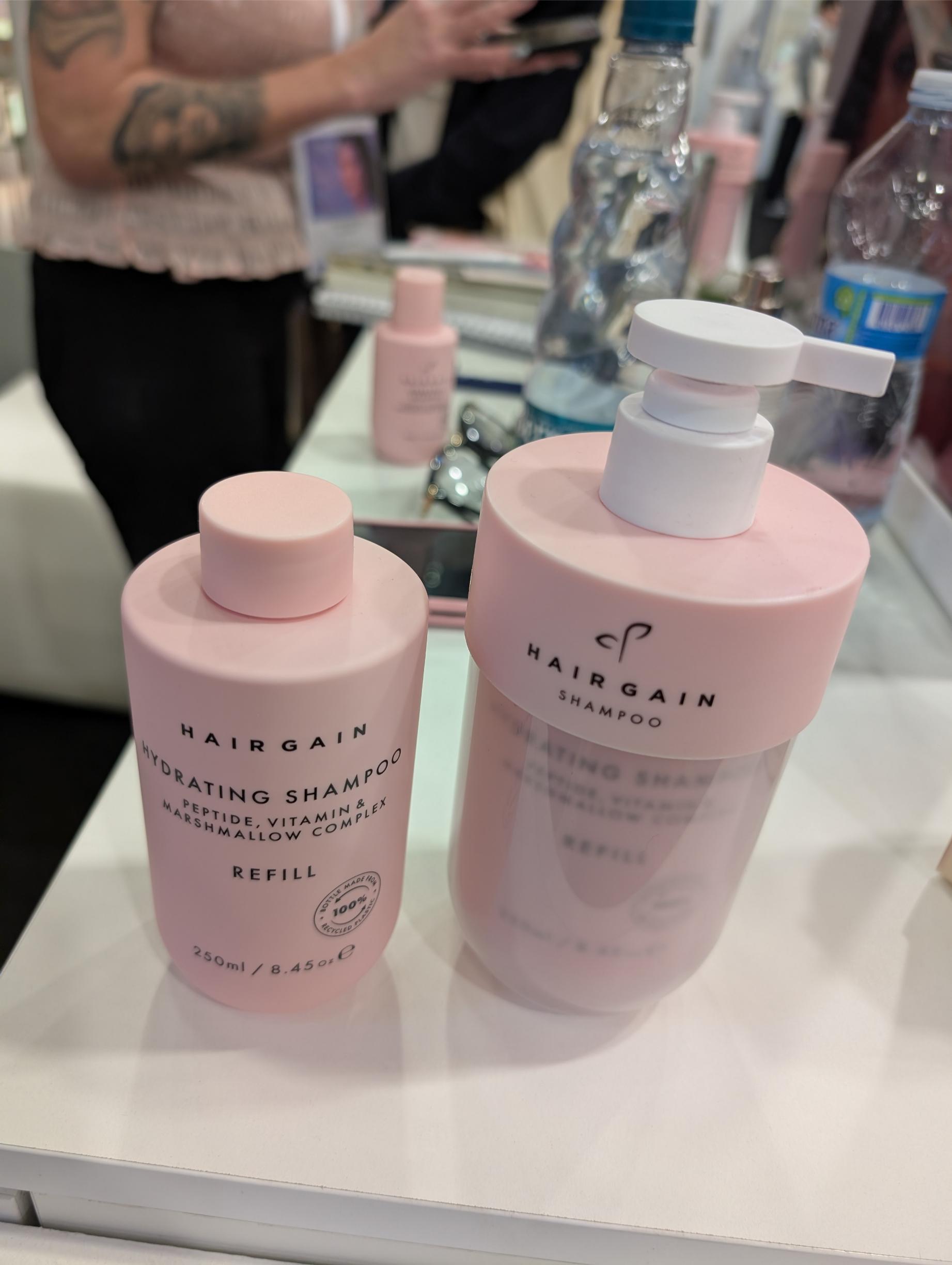
The line-up offers shampoos and conditioners which are available in refill packs similar to the Inika Organic refill concept above (you purchase the refill and slot it into the outer packaging). There is also a powder shampoo packaged in a small jar with a fluffy fabric applicator puff, an intensive hair mask which has the deepest green colour and a refreshing scalp foam. In the UK the Hairgain products are widely available online and offline, including at drugstore retailer Boots.
MATH SCIENTIFIC (Lithuania)
Lithuanian face care brand Math Scientific launched in 2020 and I really liked their eye-catching, minimalistic pack design. Math Scientific was a first-time exhibitor at Cosmoprof Bologna 2026 and the brand name reflects the positioning: high-performance lab-based face care with understated, clean and luxe-looking packaging.
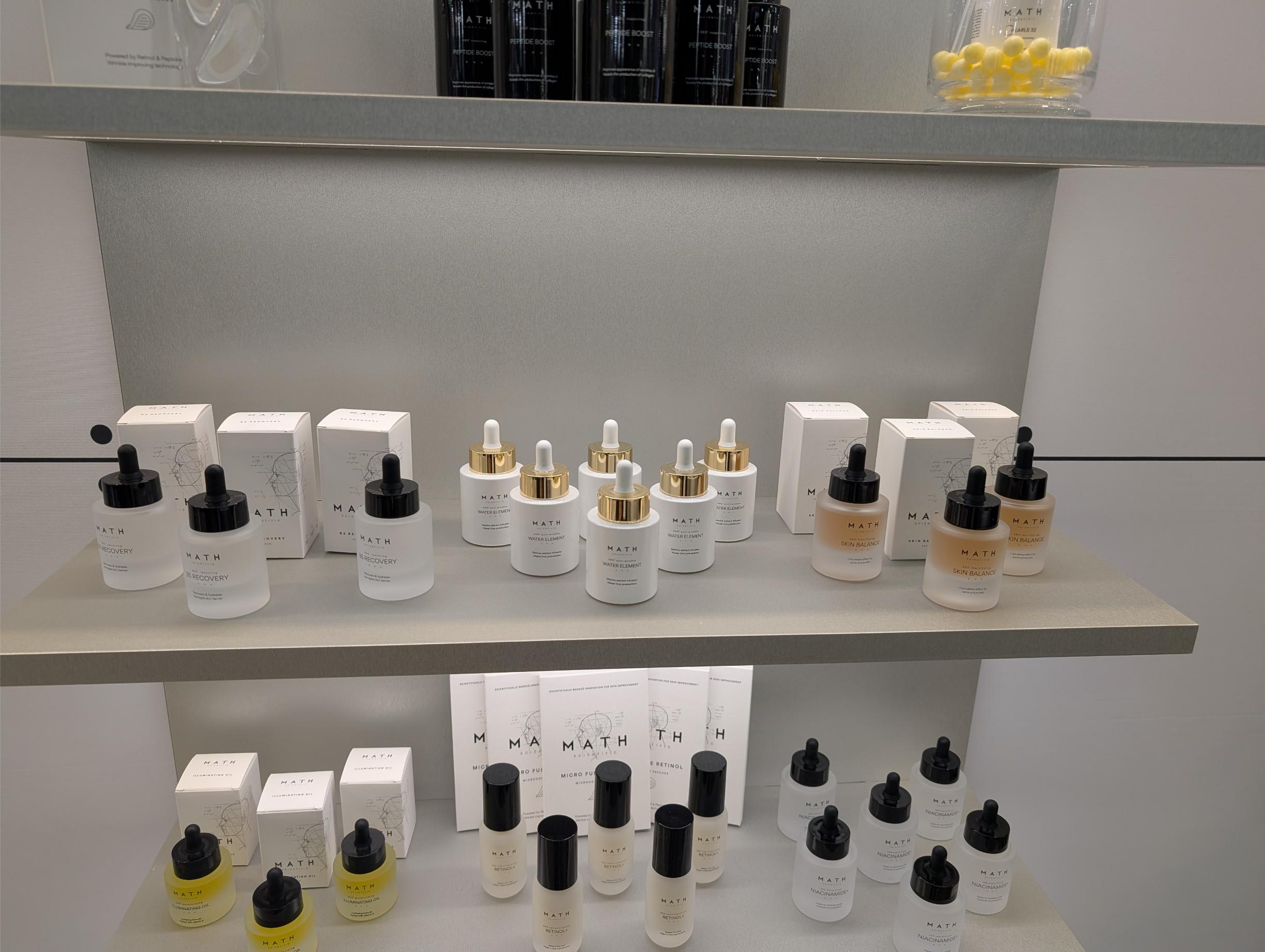

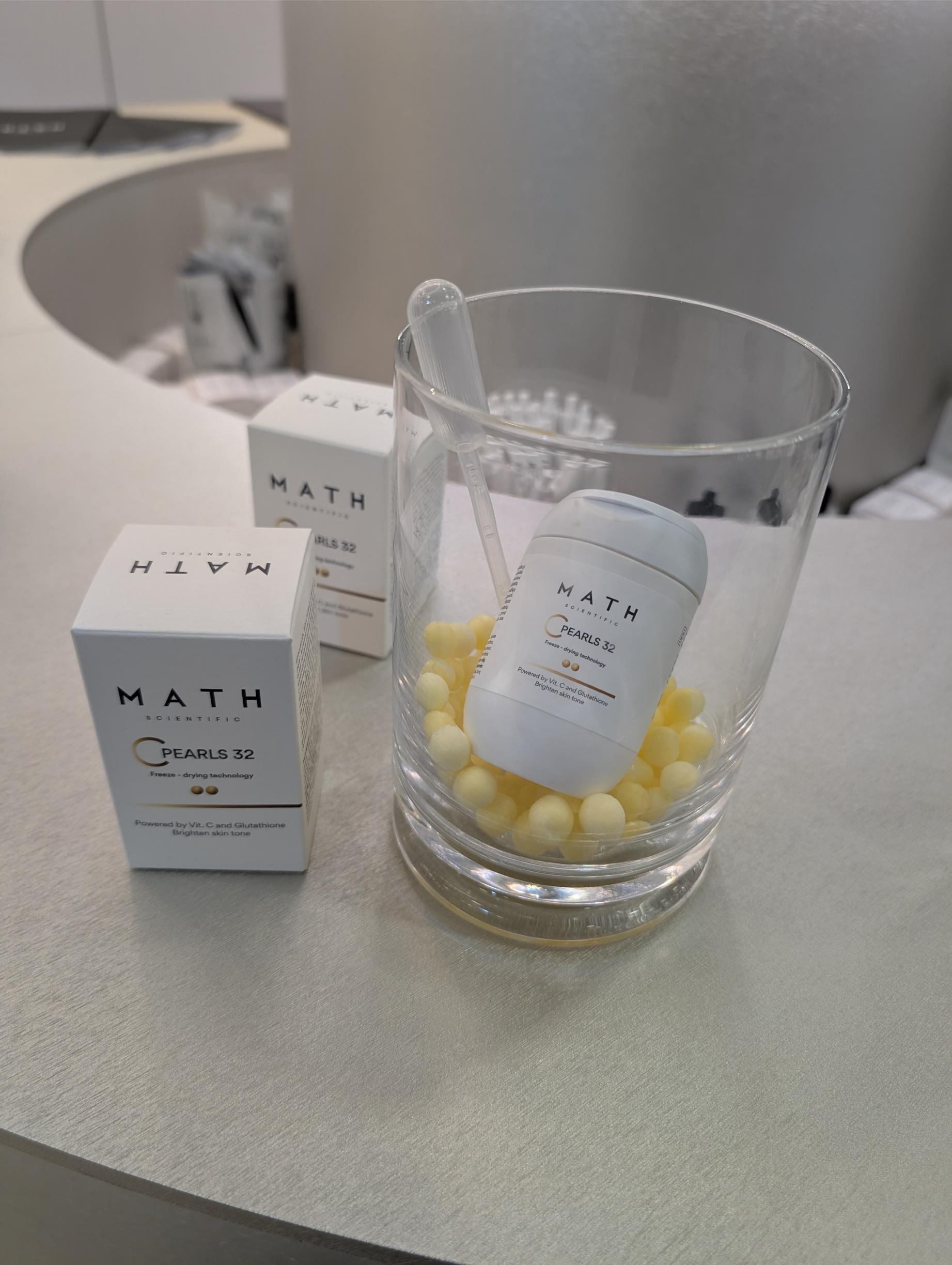
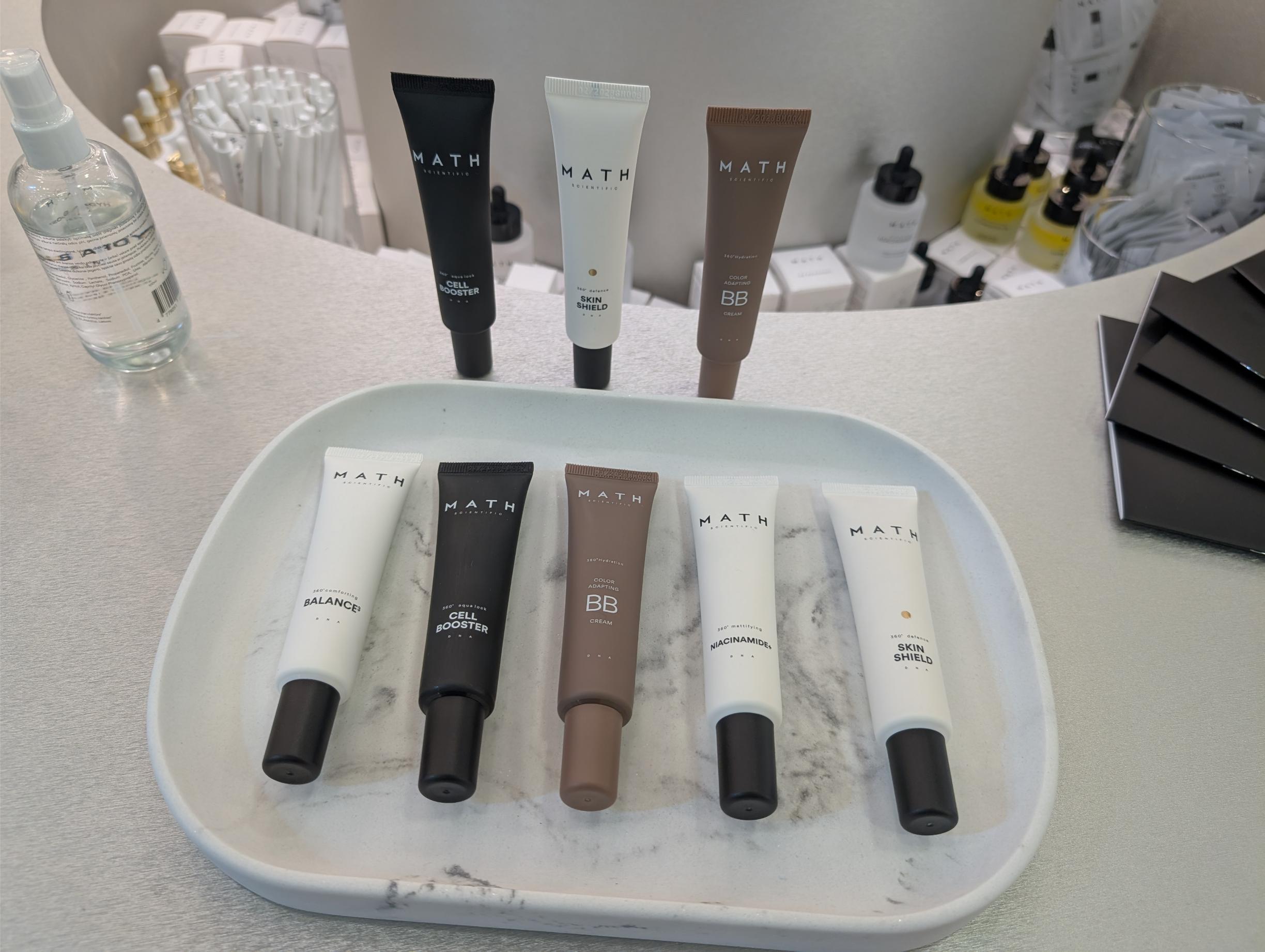
The brand’s current portfolio offers 18 face care products and the latest two launches are very much influenced by K-beauty – microneedle undereye patches and freeze-dried serum balls. Both these products are manufactured in Korea (the rest of the range, as far as I can remember, is made in Europe or even Lithuania). The serum balls looked familiar and I’m pretty certain I know which Korean company manufactured them : )
In Lithuania, Math Scientific is sold in Douglas stores and online and I can absolutely see the range in the German Douglas perfumeries as well; perhaps even in Sephora?
BLANK& (Finland)
Clean CBD skincare from Finland! I must admit that I was surprised to see CBD beauty at Cosmoprof Bologna 2026 – after the global CBD beauty hype died down a few years ago most CBD brands seemed to disappear from the market (and certainly from the trade shows) as well. However, the beneficial skin care effects of hemp-based ingredients are indisputable and personally I’m a fan of hemp beauty. As a supplement CBD never worked for me but as a skin care ingredient, absolutely.
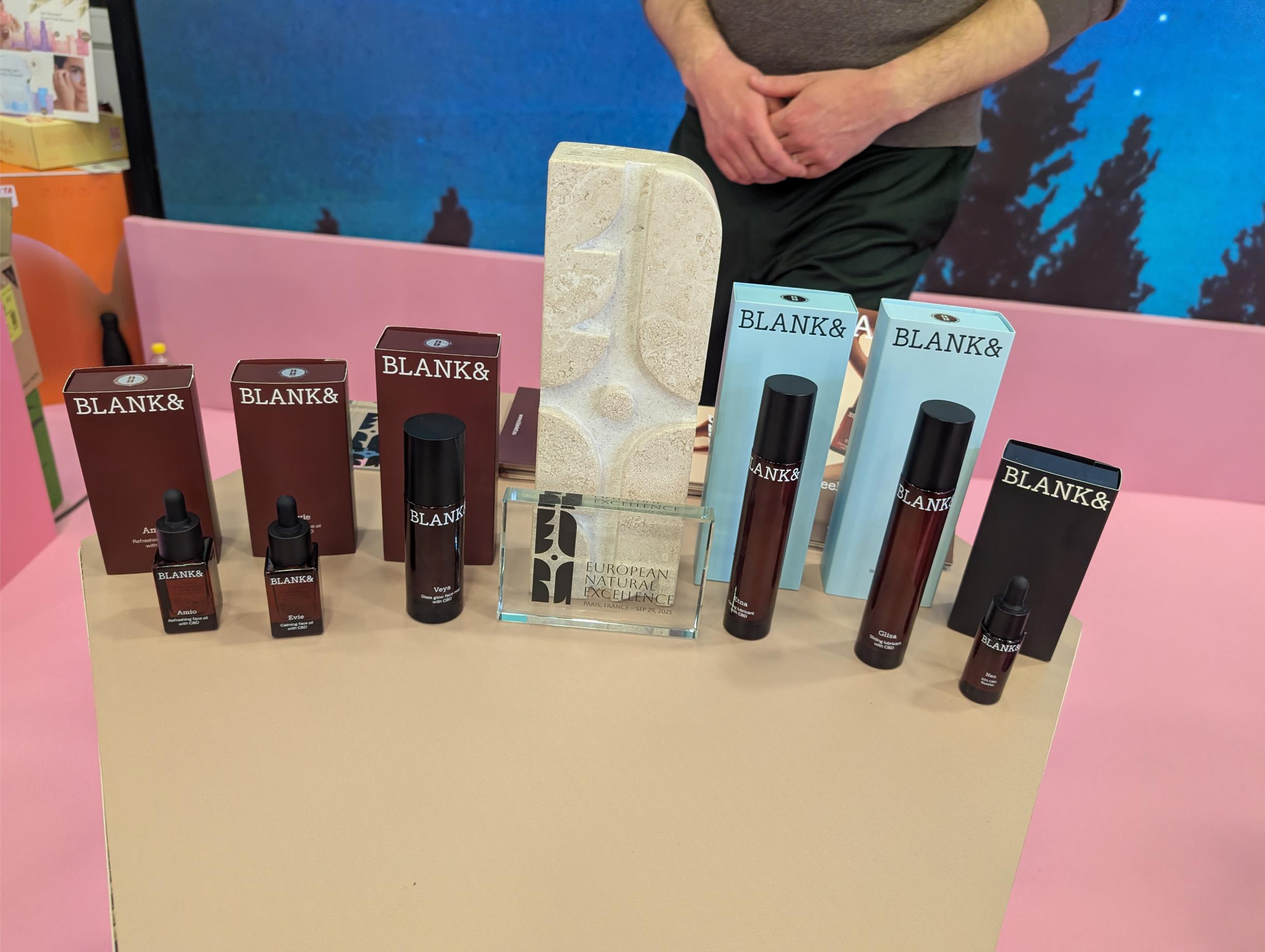
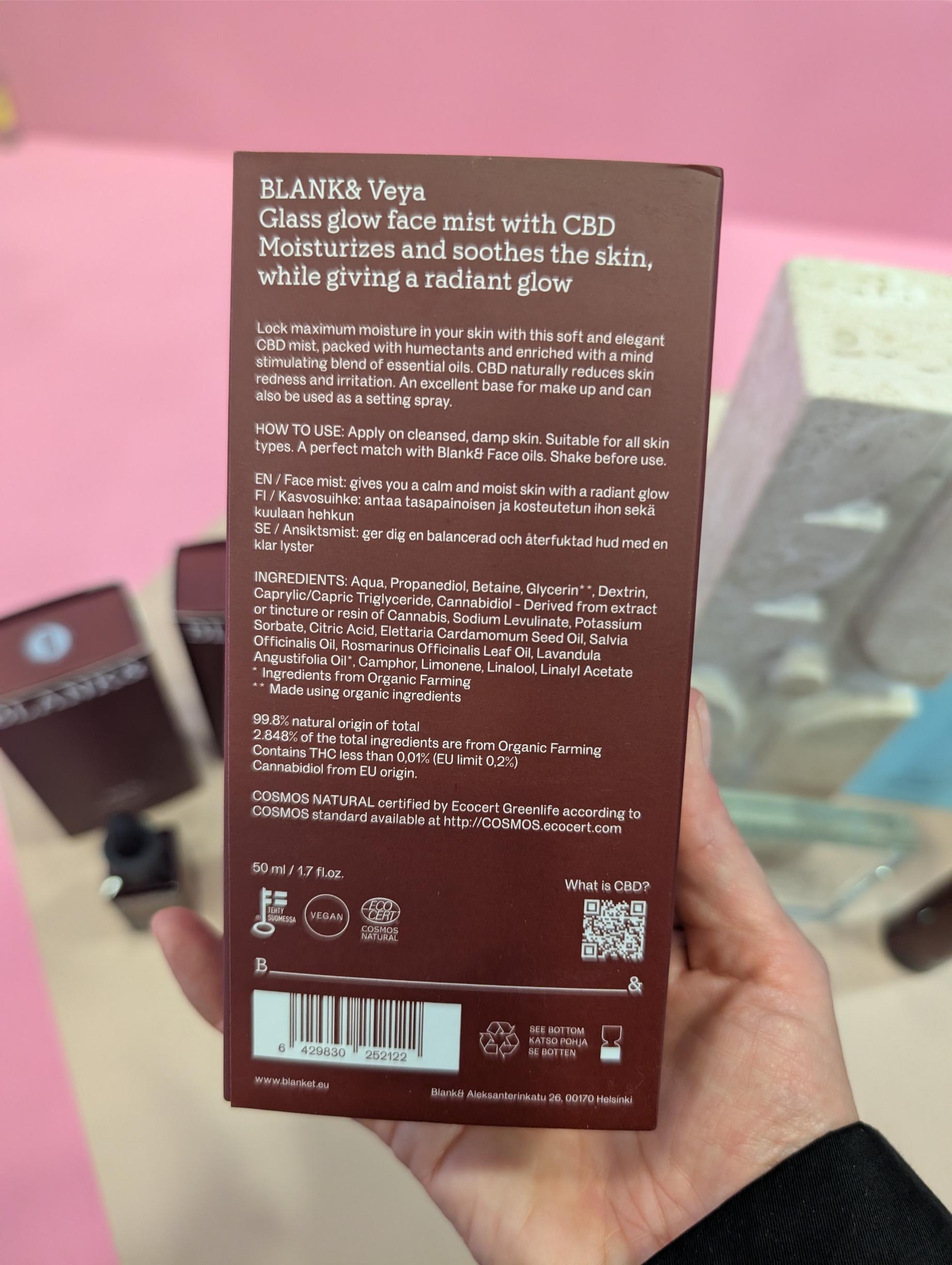
Blank& is a newcomer wellness brand which launched in 2025 but they already sell widely in Finland, including in domestic organic beauty retailer Ruohonjuuri (at the Ruohonjuuri outlet at Helsinki Airport the Blank& lubricants are amongst the brand’s bestselling products: ))
The product range is compact, four face care products and two lubricants (Etna is moisturising, Glisa is extra viscuous). CBD (in different percentages) is the key active in all the Blank& products. I also liked the pack design.
WRINKLES SCHMINKLES (Australia)
You gotta love the name of this Australian brand! Wrinkles Schminkles launched 12 years ago so they’ve been on the (Australian, US and international) market for a while. Now the company poised to enter the EU markets.
Wrinkles Schminkles manufactures silicone patches in different shapes that can be applied to areas of the face particularly prone to muscular micro movements – frown lines on the forehead, the area between the eyebrows, the undereye area and so on. The patches are made from medical grade silicone and help firm and tighten the skin so lines and wrinkles become less obvious.
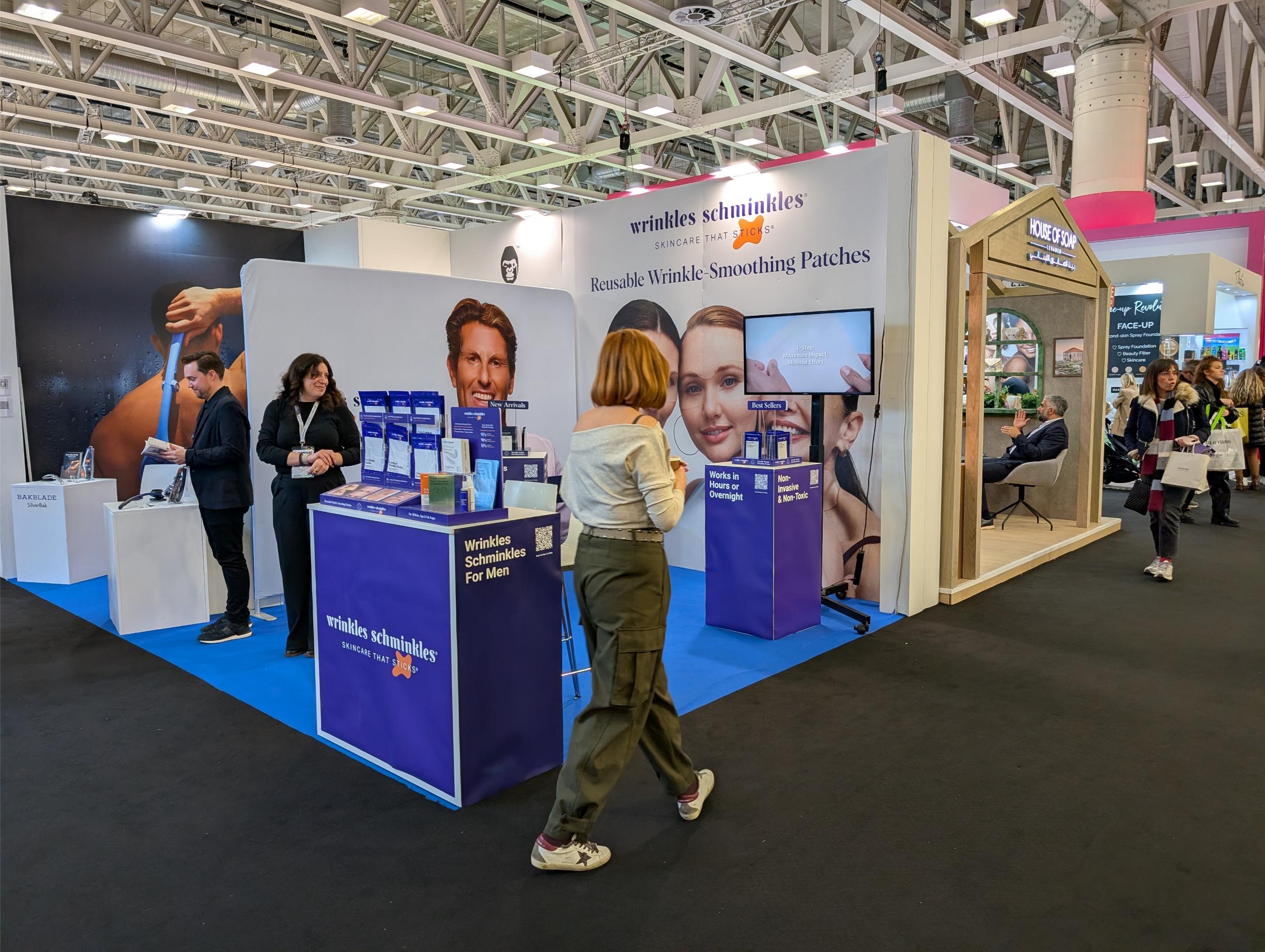
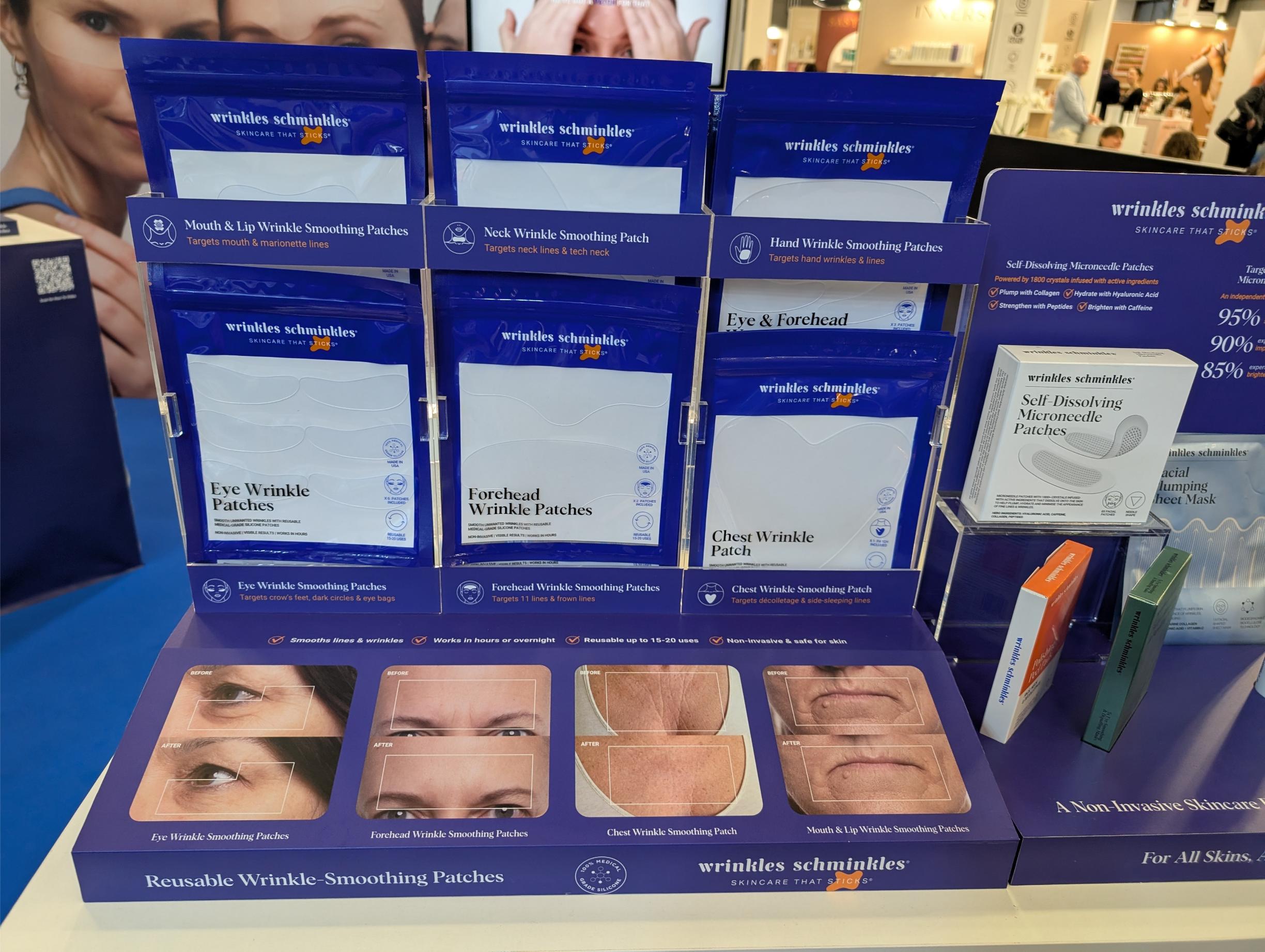
The Wrinkles Schminkles line-up offers silicone patches for facial areas but also for the chest/decolleté, neck and the hands – their online shop also lists microneedle patches and sheet masks but the core product range seem to be the silicone patches. Products are priced at around 20-30 USD and the patches are reusable. At Cosmoprof Bologna, Wrinkles Schminkles presented its newest launch: Forehead and eye silicone patches specifically for male consumers.
COSMOPROF BOLOGNA 2026: GREEN HALL BRANDS
BEN & ANNA (Germany)
Ben & Anna was one of the first German brands to introduce baking soda deo sticks in cardboard packaging back in 2016 when the company first appeared on the market. Their initial 6-sku range of deo sticks took off rather rapidly and Ben & Anna became widely available in Germany both online and offline – the deo sticks were sold in organic supermarkets, drugstores (including Rossmann) and beauty retailers, and the brand quickly expanded into other European countries.
The international distribution is a fascinating – and unique – aspect of the German drugstore beauty market, by the way. Our two leading drugstore retailers Rossmann and DM have a very strong presence in Eastern Europe and South Eastern Europe. In several countries, the two chains are the domestic drugstore market leaders – we’re not talking about a dozen stores or so; no, in some Eastern European markets DM and Rossmann operate hundreds of outlets. And any German brand that is retailed by Rossmann or DM pretty much gets automatic distribution in whichever country the retailers operate their stores.
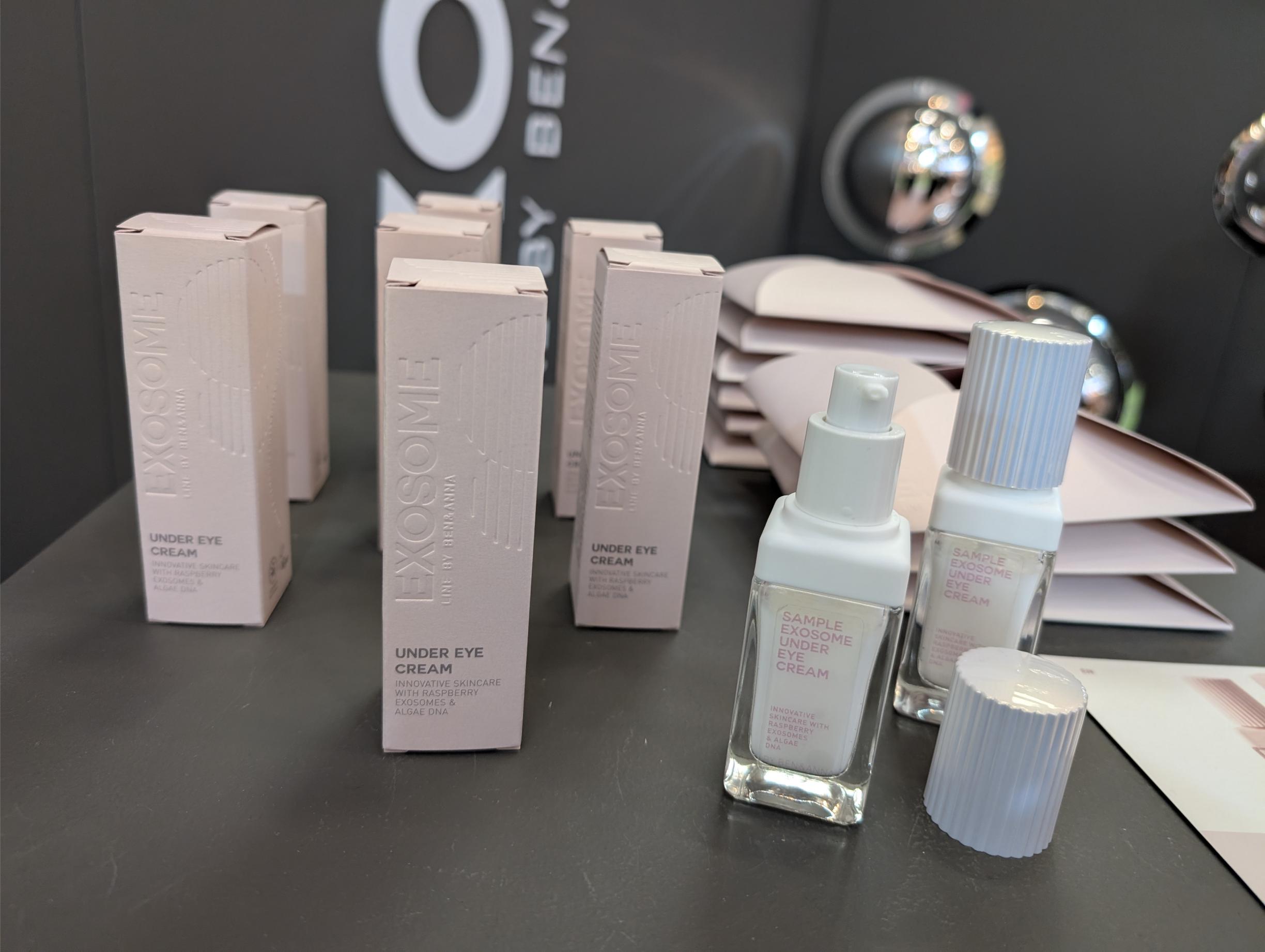
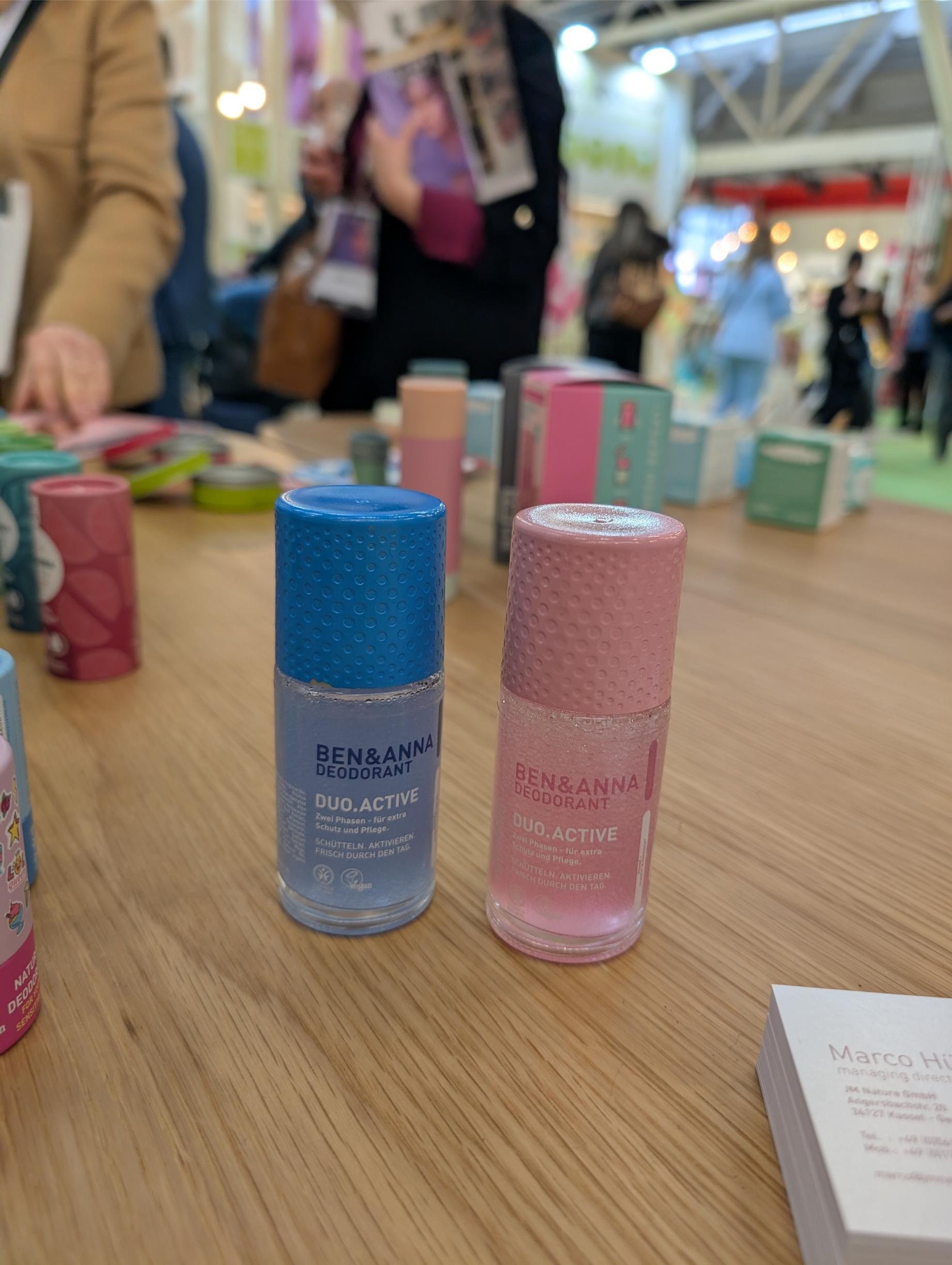
Anyway, in 2019, Ben & Anna branched out into oral care (tooth cleansing powders and toothpastes packaged in glass jars as well as mouthwashes – I remember when the new range was presented at Vivaness 2019 trade show; that pack design! Completely unlike the usual organic oral care brands at that time). In the following years, Ben & Anna introduced various bath and shower products and this year, 2026, the company is entering an entirely new product category: Face care.
And Ben & Anna is starting out with a bang; the new 3-sku face care range is formulated with exosomes (plant exosomes, obviously, in the German market where vegan claims rule supreme any trending active ingredients need to be animal-free). The line-up offers an eye cream, serum and face moisturiser, and in a departure from Ben & Anna’s usual mass market pricing, the new face care products will most likely retail from 20-30 Euro. I liked the textures that I tried out, the packaging is also rather stylish. I look forward to seeing which retail chain the new range pops up in first. Another new launch that I liked were the Duo Active 2-phase deodorant roll-ons, see pic above.
BENECOS (Germany)
Benecos is another of my favourite German natural brands (I like their loose tinted mineral powder). The budget beauty brand launched in 2012 with a colour cosmetics portfolio. A few years later, Benecos branched out into skin and body care and today the company offers certified organic makeup, face care, bath and body care, men’s care and hair care, with products usually priced at less than 10 Euro. The brand is very widely available in Germany, every organic supermarket retail chain carries the Benecos ranges as do indie beauty retailers and organic/health food stores.
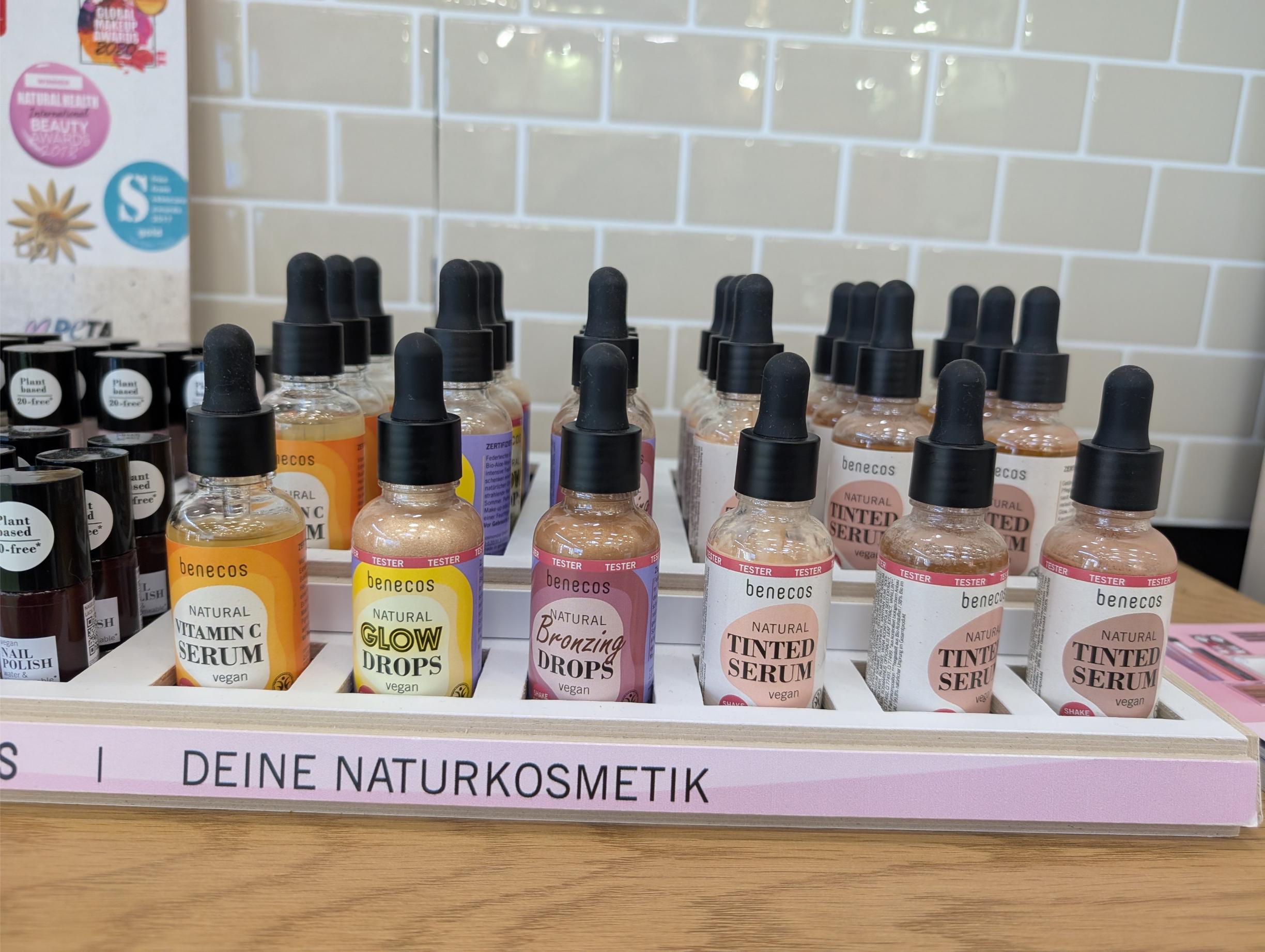
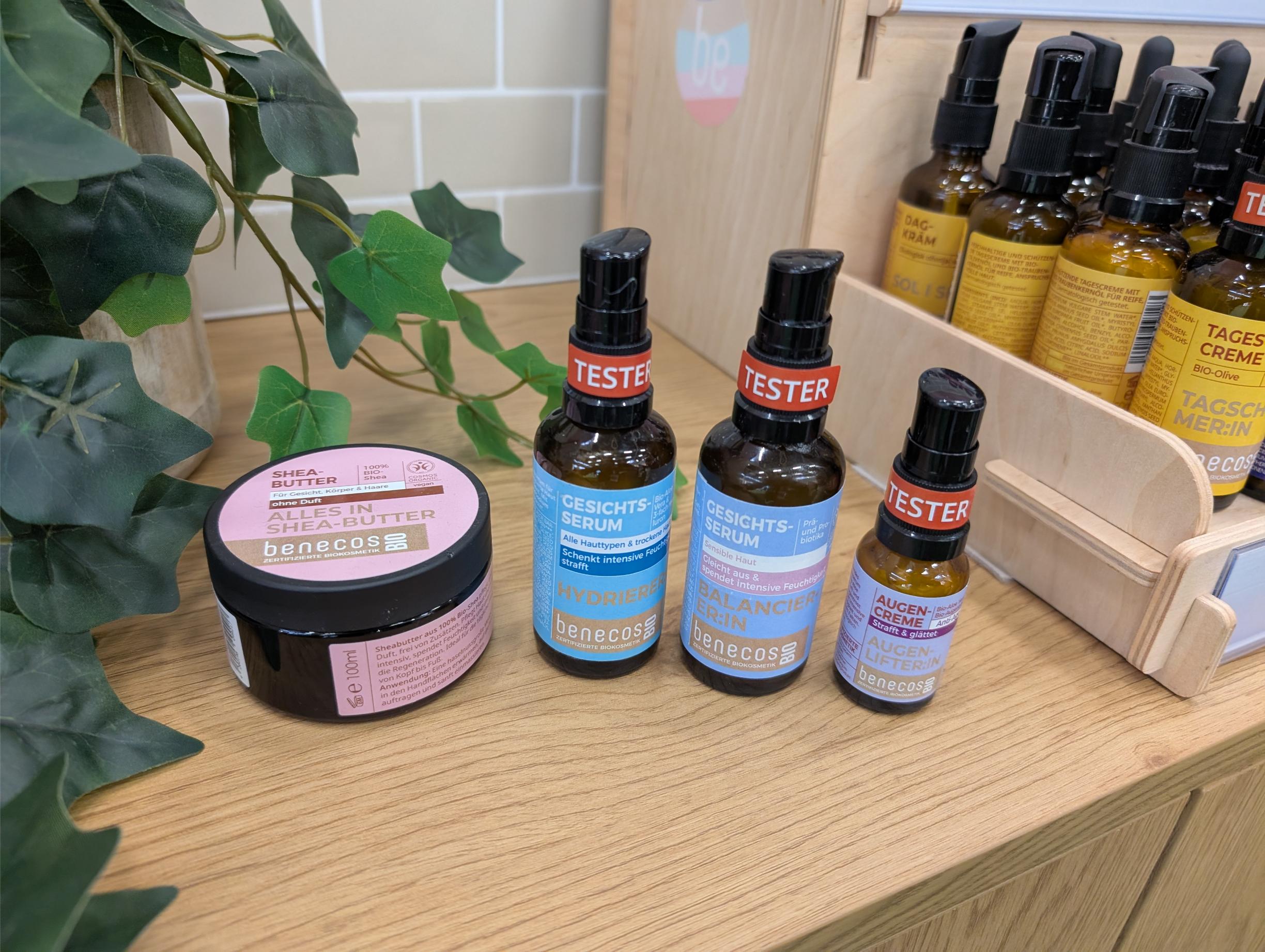
At Cosmoprof Bologna, Benecos presented a whole bunch of new face and body care launches including a 6-sku range of glow drops/tinted serums (one of my favourite product trends in the German market right now, I love shimmer/bronzing drops that you can mix with your existing face care), two face serums and two new hand creams (including a lavender hand cream – I absolutely adore lavender as a fragrance and it is surprisingly difficult to find pure lavender product fragrances in mass market bath and body care in Germany).
SPHEA (Italy)
This new launch was eye-catching: Five face and body care products formulated with colourfully encapsulated active ingredient pearls. So pretty! Sphea was launched earlier this year; parent company Athena’s Italy owns several other face and body care brands, most of them in the drugstore/mass market sector – I noticed the Athena’s face care in the DM and Tigota chains in Bologna, for example.
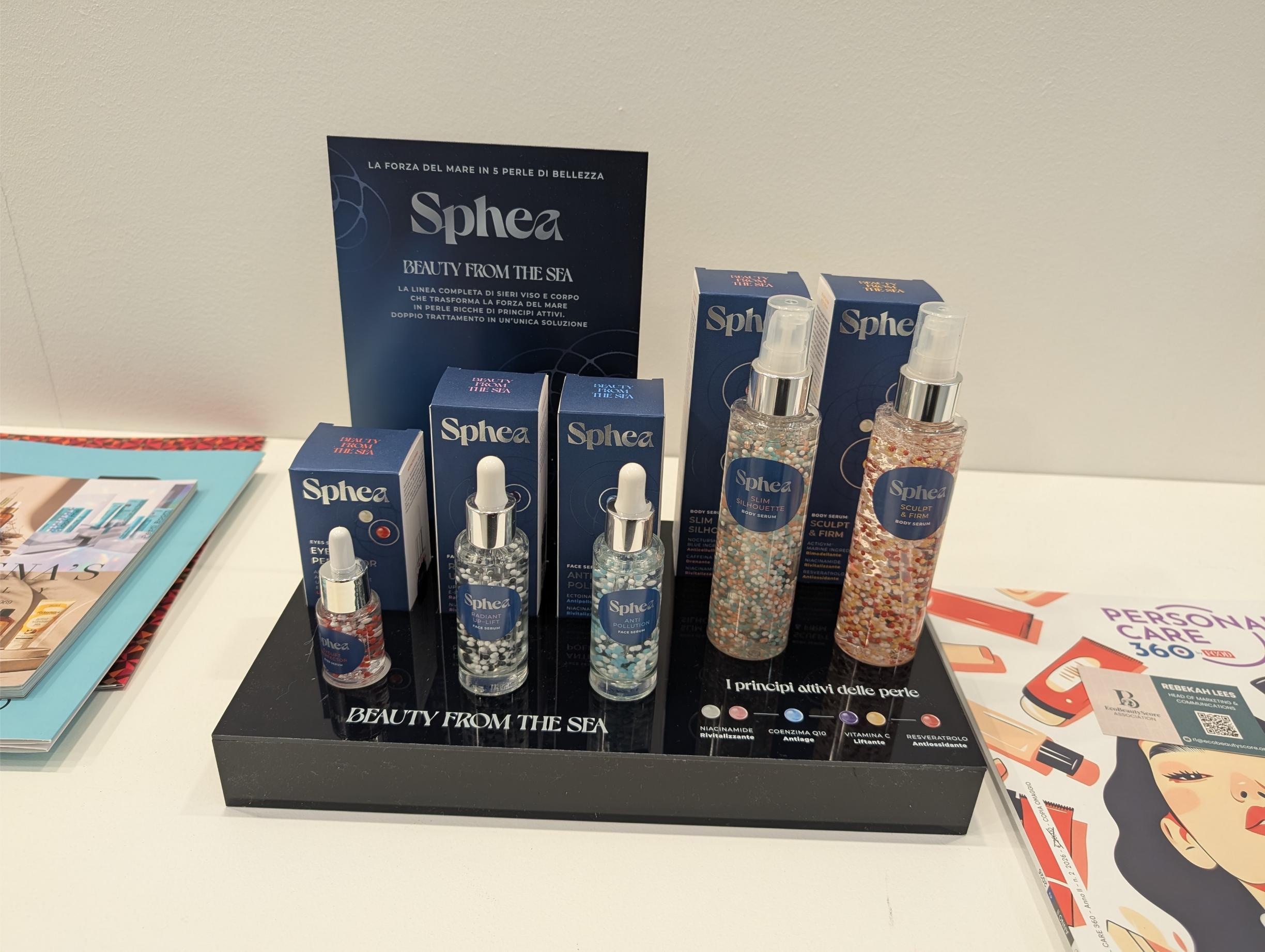
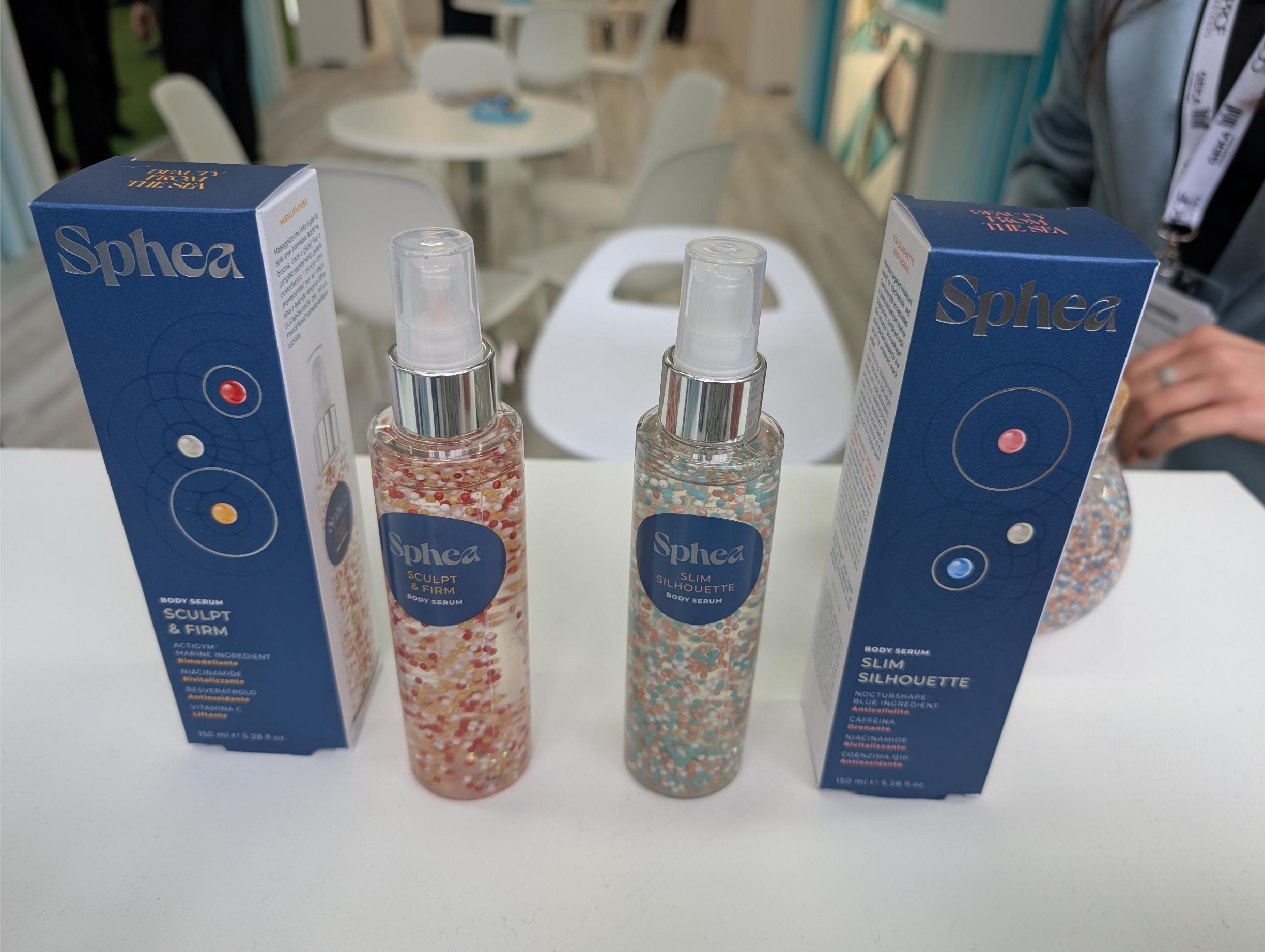
Sphea is the company’s more masstige/prestige-priced range: Three face care products, two body serums; each product contains a blend of differently coloured encapsulated ingredient spheres made from marine bio-polymers. The two face serums, for example, contain co-enzyme Q10, ectoin, and niacinamide / peptides, niacinamide, and vitamin C. The eye serum is formulated with resveratrol, niacinamide, and argireline complex. The two sculpting/firming body serums focus more on caffeine, vitamins and enzymes.
DUTCH ORIGINAL BRANDS (Netherlands)
This was the cutest little country pavillion, not one of the official ones but rather a group of four indie brands from the Netherlands that decided to share space and presence at Cosmoprof Bologna 2026.
I immediately recognised one of them: Van Toen, an organic apothecary brand that I first met at Vivaness 2022! I remember being impressed by the unique concept of Van Toen: Organic versions of traditional home remedies – plant-based vaseline, warming and cooling muscle balms, pain-relieving rubs and so on. Since their first trade show appearance at Vivaness Van Toen has added a range of essential oils to its portfolio as well as four medicinal mushroom nutritional supplement powders (chaga, reishi, cordyceps etc.).
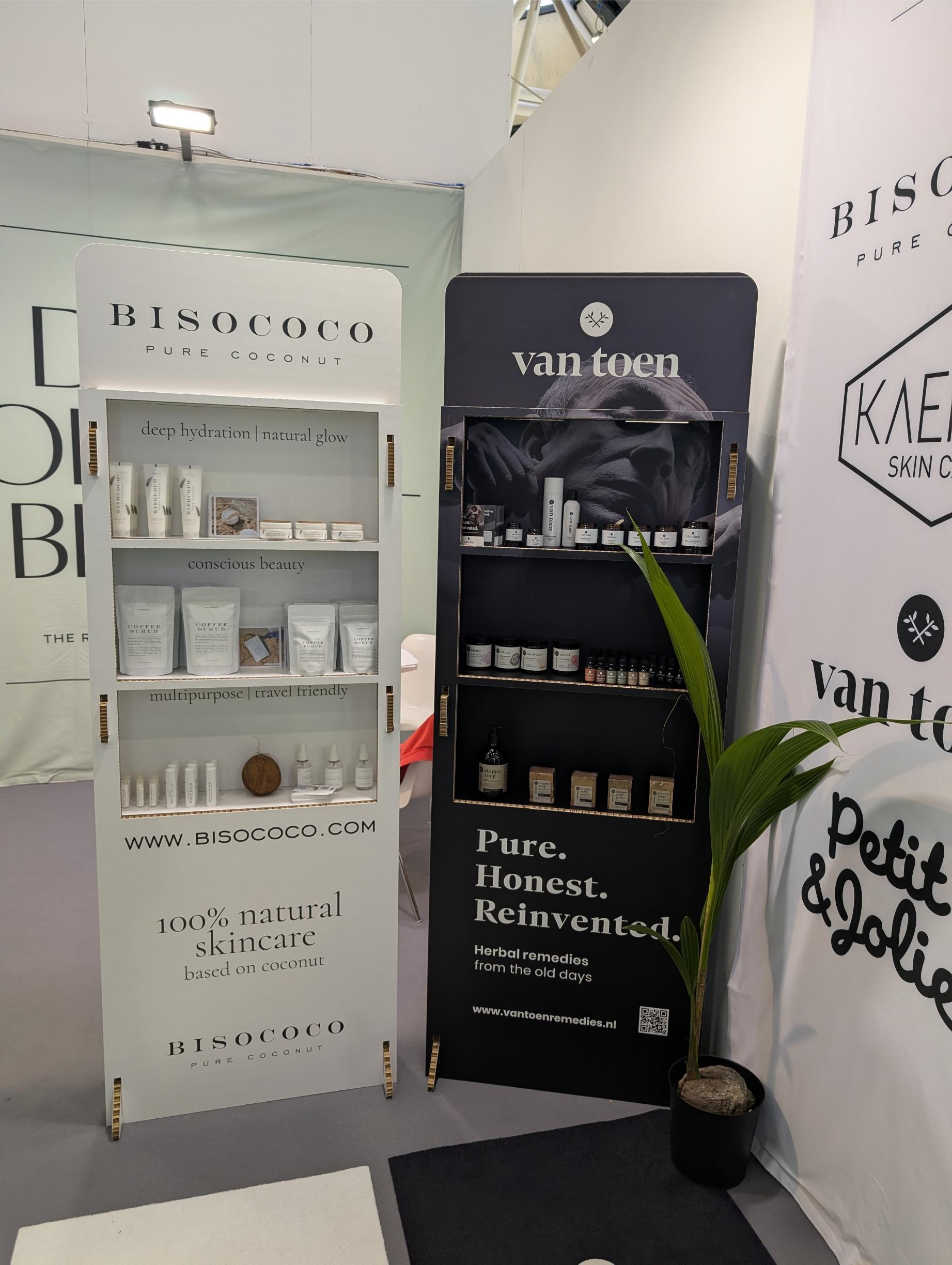
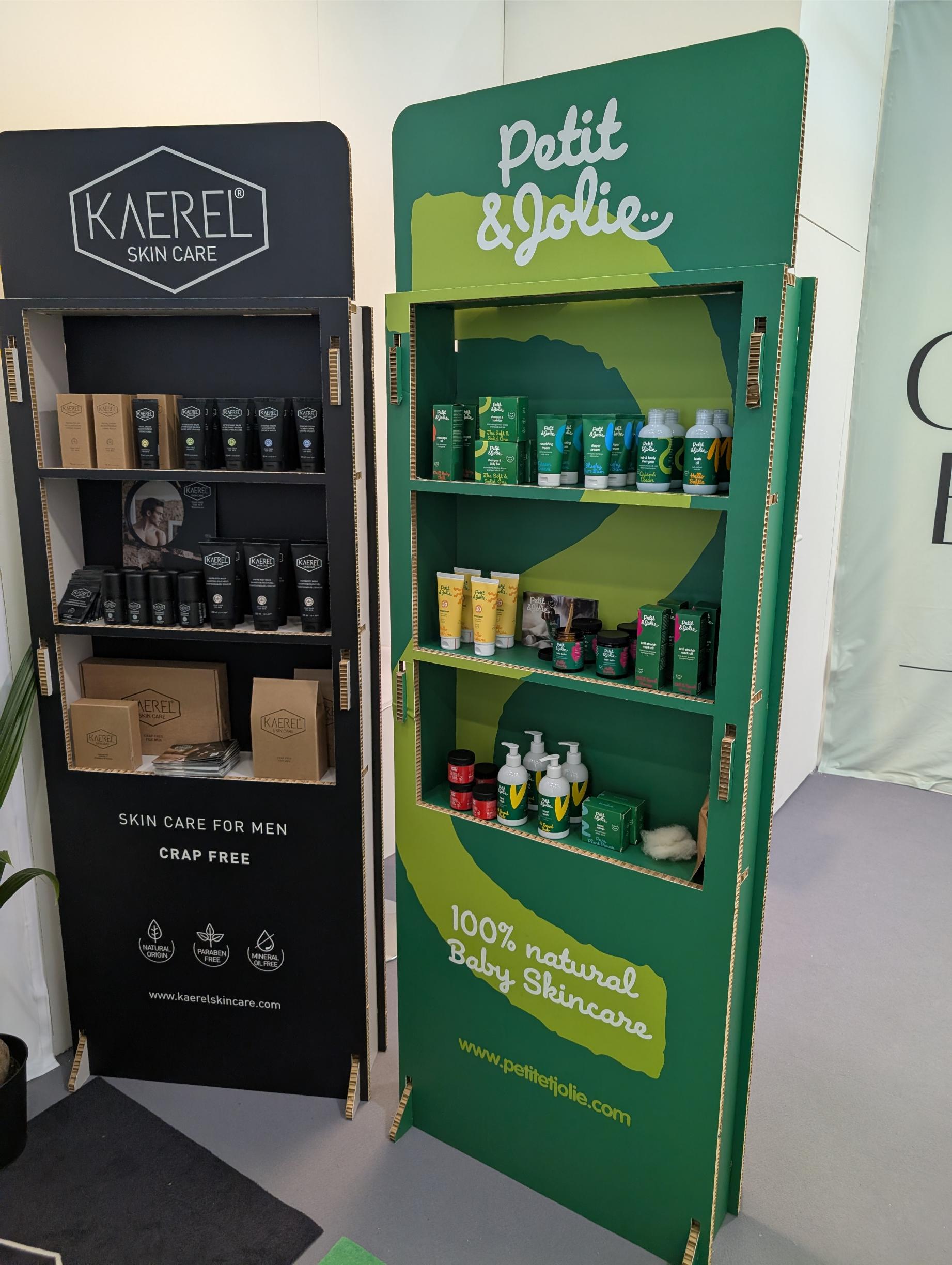
The Dutch Original Brands booth also presented coconut oil brand Bisococo which launched in 2020 – I really liked the Bisococo unrefined coconut oil which is packaged in a squeezy tube. I use coconut oil as skin care occasionally and traditional unrefined coconut oil versions are usually packaged in jars, since coconut oil is solid and only becomes liquid once it is heated up. The Bisococo oil is firm in the tube so you need to warm the tube in your hand first but it’s so much easier to portion the amount of coconut oil needed – with a jar you have to scrape it out with a spoon or spatula. The other two brands at the Dutch Original booth were Petit et Jolie, a nice-looking baby, children‘s and mum’s face and body care range which launched in 2013 men’s grooming brand Kaerel Skincare (launch: 2017).
CARBALINE (Italy)
I usually focus on beauty brands when I visit a trade show but over the past few years I’ve increasingly become interested in home fragrance brands as well, especially if these brands have an unusual concept. The booth of Italian home and personal fragrance brand Carbaline was in the Green hall just down the aisle from the Dutch Original booth and I was struck by the gorgeous glass packaging of the products. Those colours!
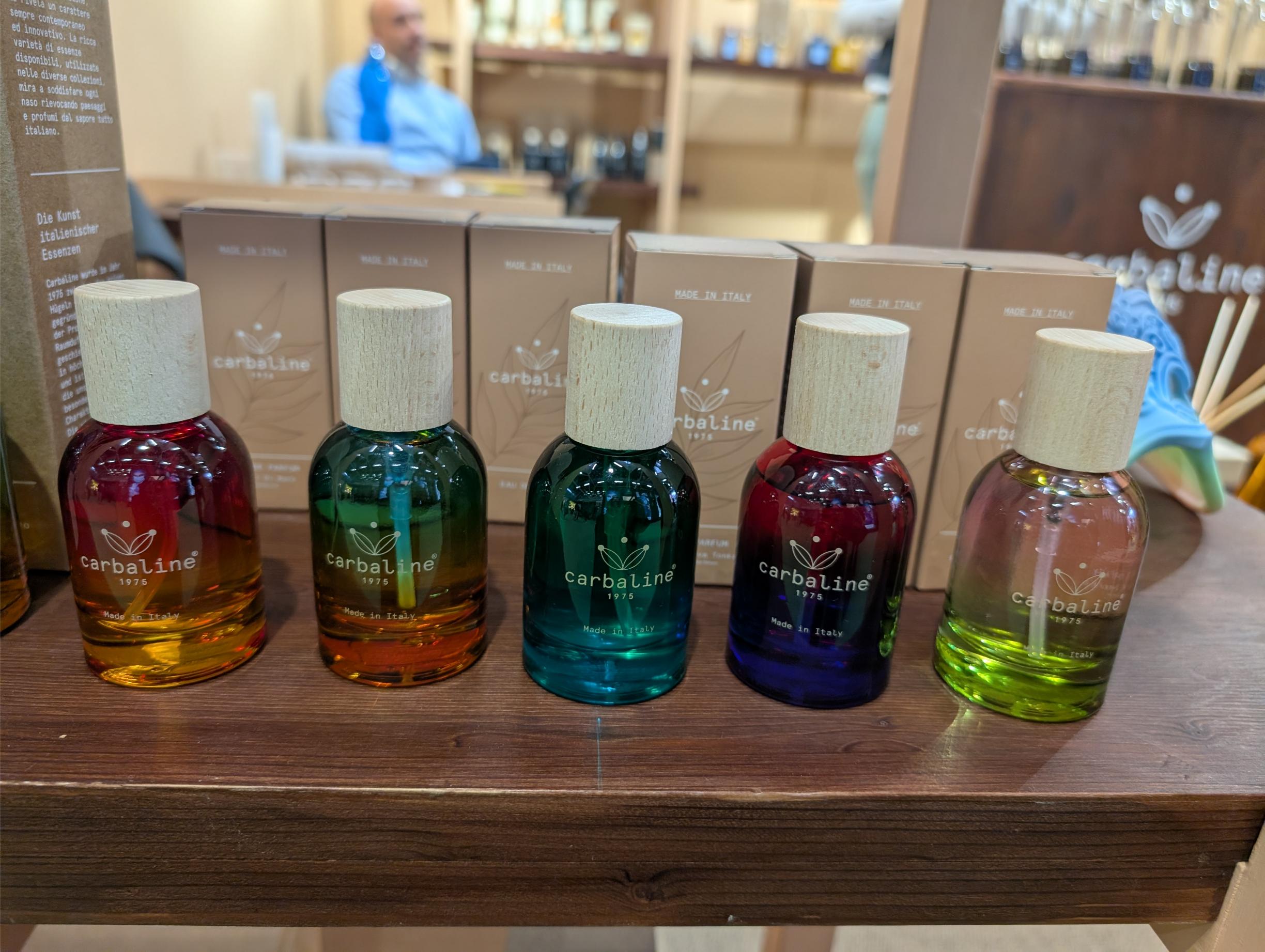
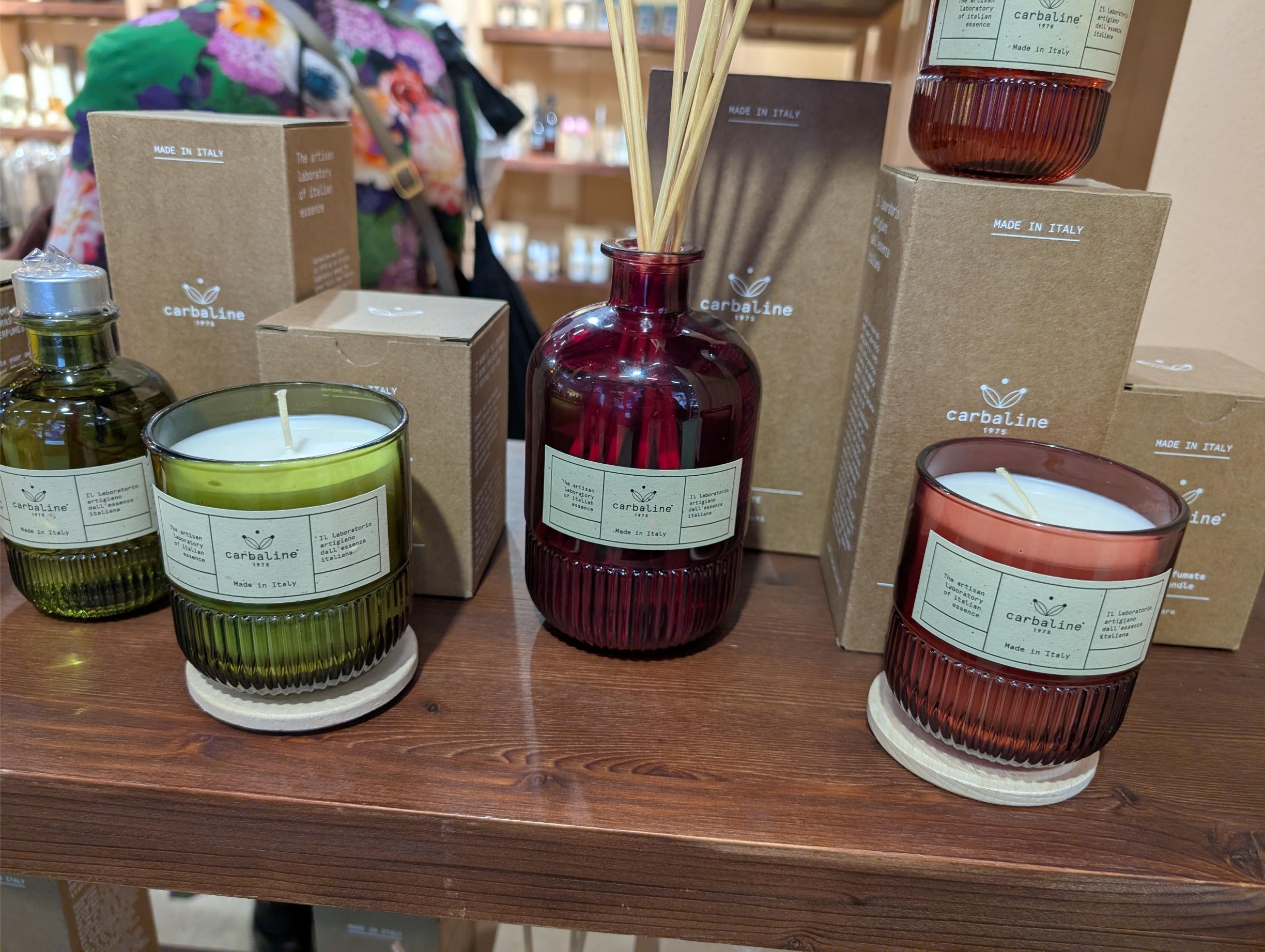
Carbaline is a family-owned brand which launched in 1975, they started out with scented sachets for the wardrobe and then branched out into home fragrance. The product range with the beautiful colour gradients you can see in the first pic anove was launched in 2025 to celebrate the Verona-based company’s first brand store in Venice – the inspiration for these flacons was, of course, the world-famous Murano glass which is produced just outside of Venice. Carbaline’s new launches also include a range of coconut oil-based perfume roll-on versions of the brand’s best-selling fragrances and another line of scented candles and diffusor sticks packaged in vintage-looking glass containers (see pic above).
ZEW FOR MEN (Poland)
I’ve seen Polish men’s care brand Zew for Men at various Cosmoprof Bologna shows – I think their first Bologna appearance was in Extraordinary Gallery in Cosmoprime 2017 or 2018? – and I always enjoy checking out Zew’s new launches. And the company introduced some very cool new products last year, including one of the most interesting collabs between beauty and F&B (Food & Beverage) brands that I’ve ever seen.
Zew for Men’s beard balms and beard oils are scented with the fragrance of Jameson Whiskey. And this isn’t just a generic whisky fragrance either – each balm/oil is scented with the fragrance of specific Jameson whiskey blend/cask.
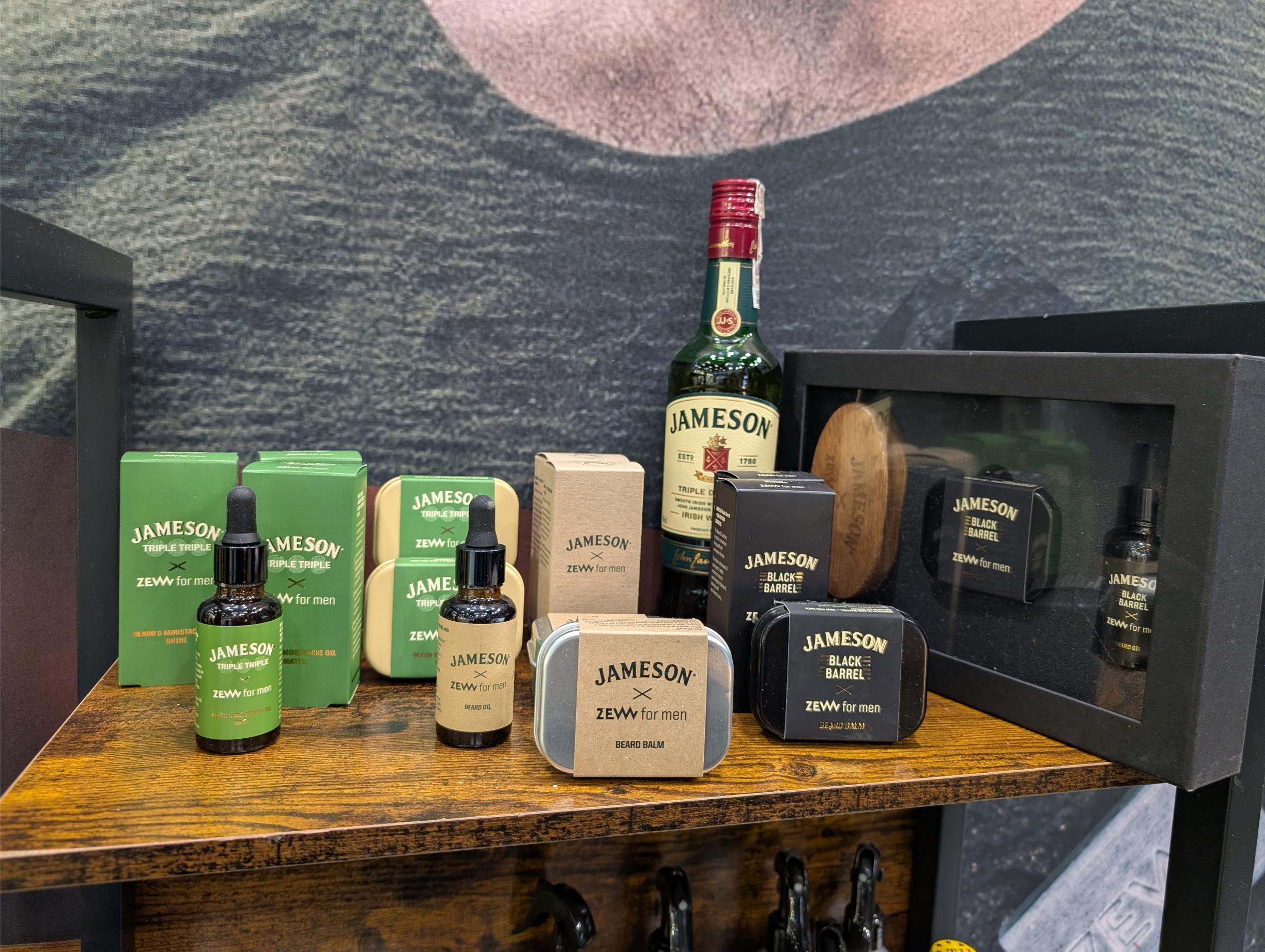
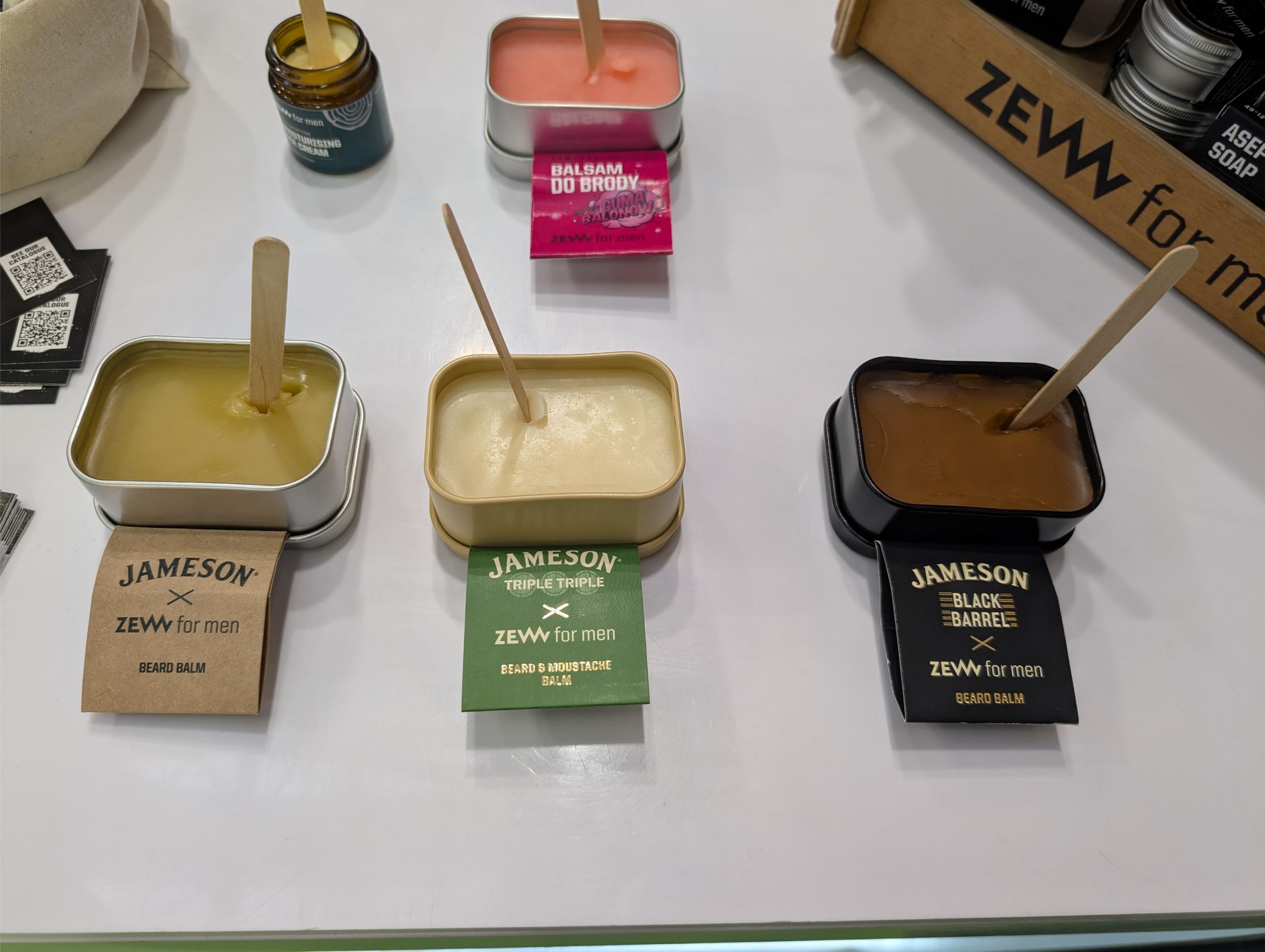
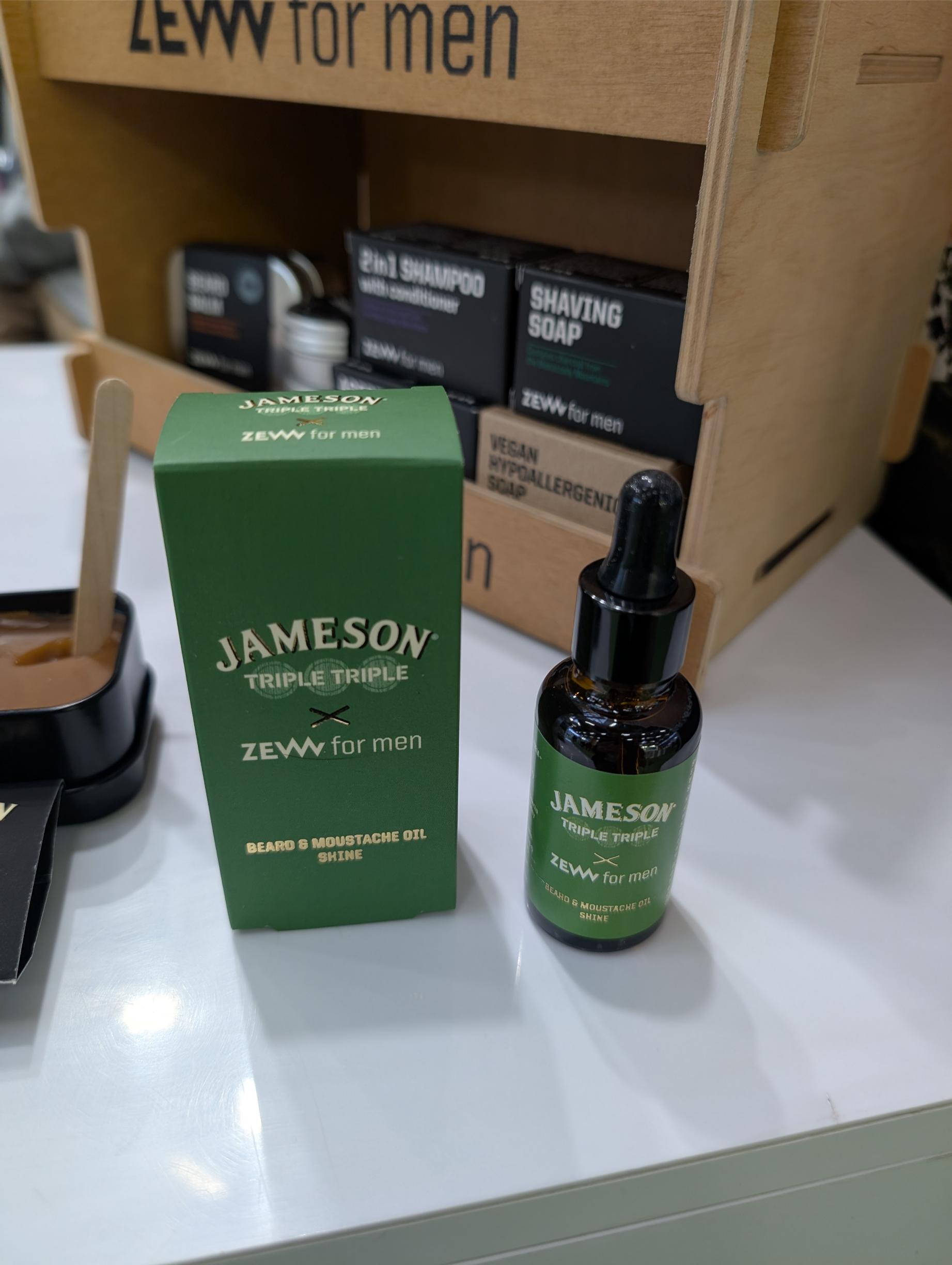
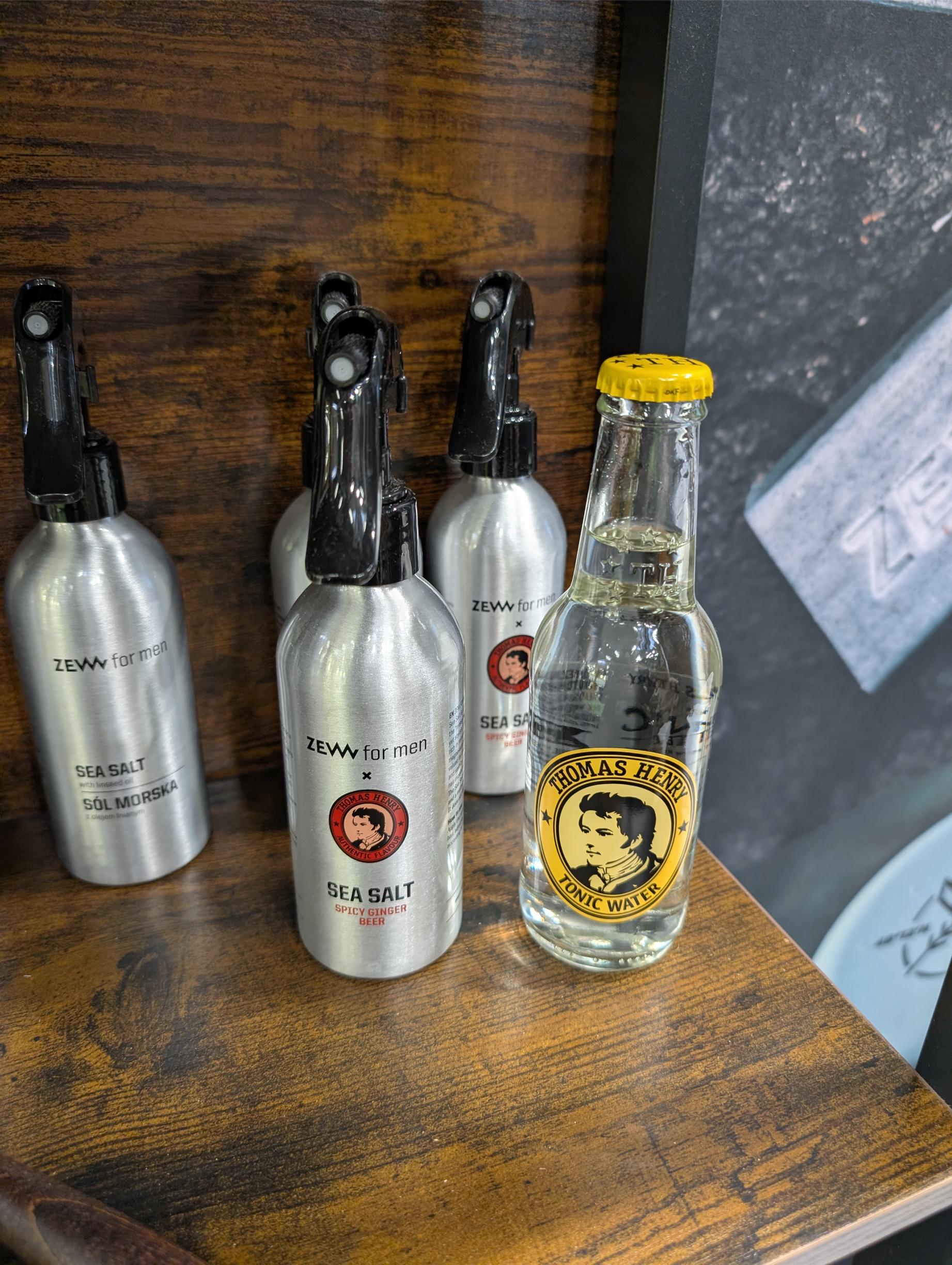
The collaboration began back in 2020 and the latest balm and oil is the green-packaged Triple Strength Jameson Whiskey which launched in 2025 and was inspired by the scent notes of Jameson’s Malaga Cask Triple Triple whiskey. Zew for Men even has a sea salt styling spray launched a couple of years ago which was created in collaboration with German lemonade brand Thomas Henry. The spray is scented with Thomas Henry’s Spicy Ginger Beer (which is one of my favourite ginger beers ever).
FARFALLA (Switzerland)
It’s been a few years since I saw Swiss organic beauty brand Farfalla at a trade show – I think the last time might have been at a small organic fair in Hannover in 2022?
Anyway, Farfalla was a first-time exhibitor at Cosmoprof Bologna and it was a lot of fun checking out the brand’s new products in depth. Farfalla is available in Germany both online and offline, in selected indie beauty retailers and the Müller drugstore chains but I usually have to order my favourite Farfalla product online (their Hydrating Aloe Vera Gel has been in my permanent skin care rotation for at least ten years).
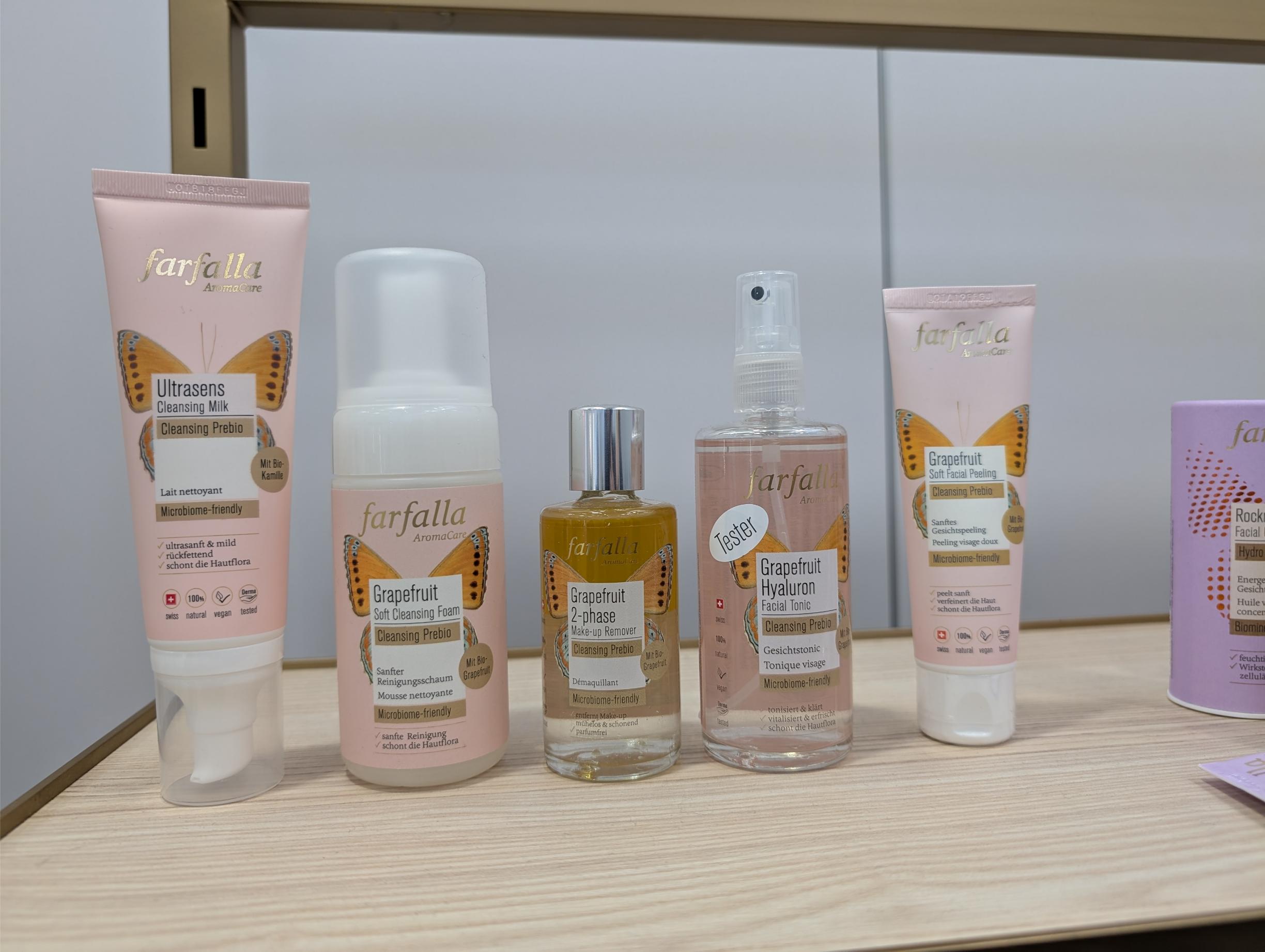
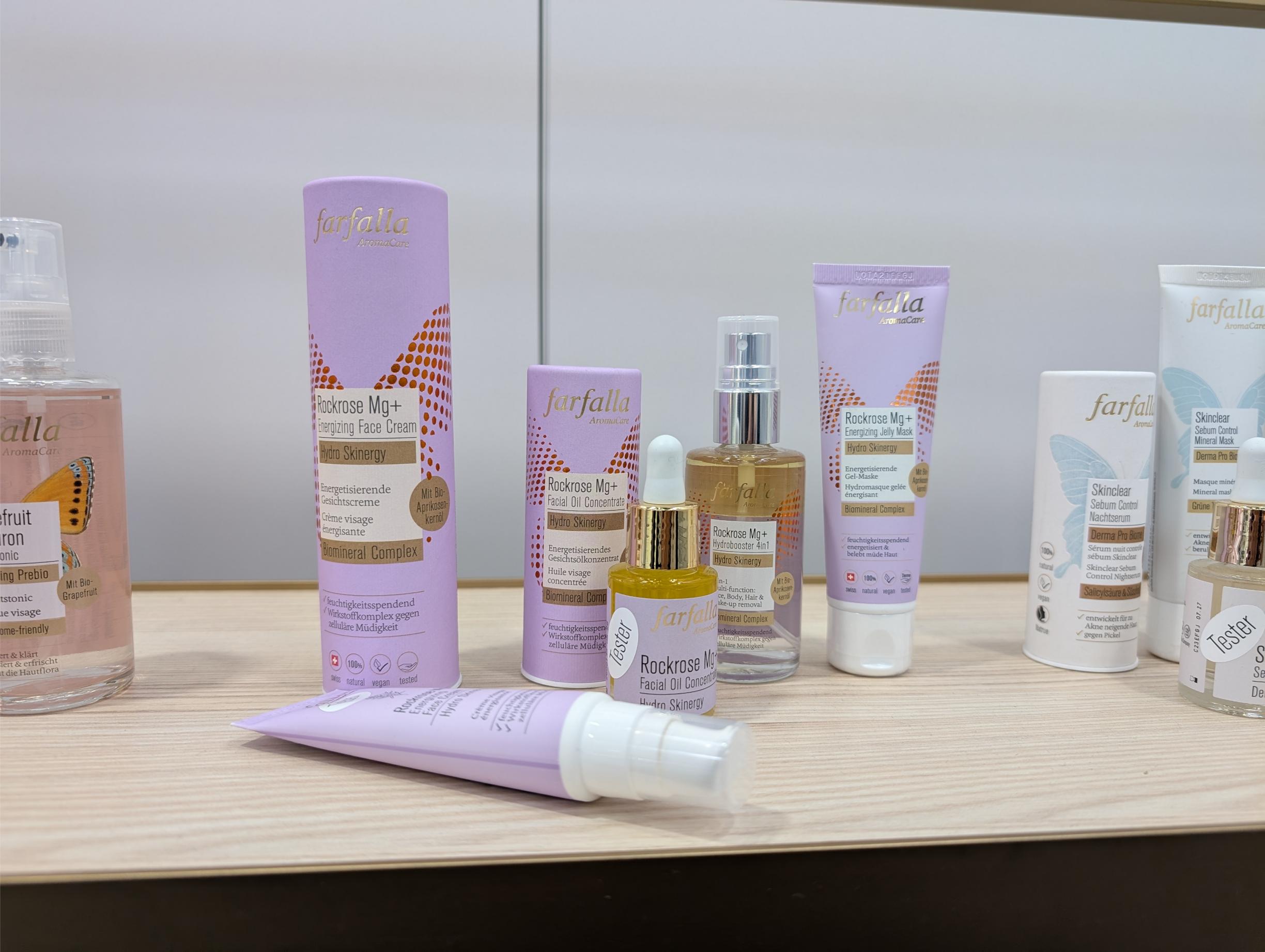
Farfalla has a fairly brisk launch pace so there were a lot of products to look at – the new 5-sku Grapefruit Cleansing Prebio range (cleansing foam, cleansing milk, tonic, facial scrub and 2-phase makeup remover) which is formulated with grapefruit extract and prebiotic ingredients to help protect the skin’s microbiome. Another launch from this year was the Rockrose Mg+ face care range, five face care products formulated with rock rose extract, magnesium and apricot kernel oil.
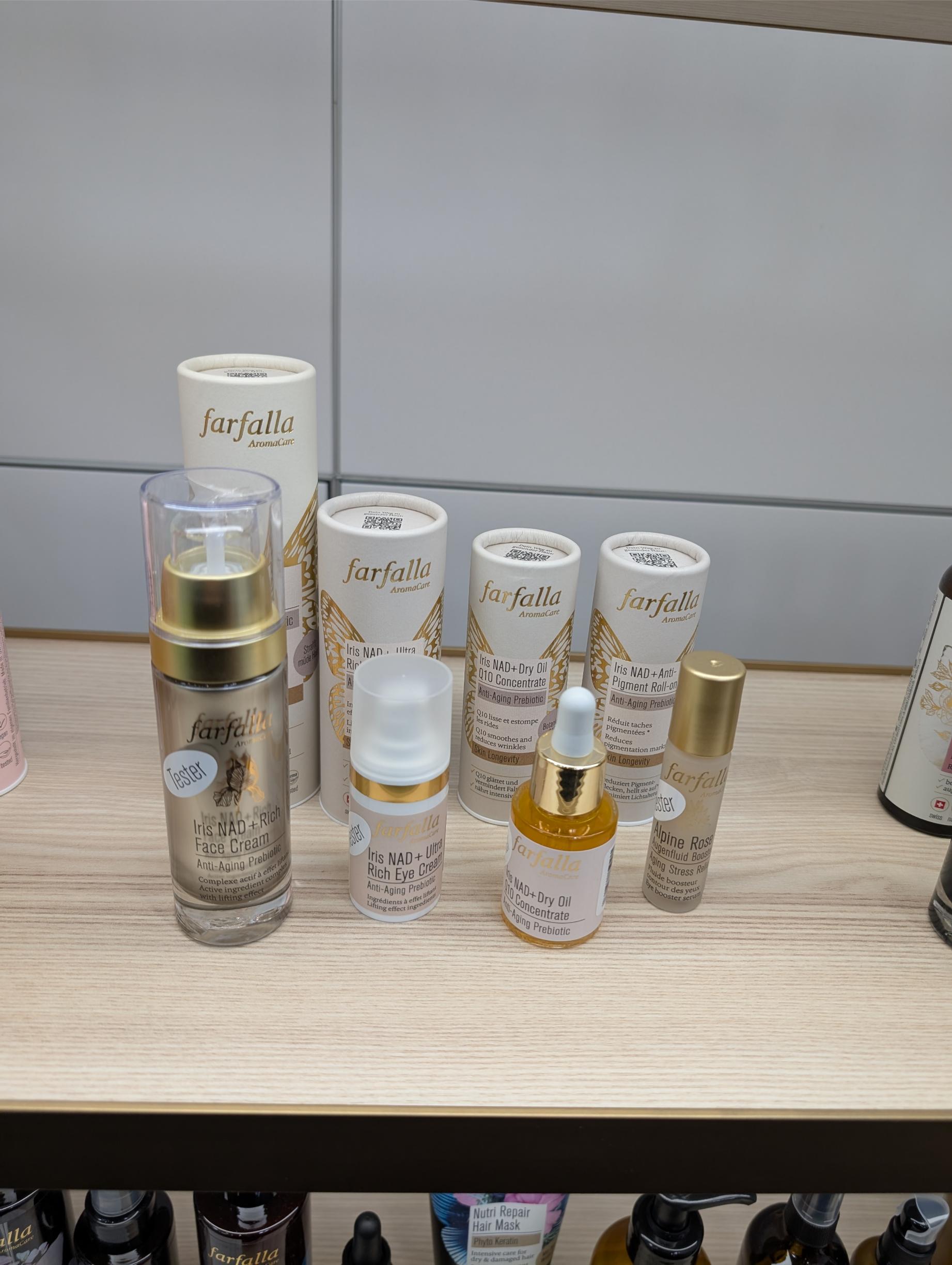
Several Farfalla face care ranges were reformulated with new and trending actives such as NAD+ (nicotinamide adenine dinucleotide, a co-enzyme) and co-enzyme Q10. The brand’s core portfolio also includes AromaCare, various aromatherapy/wellness ranges offering room/pillow sprays, body care and essential oils/home fragrance scent blends to help deal with different emotional and mental health issues – stress relief, relaxation, sleep problems, menopause etc.
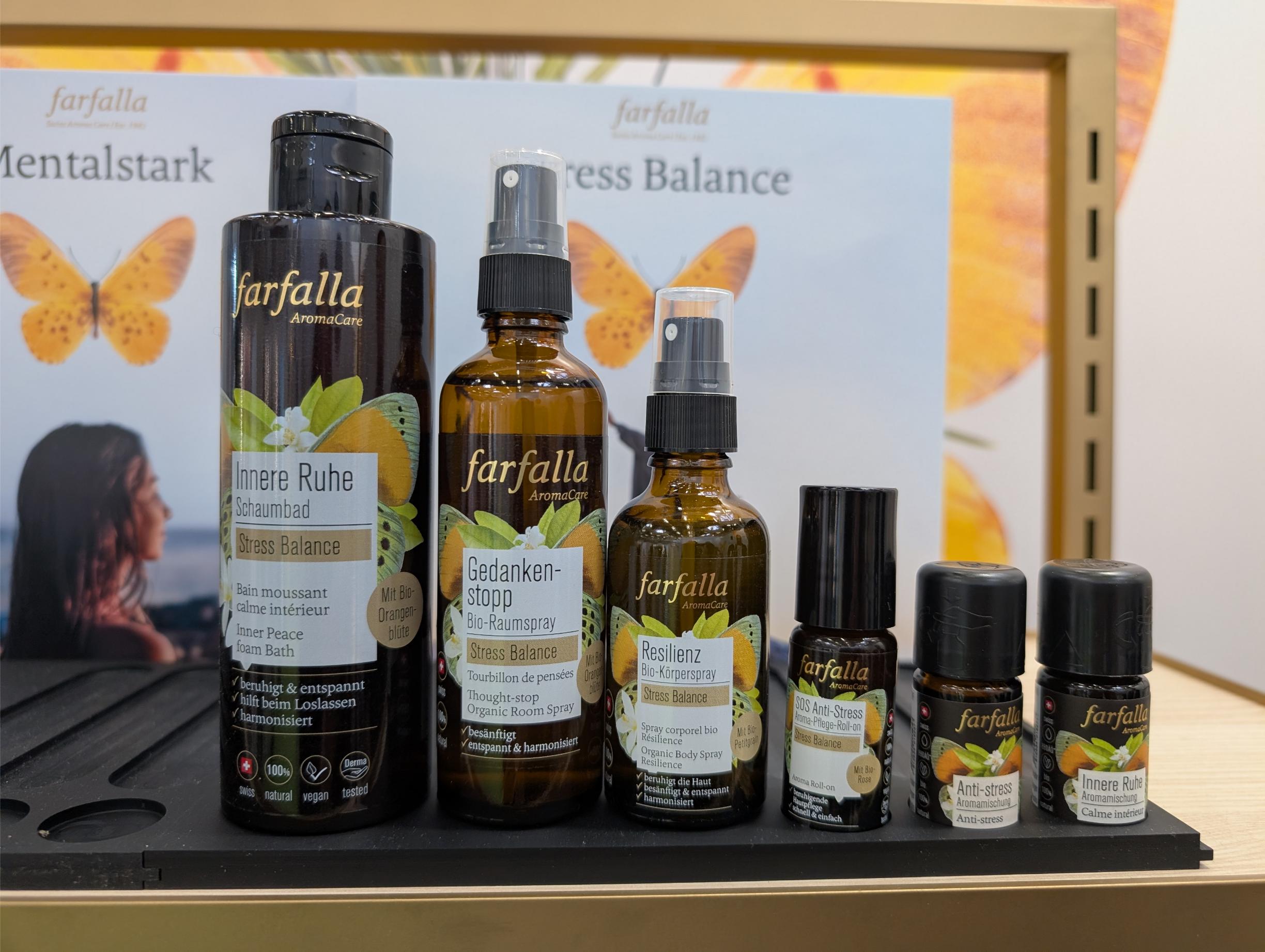
The latest launch on the AromaCare side of things was the interesting-looking emotional health range Stress Balance – a relaxing bath essence, room spray, scented roll-on and essential oil blend scented with a calming blend of rose, orange blossom and petitgrain.
ESPONJABON (Mexico)
Such a fun brand! Esponjabon’s sponge soaps were launched in the brand’s home market Mexico 25 years ago under the brand name Taio. Now, the company is set to expand into the European countries; I was told that the soap-filled sponges went viral on TikTok a while ago and I can certainly understand that, Esponjabon is such an unusual beauty product.
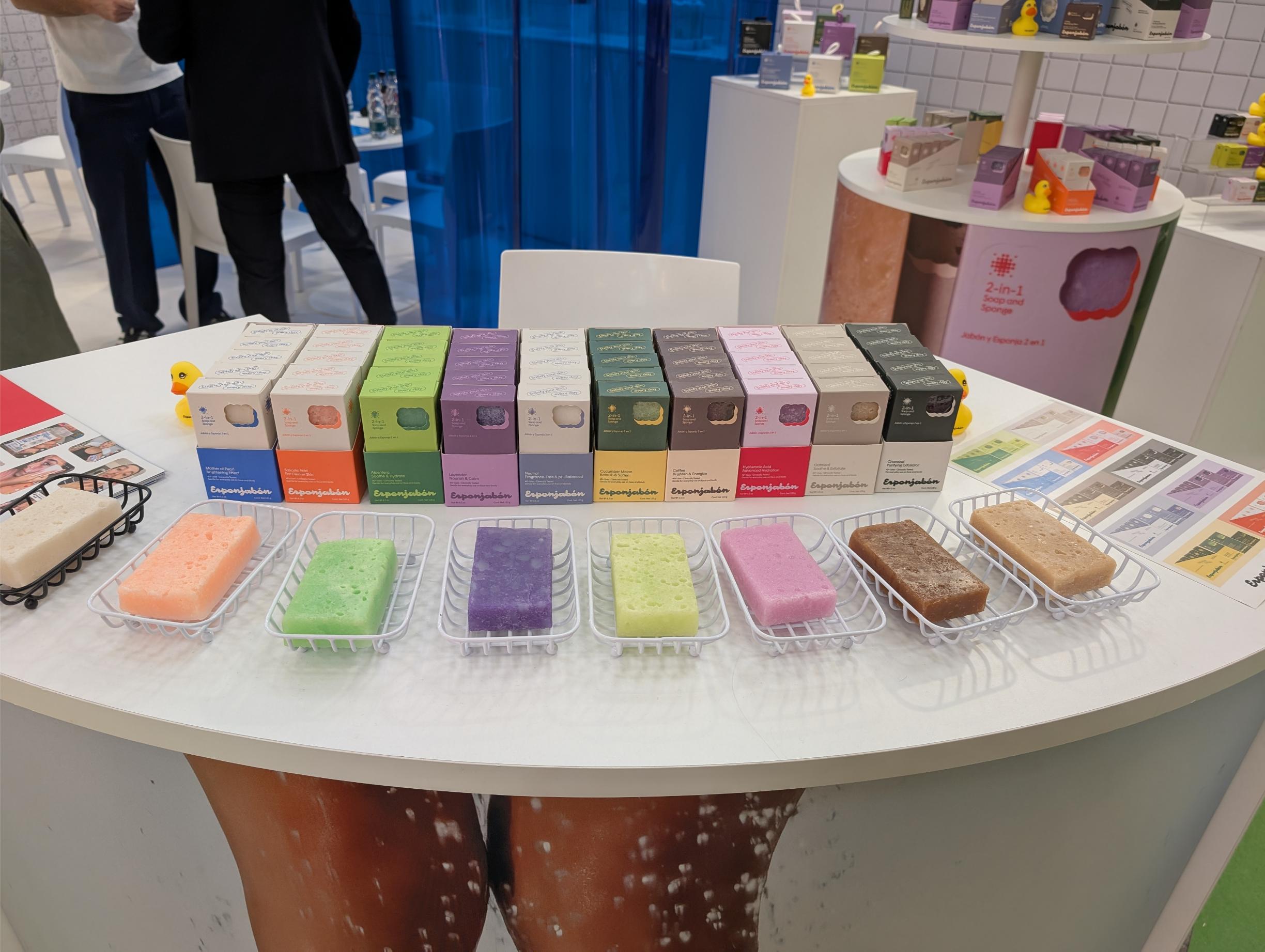
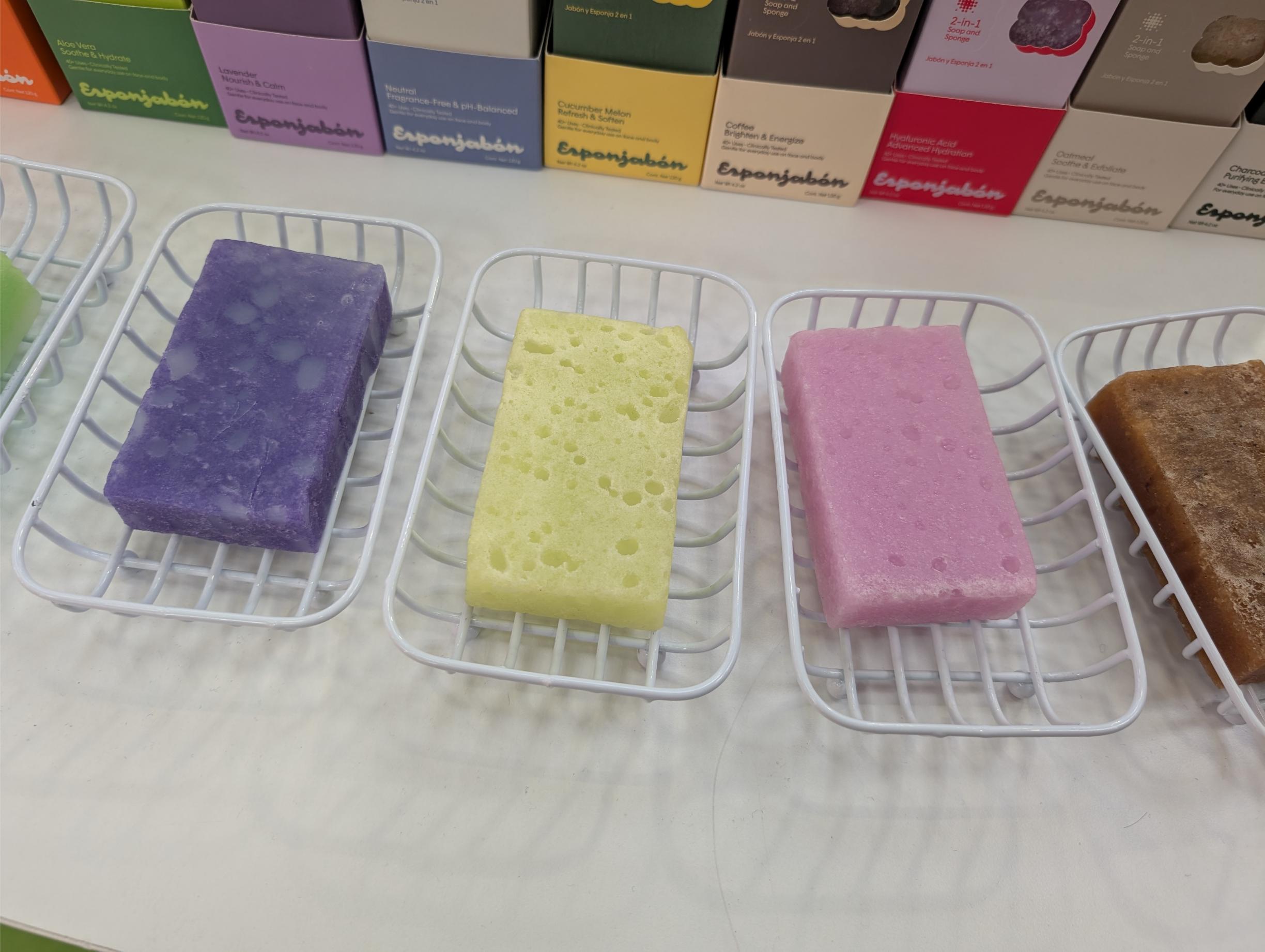
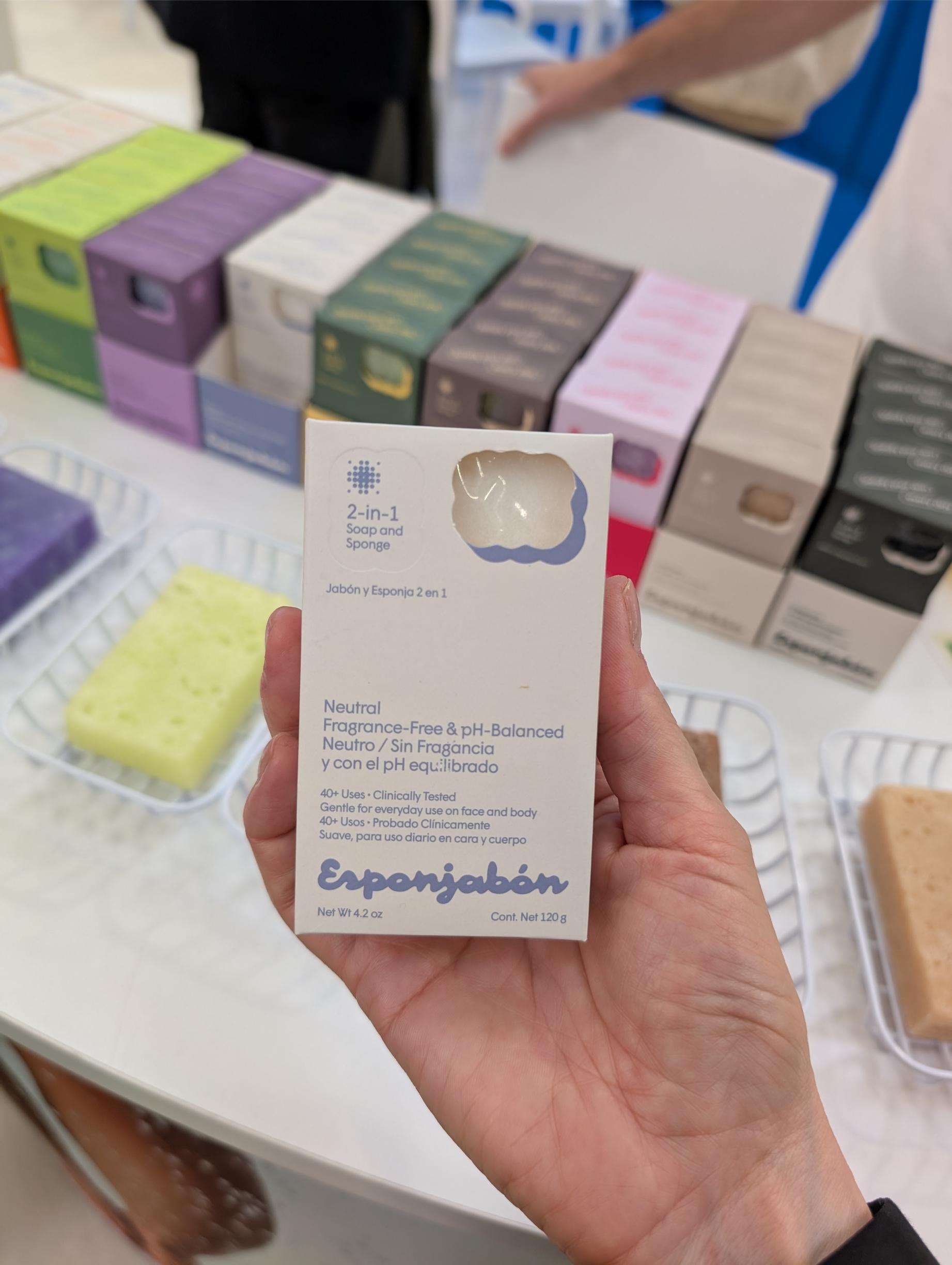
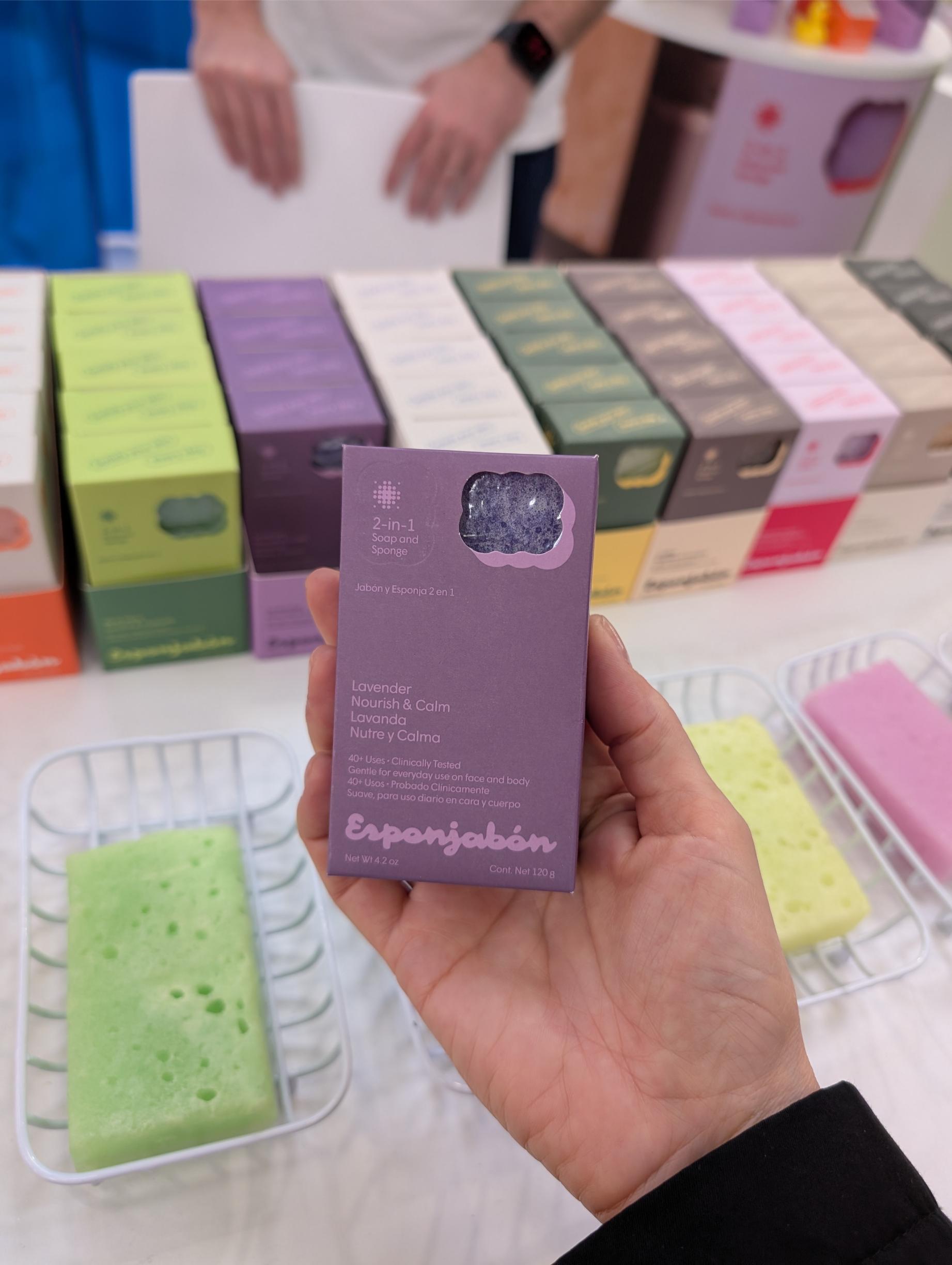
Essentially, these are rectangular sponges filled/saturated with soap, you use them like you would a regular bars of soap. Every time you wash your hand, face or body a bit of the soap disappears until only the sponge is left. The Esponjabon range offers 10 different soap variants and the two most recent launches reflect two of the biggest skin care trends right now: an anti-ageing hyaluronic acid-infused formula for older, mature skin and a fragrance-free sponge soap for sensitive skin.
COSMOPROF BOLOGNA 2026: COUNTRY PAVILLION BRANDS
DEARDOT (Korea)
Jeju-based face care brand Deardot has become one of my favourite Korean indie brands over the past few years. I see the company at Cosmobeauty Seoul every year and at Cosmoprof Bologna. The Deardot products are absolutely delightful, clean/natural formulae with lovely textures; the star ingredient is Deardot’s fermented Dangyuja extract. Dangyuja (Citrus grandis Osbeck) is an indigenous type of citrus-pomelo hybrid traditionally cultivated in Jeju/Korea. Although the plant is used in traditional Korean herbal medicine, the fruit doesn’t taste well so it is no longer grown commercially.
As a result, the dangyuja is now on various international endangered plant lists. Deardot decided to use the dangyuja fruit – which contains three times as much vitamin C as lemons – as the base for its signature cosmetic active. All Deardot products contain fermented dangyuja extract and other dangyuja-derived components so the plant is now cultivated and harvested again, and hopefully won’t go completely extinct. Deardot has also donated dangyuja seeds to the Baekdudaegan Arboretum’s Seed Vault in Korea’s Bongwha region.
Quick sidebar info on seed vaults/endangered plant species taken from my 2023 Cosmobeauty Seoul report: The Bongwha Seed Vault is a bit different from other seed libraries across the world: It is in a high security, earthquake-safe location and holds around 100,000 seeds from some 5,000 different wild plant species already. Bongwha is one of just two seed vaults in the world that collects wild plant seeds to keep them safe in the case of an apocalytic event like nuclear strike, war, natural disaster, and climate change. If you’re interested, the other doomsday seed vault is located in the Arctic, on Spitzbergen. Svalbard Global Seed Vault is a global repository of food crop seeds and plants, with seed donations from over 100 countries worldwide. It has the same brief as the Bongwha vault: Keep the seeds safe in case things end badly.
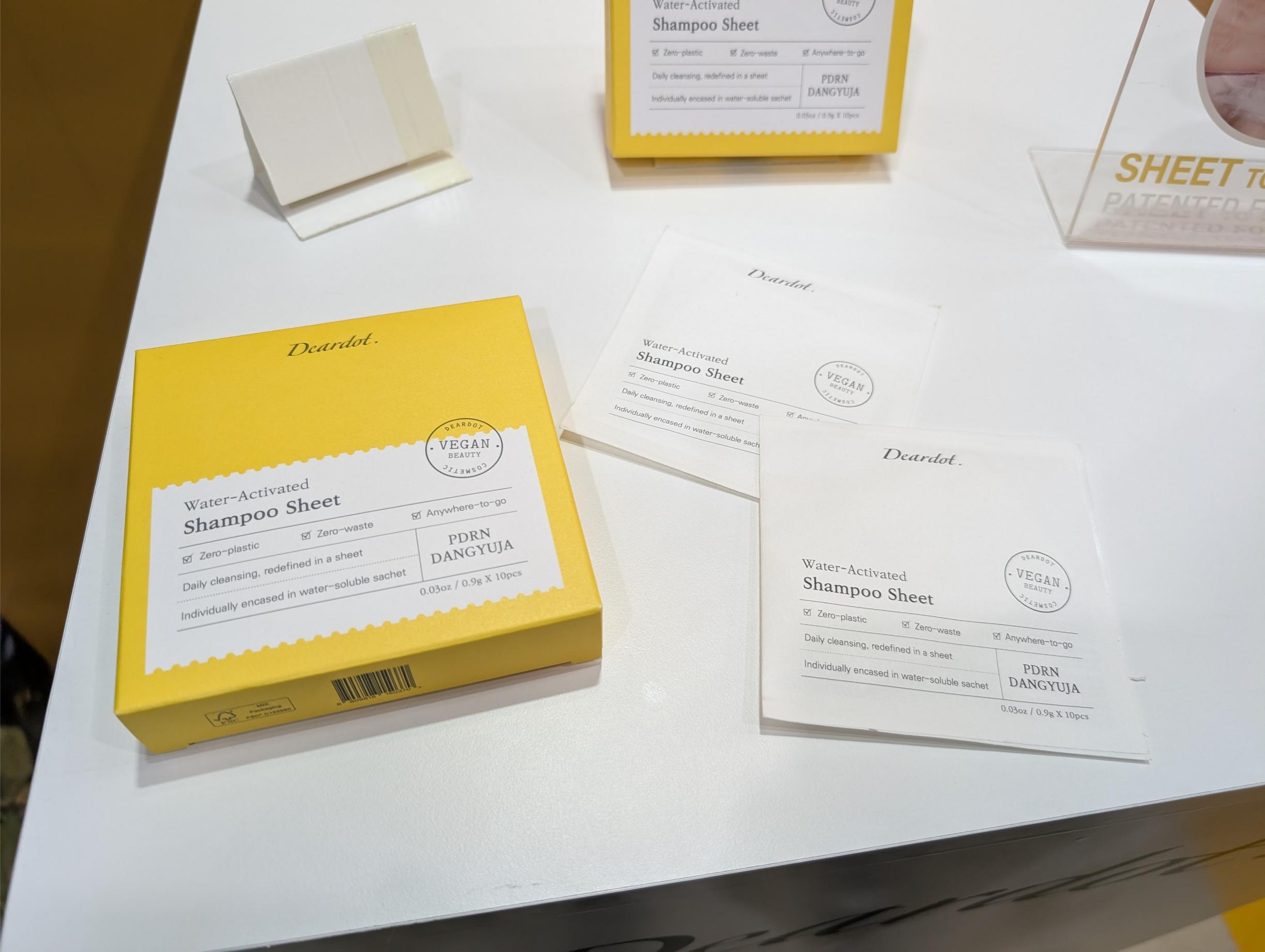
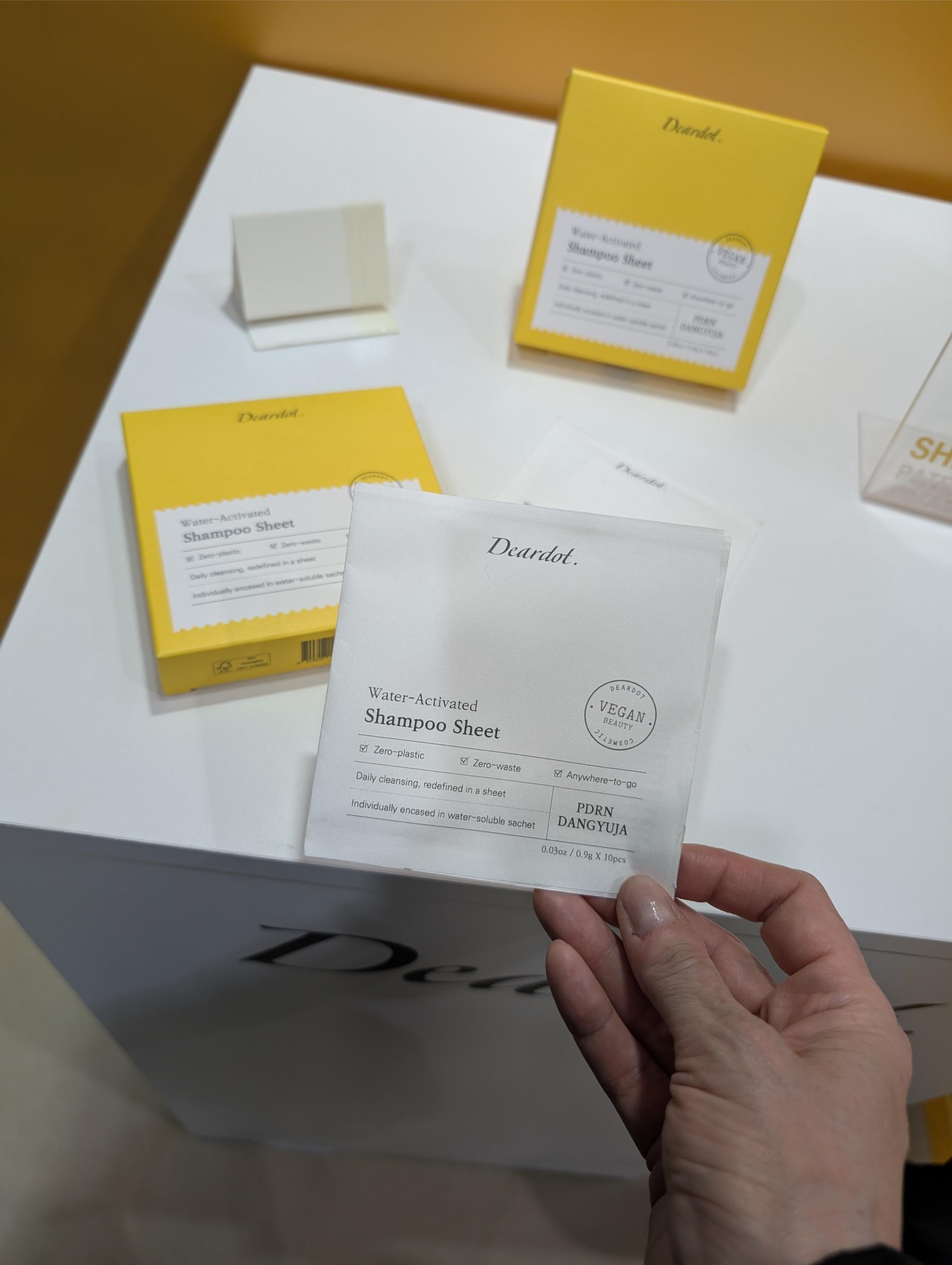
Just one of several reasons why I like Deardot. I am also impressed by the brand’s commitment to creating sustainable products. In 2024, Deardot launched a face and body cleansing powder packaged in a fully water-soluble sachet so the entire thing turns into a rich, creamy foam. This year, Deardot presented an innovative dry shampoo sheet (see pics above) which turns into a foaming cleanser when you add water and friction (shower puff/hands). The sheet is packaged in a water-soluble sachet and the outer packaging is cardboard. The product was a finalist in the 2026 Cosmoprof Awards but unfortunately didn’t win.
BUDAPEST SELECT (Hungary)
This was a fortunate discovery on my final trade show day, I was meandering through one of the country pavillion halls and came across this city brand pavillion. Budapest Select featured five Budapest-based indie beauty brands showcased under the Creative Hungary banner, an Hungarian agency/initiative launched in 2018 to support domestic beauty, fashion and design brands in Hungary and internationally. It’s such a good idea, Hungary’s capital city Budapest has a centuries-old tradition (and reputation) for thermal/hot springs and spa/ bathing culture in general; there are over 120 hot springs that feed Budapest’s half dozen (or so) famous thermal baths.
And while some Hungarian luxury spa brands like Omorovicza have a strong international retail footprint, other domestic brands are less well known outside of Hungary, so I was particularly excited to discover five of these at the same time. An interesting mix of brands as well, running the gamut from mass market to super luxe and organic to high-tech lab-based beauty.
Crèem, for example, is a family-owned organic beauty brand launched in 2023. The brand’s line-up offers 13 body, hair care and wellness products (body oils, creams, shampoo, shower gels etc.) with organic formulations, most of the raw plant materials used in the products are cultivated, harvested and produced on the company’s own farm. The packaging is stylish and minimalistic, with tubes made from sugar cane and jars produced from recycled glass.
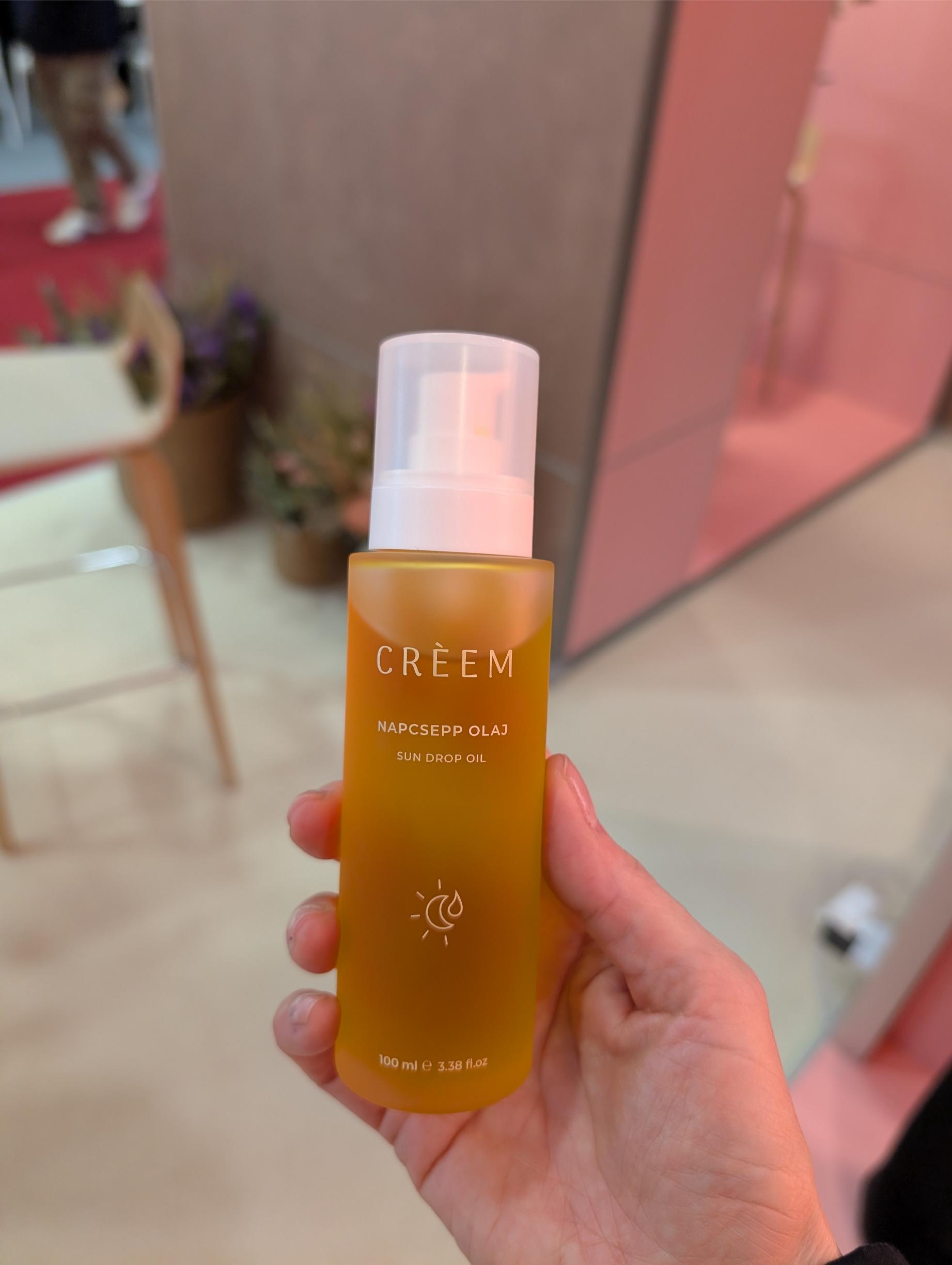
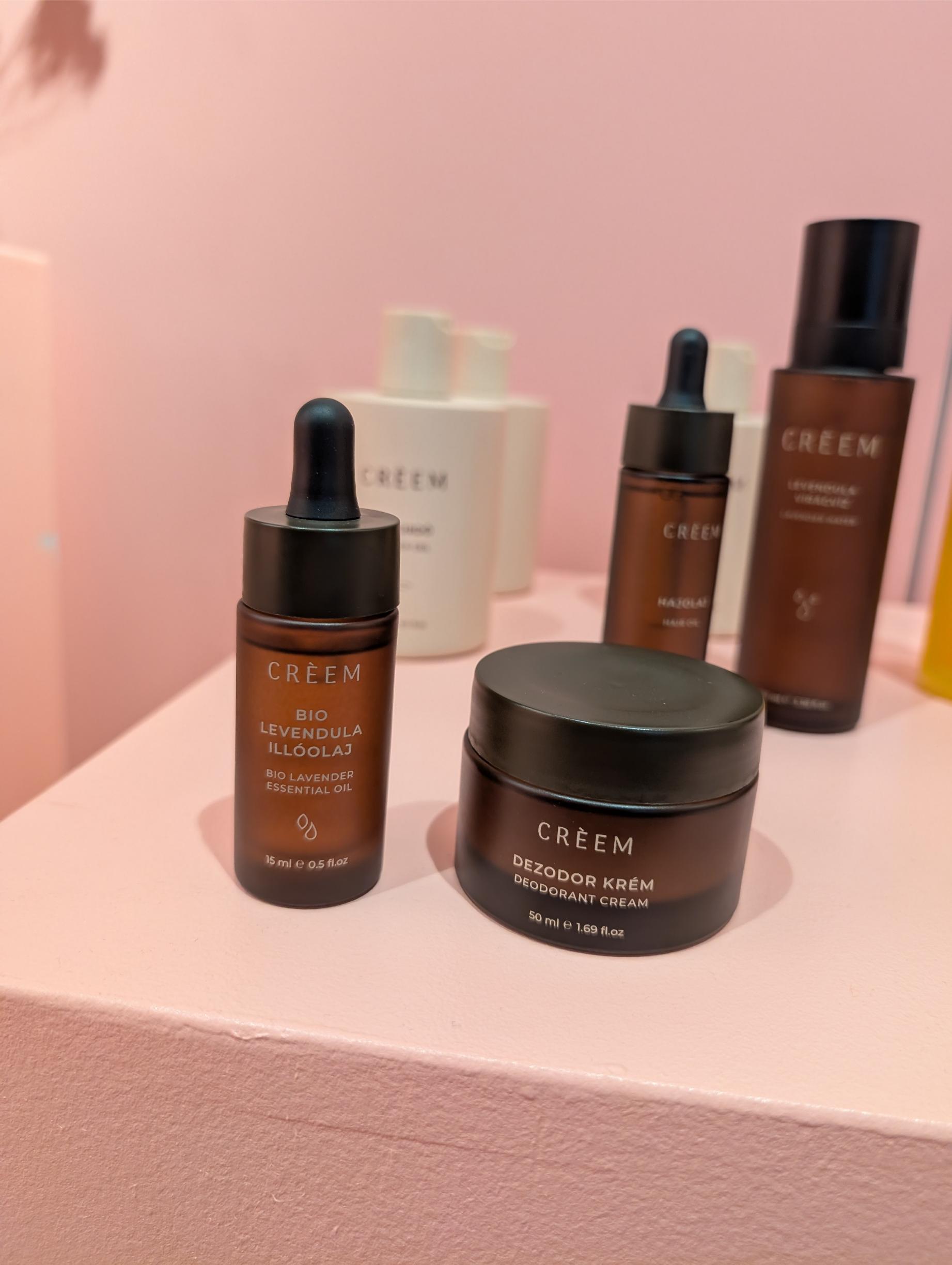
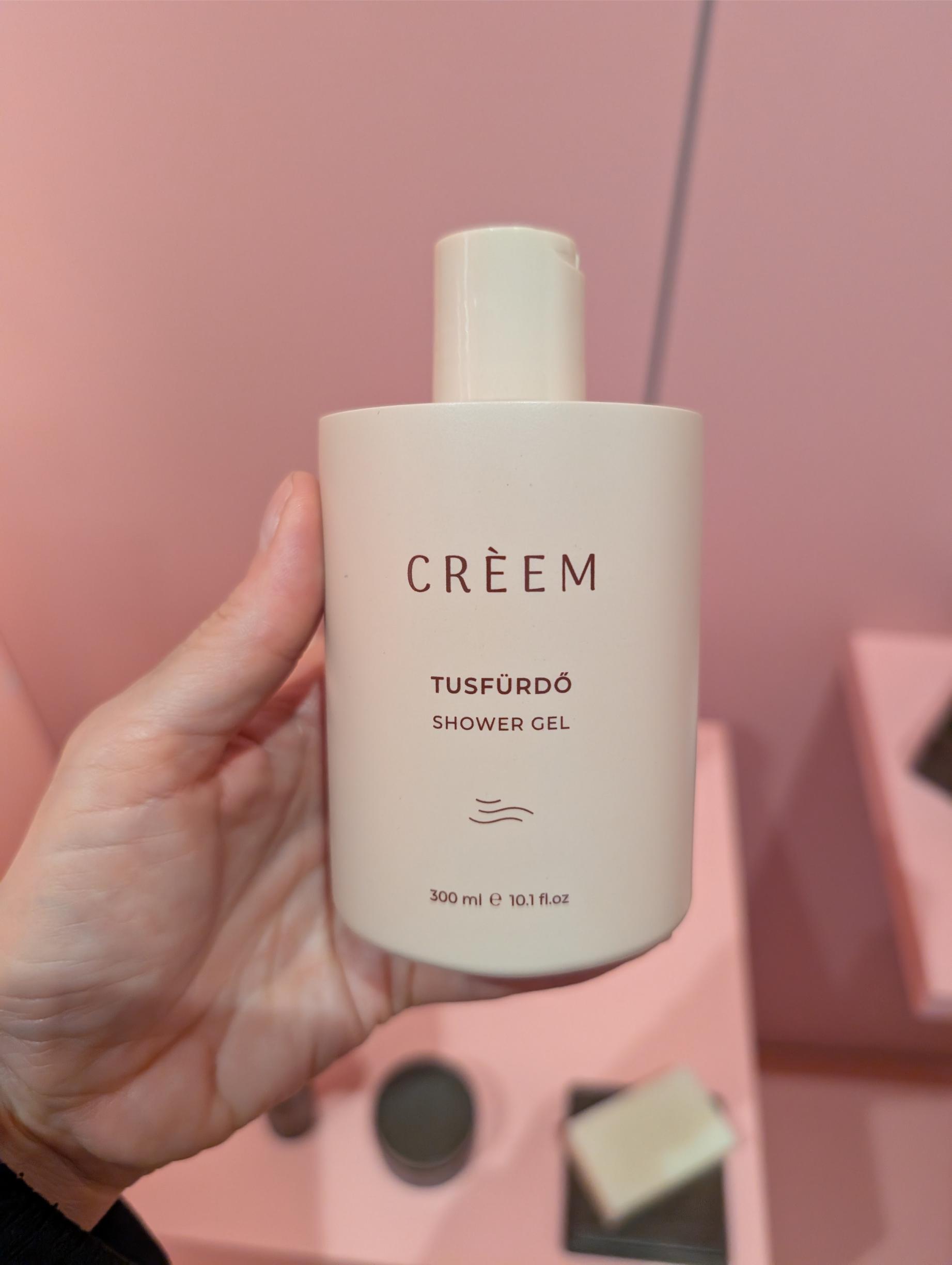
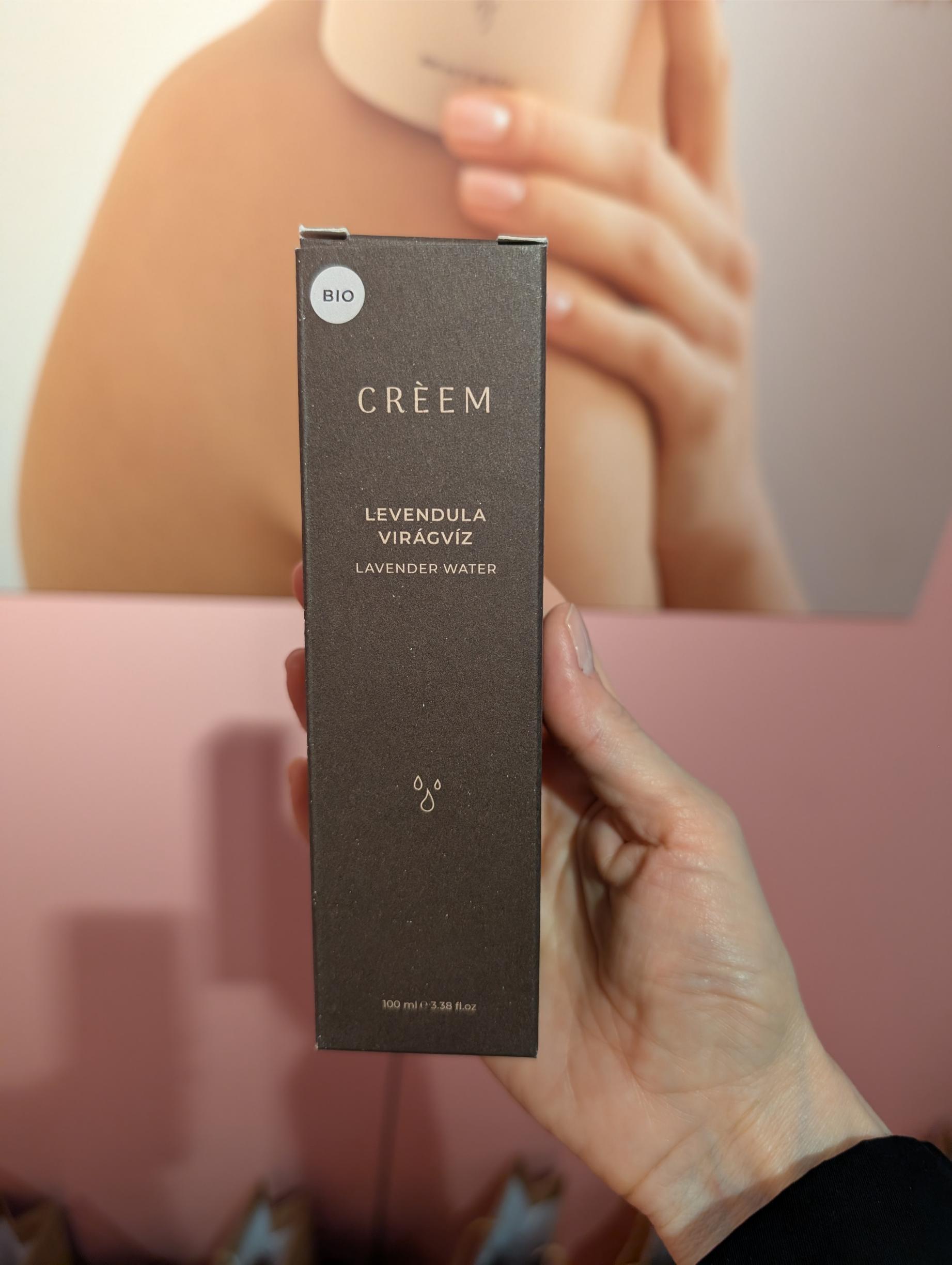
In 2027, Crèem will expand into the face care category. At the moment, products are sold primarily online, and offline in local concept stores as well as in the Hungarian outlets of German drugstore chain Müller. However, Crèem is looking to expand into other European markets. I’ll keep my fingers crossed for them.
Dr. Hazi, the next Budapest Select brand that I visited, was the exact opposite of Crèem – also an indie brand but with a luxe price tag (189 USD to 1,300 USD with the majority of products retailing at around 500-600 USD), voluptuously shimmering packaging and a very select spa and salon distribution. Dr. Hazi, founded by dermatologist Dr. Edina Hazi, is classic high-tech luxury dermocosmetic face care – think longevity and anti-ageing; with colloidal crystals/metal complex, peptides, collagen, ceramides, liposomes and so on.
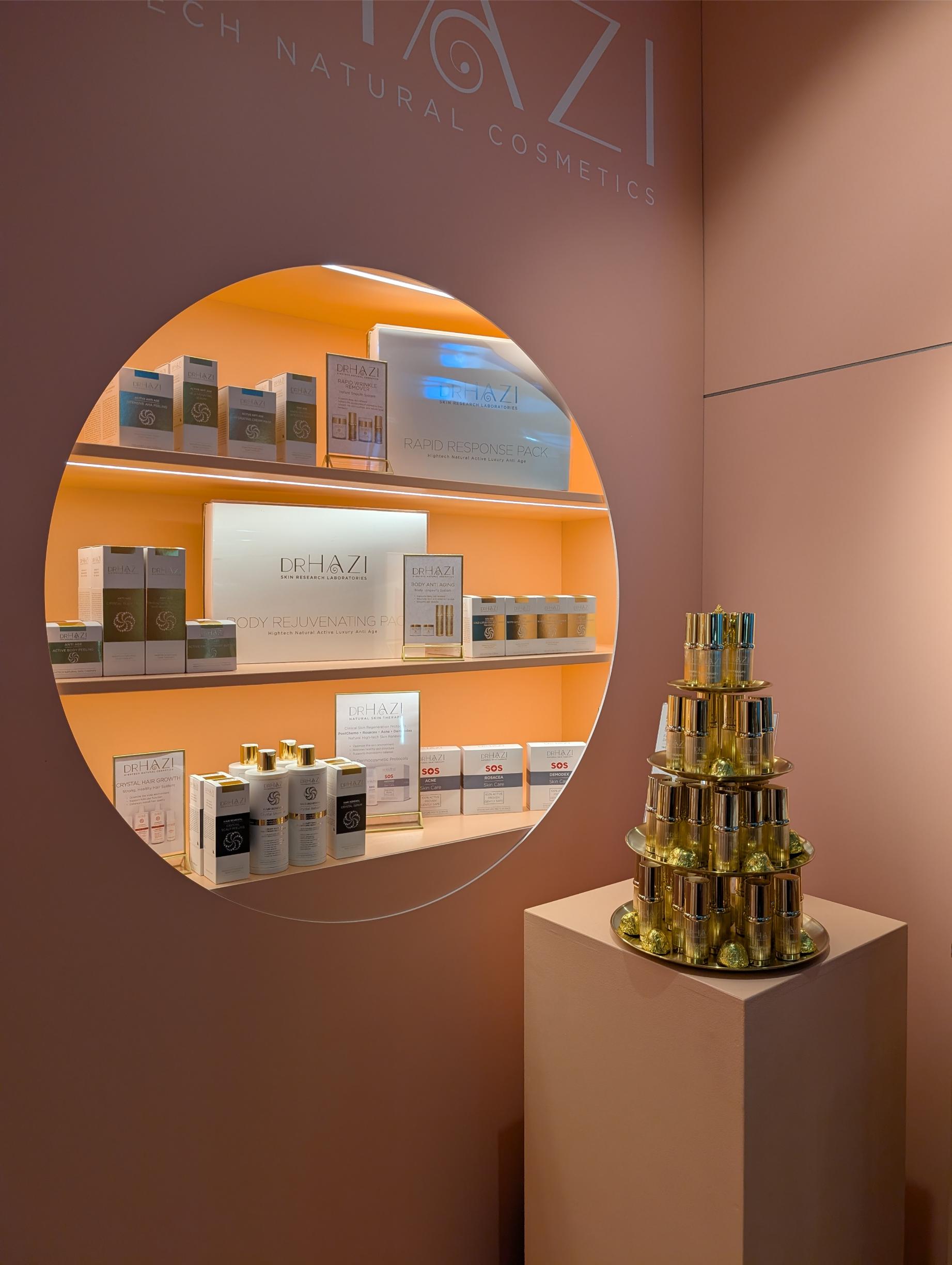
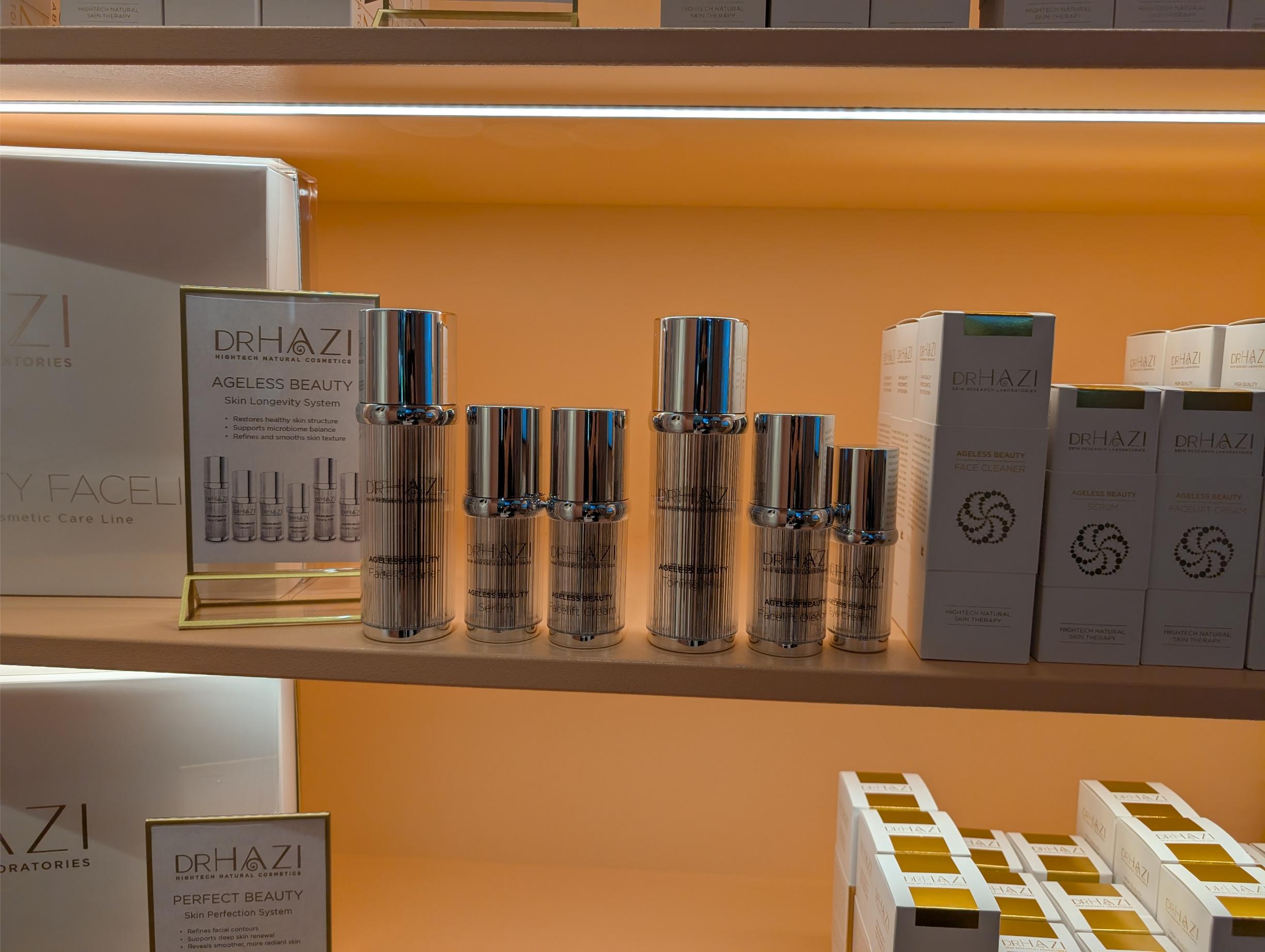
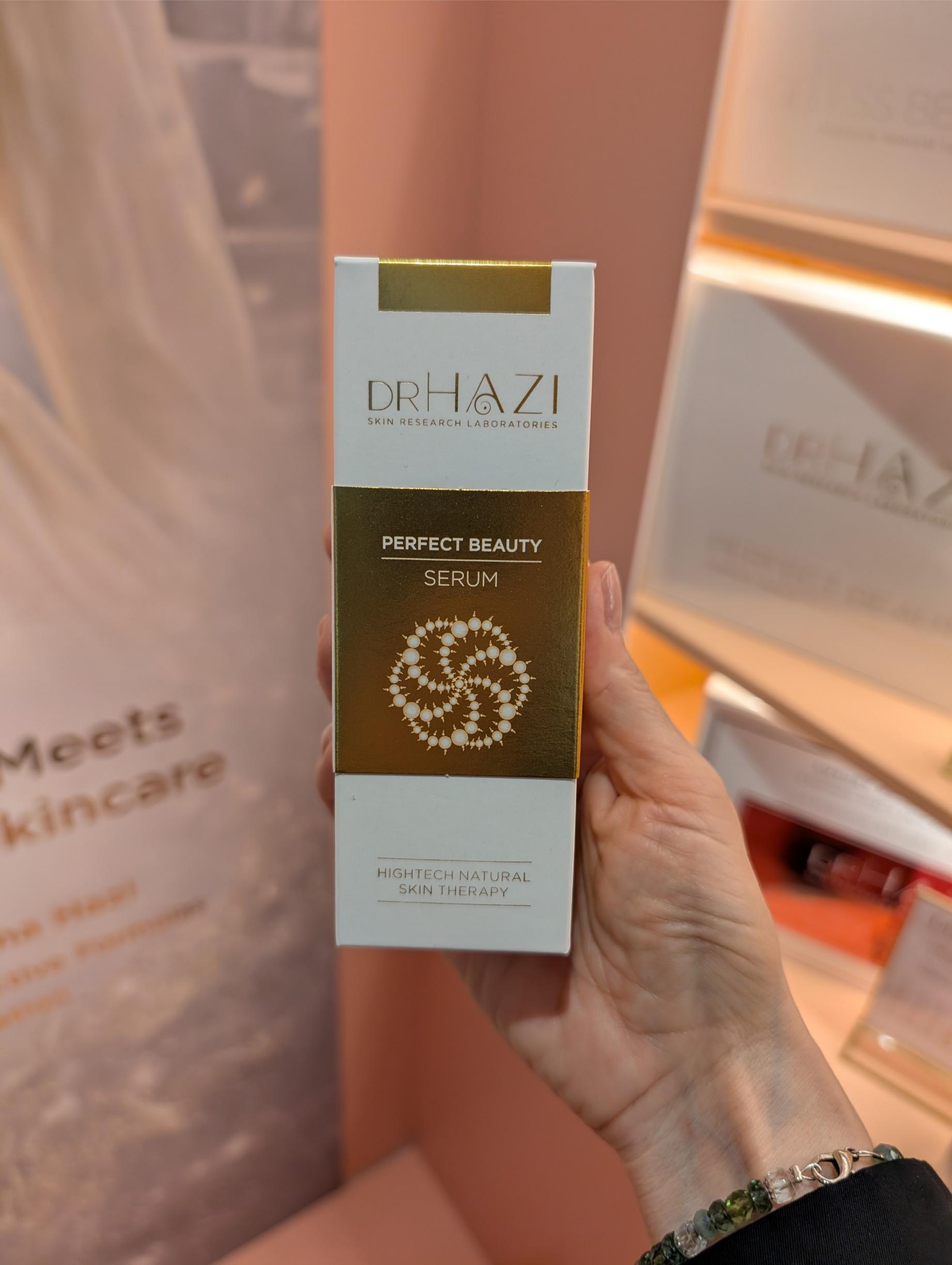
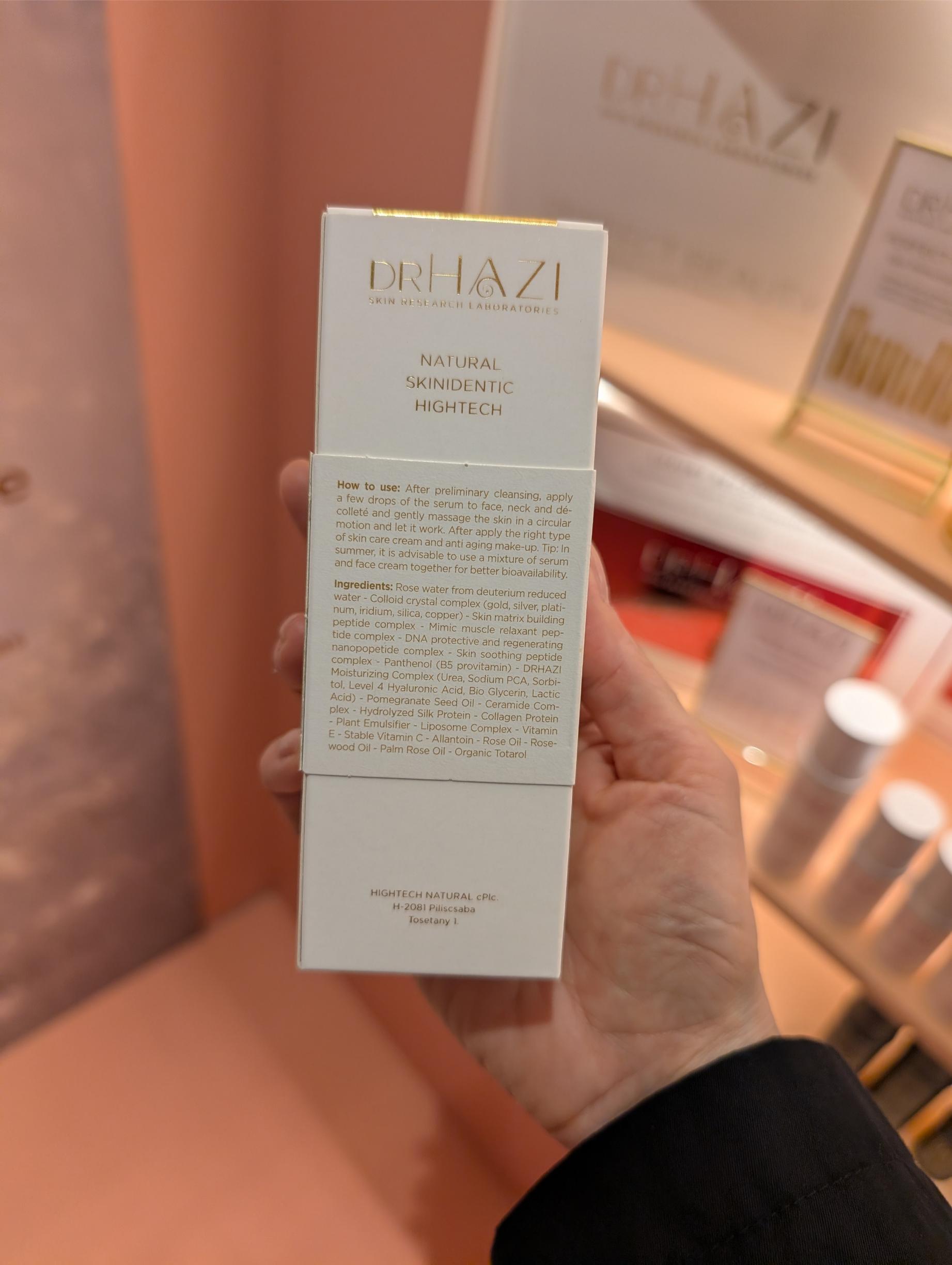
Some of the products – like the Perfect Beauty Serum – are manufactured with deuterium-depleted water (DDP) which is water with lower than usual levels of deuterium (according to Google this type of water might have various health benefits. There are around 40 sku in the Dr. Hazi line-up, the range is split into salon/professional and retail lines. The brand’s products are sold online and through the Dr. Hazi beauty salons.
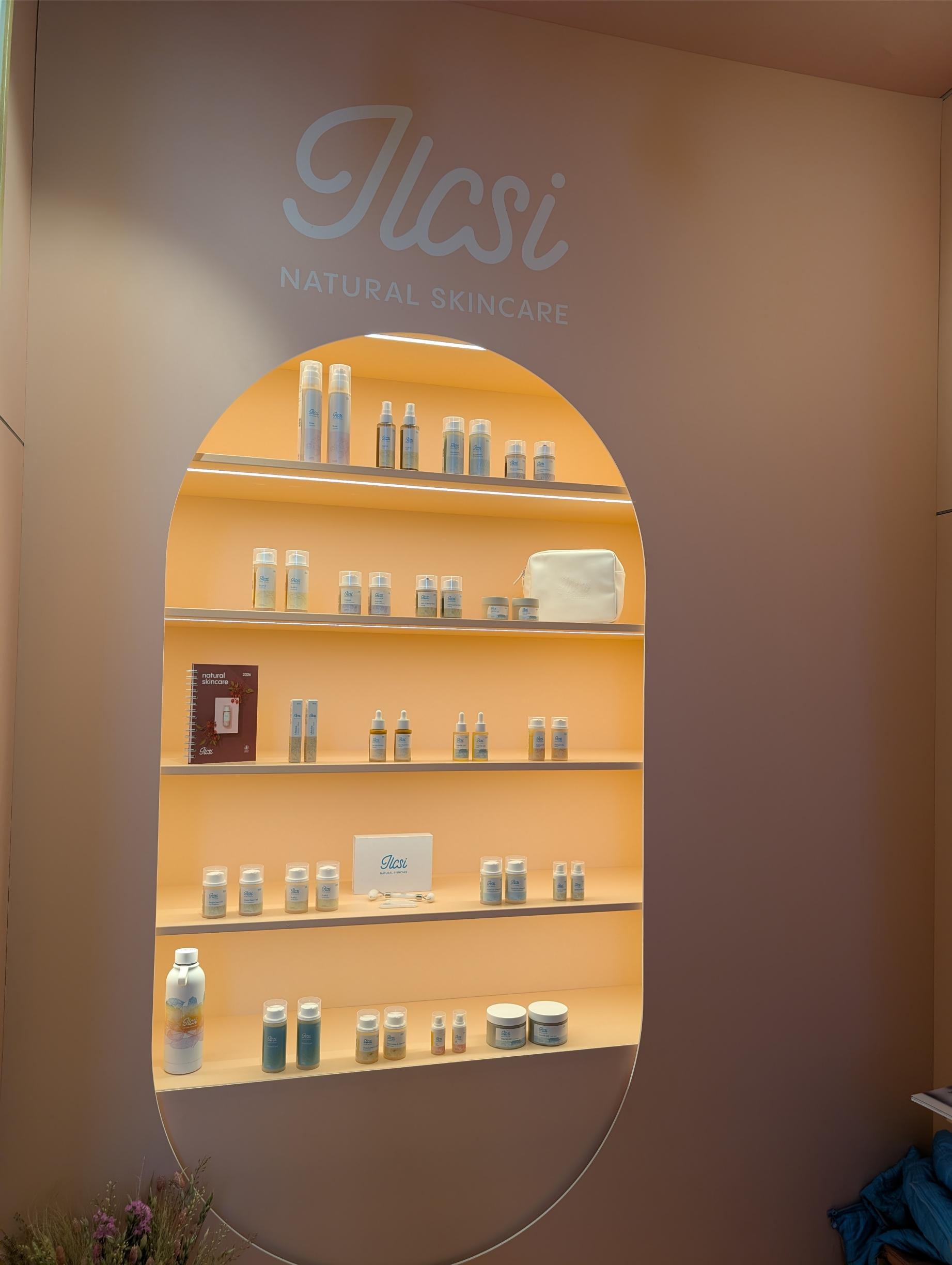
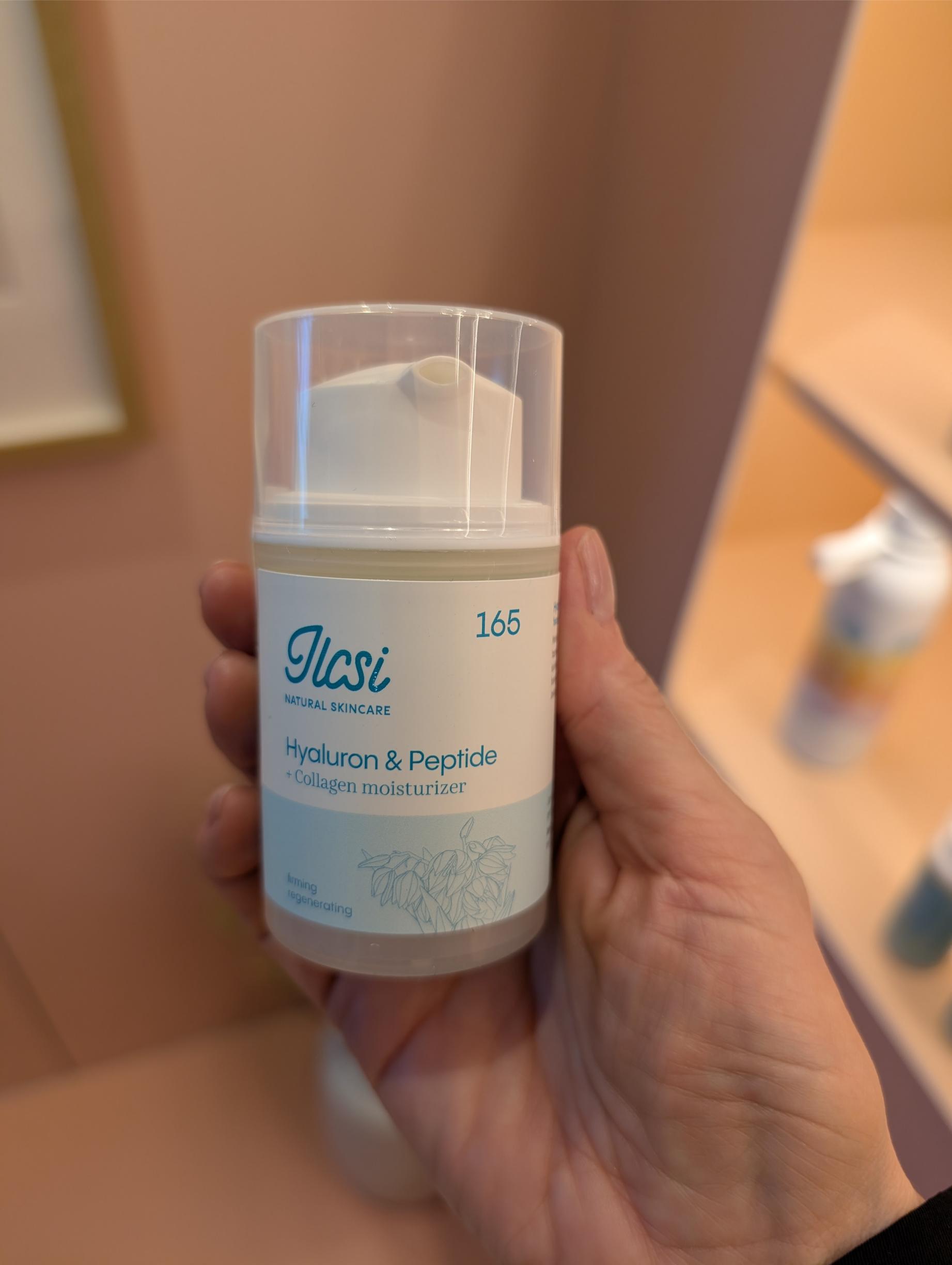
Organic beauty brand Ilcsi first launched in 1958 (Ilcsi is the first name of the brand’s founder, today the company is led by the third generation) and offers 150+ sku of certified organic and certified halal face and body care. All plant ingredients used in Ilcsi products are cultivated and harvested on the company’s own farm. Products retail at 15-45 Euro and are sold in Müller and DM drugstores in Hungary, in salon/beauty clinics and Ilci salons.
Salon brand Adrienne Feller was launched in 2000. The company’s portfolio includes salon and retail ranges, the retail line-up offers 65+ beauty products manufactured with Hungarian thermal water and local plant extracts. Products are sold online, in Hungarian luxury hotels and through beauty salons. The final brand at the Budapest Select booth was Anna Haranvölgyi Skinnotech, another family-owned and female-founded brand. Launched in 1991, the line-up offers some 35 sku of face, body and hair care which is divided into retail and salon lines.
BtheB (Korea)
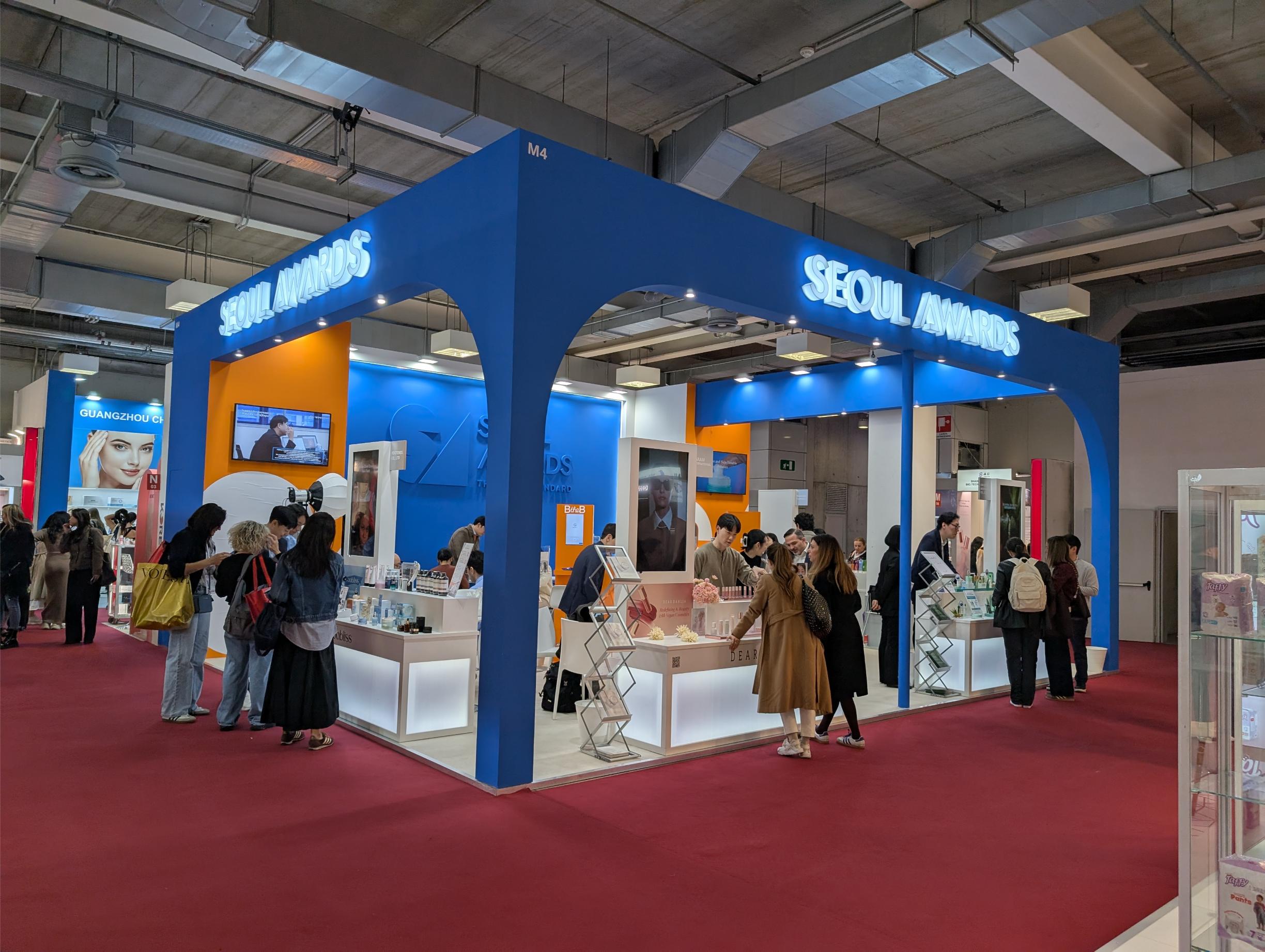
Just around the corner from Budapest Select was Seoul Awards, a communal pavillion of mostly Seoul-based beauty brands that I’ve seen at other Asian beauty trade shows, most recently at Cosmoprof Hong Kong 2025. And then I spotted the logo of BtheB, a Korean brand marketing initiative which also organises a beauty brand showcase that I absolutely admire: The BtheB brand installation/exhibition which takes place in Seoul’s Dongdaemun Design Plaza. The first BtheB showcase opened in 2022 as part of the government‘s efforts to re-invigorate Korea’s – and Seoul’s – beauty and retail industry after the pandemic. BtheB was established by Seoul Business Agency (SBA), an economic development agency to help promote Seoul-based businesses and boost global brand expansion.
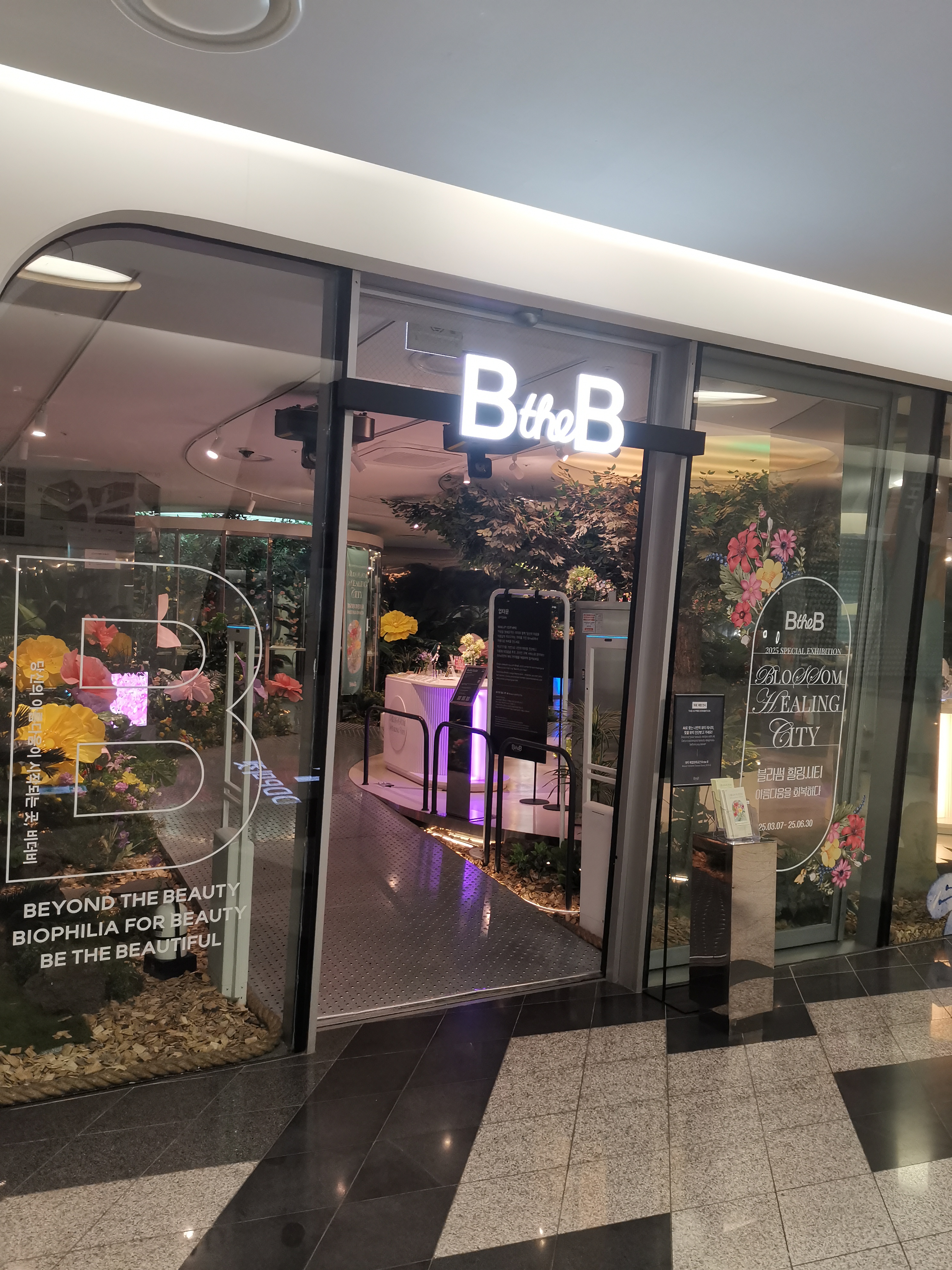
Every time I’m in Seoul I visit DDP to check out the latest BtheB exhibition. It’s such a brilliant brand experience concept, showcasing emerging and established Korean beauty brands across the entire industry: Organic and conventional brands, mass market and indie labels; face care, hair care, wellness, fragrance, makeup, hair styling, men’s care; there are AI-driven skin and colour diagnostic stations, beauty tech brands and devices to try out and a ton of beauty products to sample.
Each BtheB exhibition is accompanied by a brand brochure you can pick up at the entrance which gives mini profiles of all participating brands; there are QR codes to scan at the individual brand stations if you want to find out more or order products online. And of course everything is super social media-friendly, with selfie spots galore. The BtheB brand line-up changes every 3 months or so, and each exhibition/showcase is embedded in an entirely new exhibition architecture. The exhibition space in DDP looks different every time.
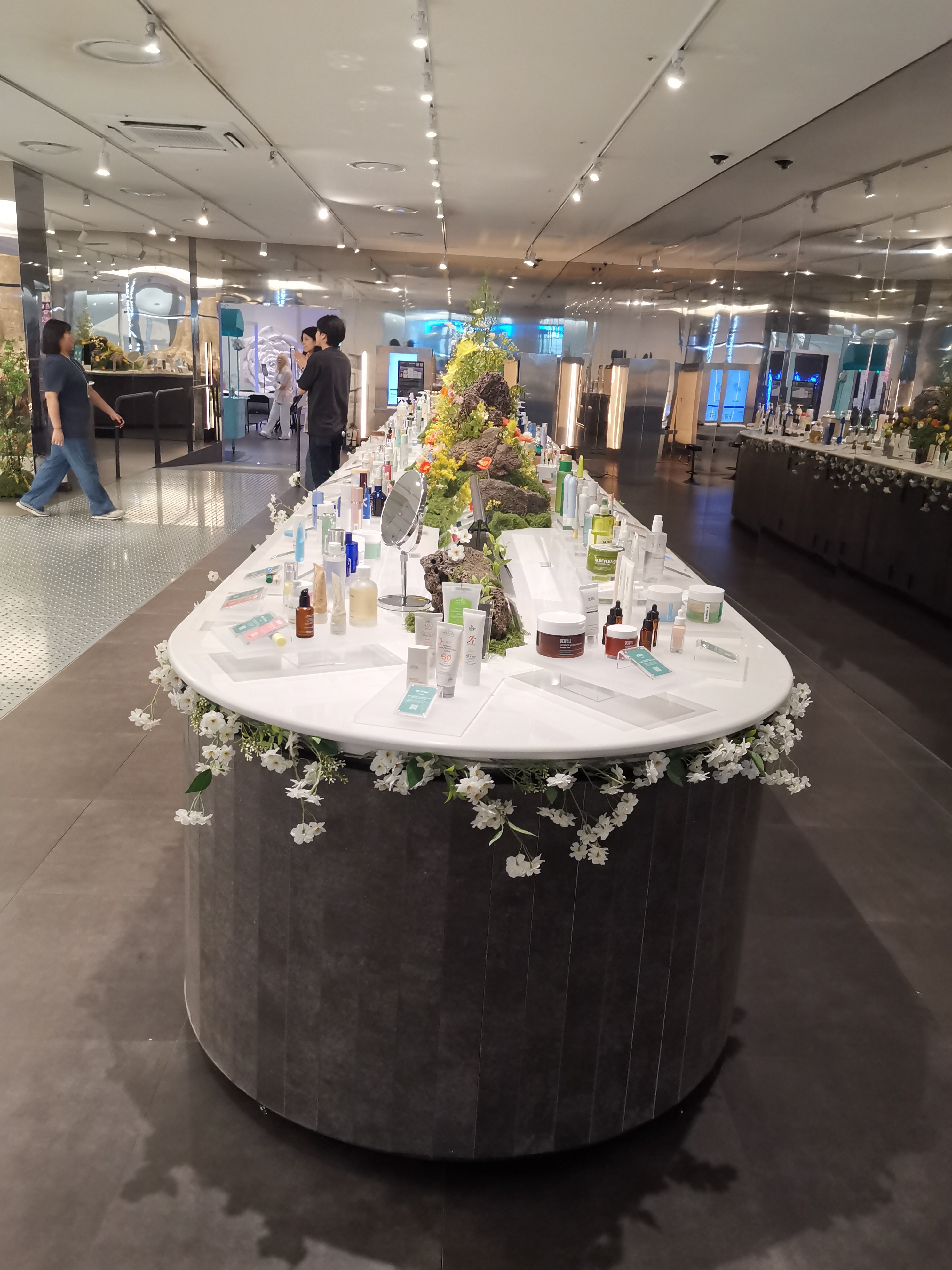

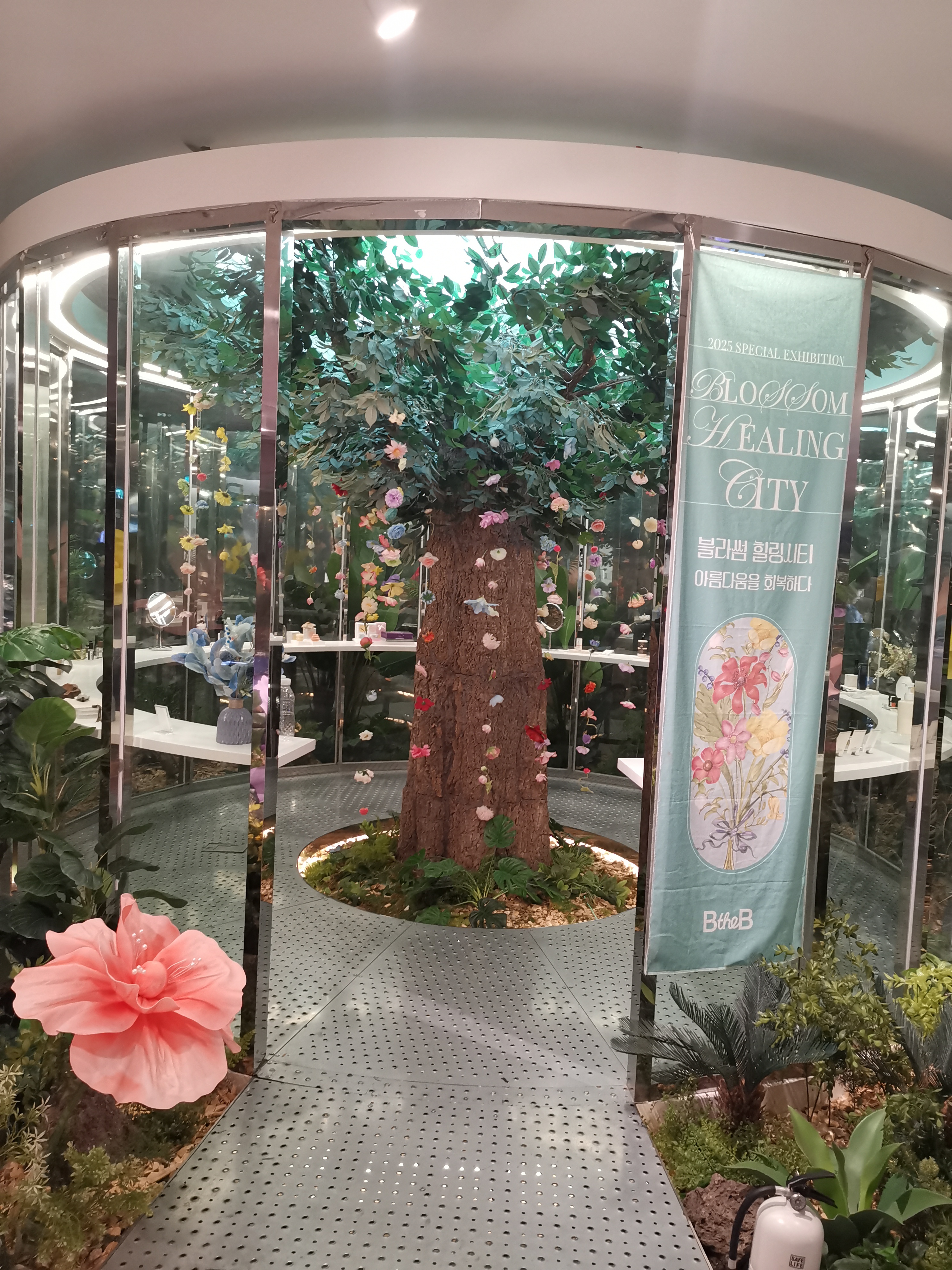
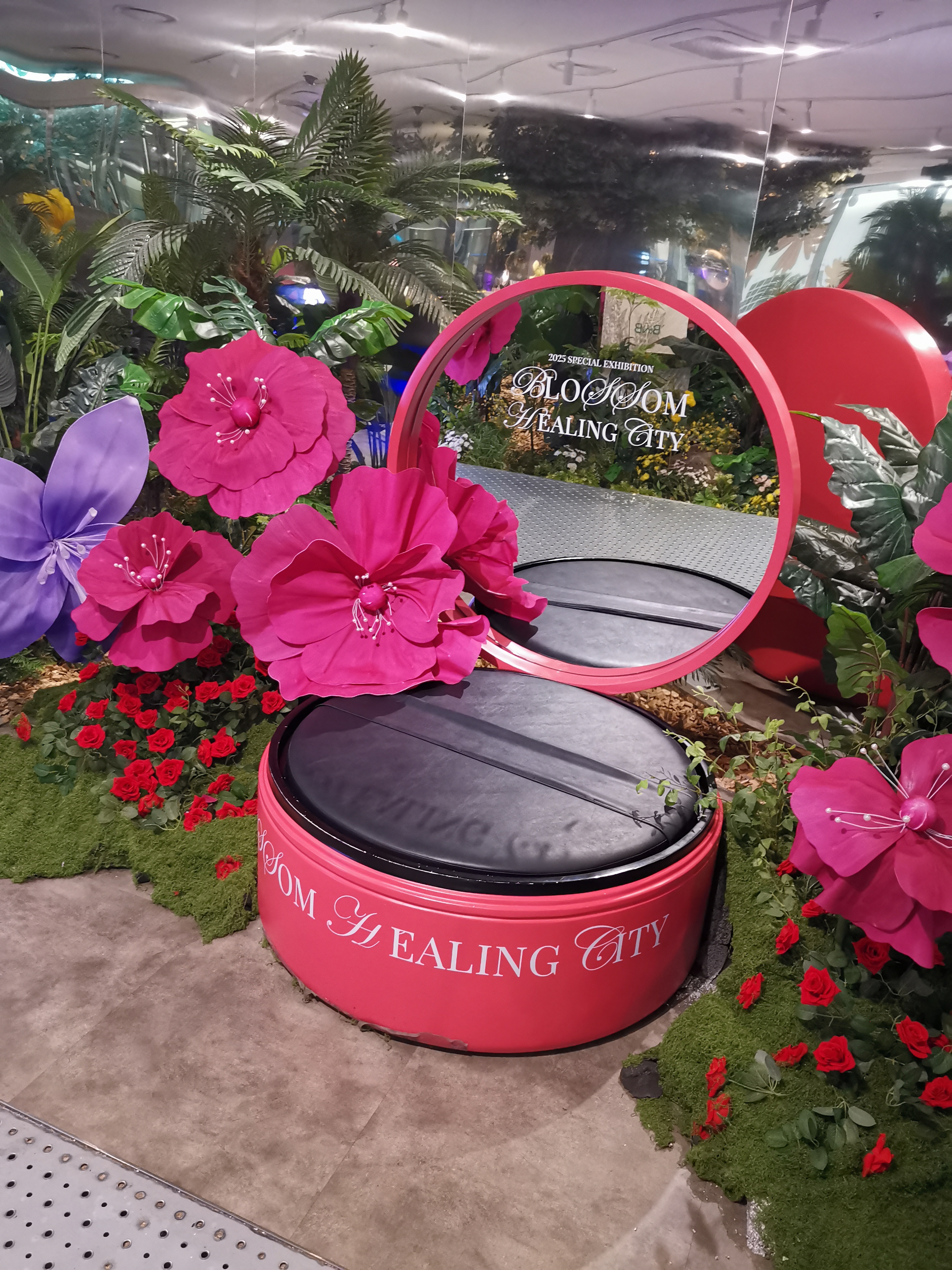
In terms of decorating the organisers go all-out every single time. In the last exhibition I visited, May 2025 (Blossom Healing City), the rooms were dressed up to look like an over-sized park with gigantic colourful blooms everywhere, living and artificial plants, stone-covered paths to walk along the different brand stations and sample areas; music and birdsong – a proper immersive brand experience. It’s free to visit and open every day. The above five pics are from my May 2025 visit. Needless to say, I’m a big fan of BtheB so I was delighted to see their logo on the Seoul Awards booth and to have a brief chat with the company. I already look forward to seeing the current BtheB exhibition in Seoul next month.
This is definitely one of my longer trade show articles! Thanks for reading. I’ll leave you with some more impressions of the show.